
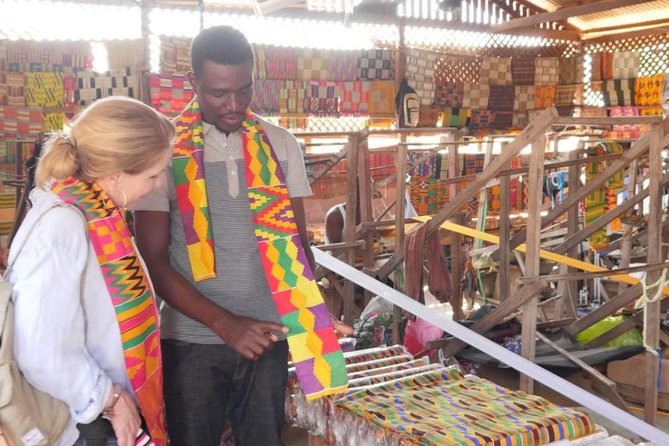
Reviewed · KUMASI CULTURAL TOURS
Kumasi Culture and Heritage Tours
Kumasi’s strongest cultural experiences are hands-on, and this tour puts you right in the middle of two famous Ashanti crafts. At Ntonso, you learn how Adinkra symbols carry messages about sorrow, farewell, wisdom, and daily life, then choose fabric and stamp your own design. At Bonwire, you see the craft of kente weaving and learn why the cloth matters.
I like the practical demonstrations and the chance to make something yourself rather than simply look at displays. I also like that lunch, bottled water, drinks, an air-conditioned vehicle, entrance fees, and a private guide are included. The main drawback is the price: at $140 per person, it makes the most sense if you value private transport and guided access, or if you are sharing the experience with a small group.
Key points at a glance
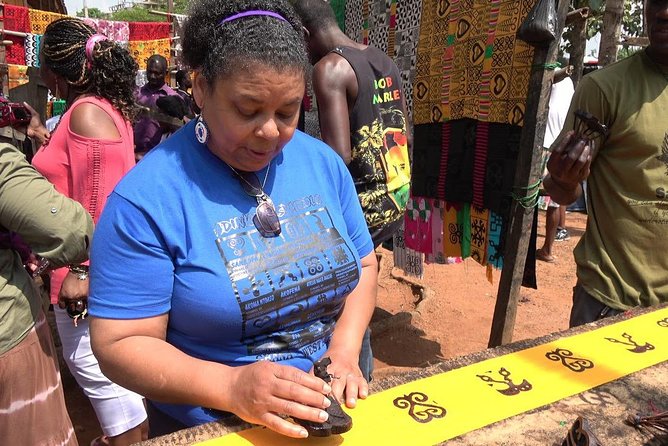
- Stamp your own Adinkra cloth: At Ntonso, you can choose a color, select symbols, and try the stamping process yourself.
- Visit the home of Adinkra: The village is presented as the local center of Adinkra production and symbolism.
- See kente where it began in Kumasi: Bonwire gives you a close look at traditional weaving and the meaning attached to the cloth.
- Learn from a private guide: The tour is for your group only, with guides identified in the tour material as Yaw or Bilson.
- Enjoy a six-hour outing: Pickup is offered from Lancaster Kumasi City, with a 9:30 am start and a return to the same meeting point.
- Have the basic costs covered: Lunch, drinks, bottled water, transport, entrance fees, and guide service are included.
Why Ntonso Adinkra village is the heart of the tour
The most distinctive stop is Ntonso, the Adinkra stamping village outside Kumasi. Adinkra is not simply decoration. The symbols communicate ideas, memories, moral lessons, and feelings, so the designs give you a visual way into Ghanaian custom.
The tour explains the connection between certain Adinkra marks and mourning. Some symbols were used to express sorrow and to say farewell to someone who had died. That gives the cloth a purpose beyond fashion. You are looking at a system of messages, not just a collection of attractive patterns.
I find this part especially useful because it gives context before you handle the materials. A design that looks like a simple geometric mark can carry a message about grief, wisdom, strength, unity, or another part of life. The exact symbols available during your visit are not specified, so your guide will be the best person to explain the meaning of the particular stamps in front of you.
More kumasi cultural tours in Kumasi:
- Tour Kumasi City Like a Local
★ 4.5 · 34 reviews - Traditional naming ceremony For African Diasporas in Kumasi
★ 5.0 · 10 reviews - Kumasi City Tour
★ 5.0 · 8 reviews
Making Adinkra cloth with your own hands
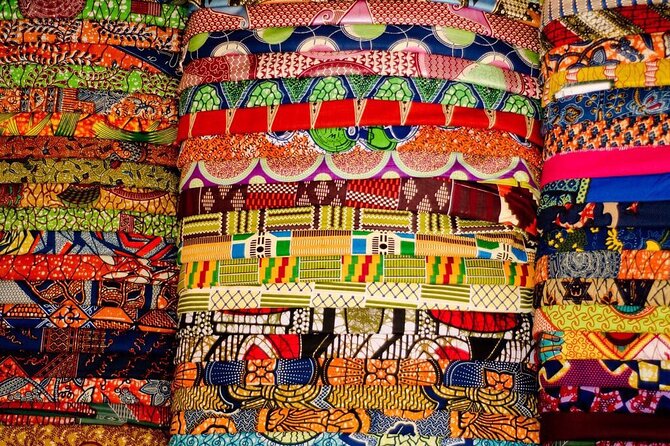
The hands-on session is the feature that changes the pace of the day. Instead of watching a craft worker from a distance, you get to try the process yourself. You choose a preferred fabric color, select symbols, and stamp the cloth in your own pattern.
The dye is made locally from scratch. The process includes pounding the bark of the buddy tree to create the dye, then applying the carved symbols to textiles. This is a useful detail to understand before you arrive: the design is not produced by a modern printer or a quick souvenir machine. It comes from plant material, carved stamps, fabric, and repeated handwork.
You should expect a demonstration and an opportunity to take part, rather than a full craft apprenticeship. The tour description does not give the length of the workshop or say how large your finished cloth will be. Still, the practical attempt is valuable because it helps you understand the pressure, spacing, and repetition involved in the work.
Give yourself permission to make an imperfect pattern. The point is not to produce a professional textile. It is to feel how the process works and leave with a personal connection to the symbols and materials.
Bonwire and the story of kente weaving
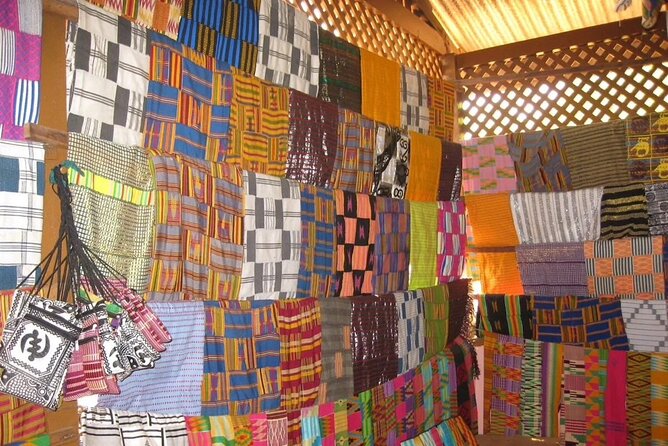
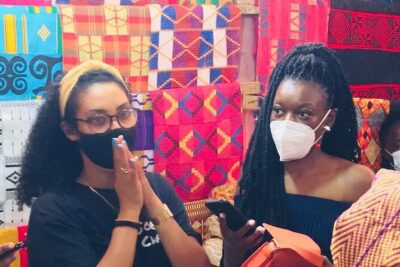
The tour also visits Bonwire, identified as the place where kente weaving began in Kumasi. Kente is one of Ghana’s best-known textiles, and seeing the weaving process in its local setting gives the cloth more meaning than viewing finished fabric in a shop.
You learn about the history of the kente fabric and the well-known spider web story connected with its origin. The visit includes a chance to watch the weaving and, according to the tour details, try weaving like a local. That practical element pairs well with the Ntonso stamping session: one stop focuses on woven strips, while the other focuses on printed symbols.
Bonwire is also a useful place to buy kente. Purchases are not included, so bring a payment method that works for you and think about what you want before shopping. A small textile may be easy to pack, while larger pieces can be harder to carry home. The tour does not state the prices or exact range of products, so treat buying as optional rather than part of the value calculation.
The order of the stops can vary. The description places the focus on Ntonso and Bonwire, with the tour returning to the Kumasi meeting point after roughly six hours. Your guide can explain the day’s sequence when you meet.
A guide makes the symbols easier to understand
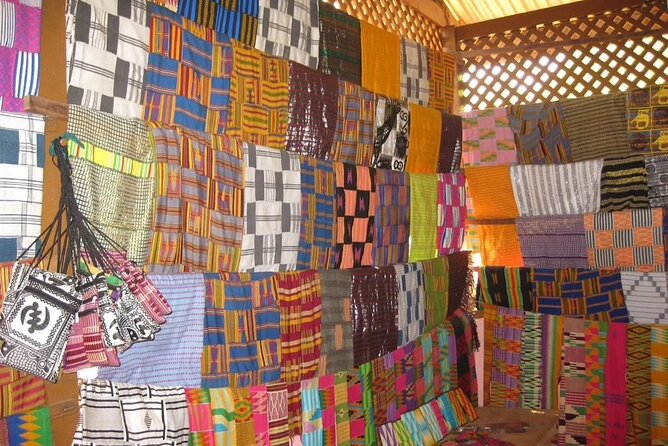
This is a tour where the guide matters. Adinkra symbols and kente patterns can be attractive even when you know nothing about them, but the experience becomes much better when someone explains the messages behind what you see.
The available tour information names Yaw and Bilson in connection with the experience. Yaw is described in the supplied feedback as a guide who explained the demonstrations and helped with the practical activity. Bilson is also described as caring during the kente and Adinkra portion of the outing. Because the booking information does not guarantee which person will lead your particular departure, you should confirm the guide’s name when arranging the tour.
A private format is another advantage. Only your group participates, so you are not tied to the questions or pace of a large coach group. If you want to spend more time understanding a symbol, ask about the dye, or take another turn at stamping, a private guide should make that easier.
The tradeoff is that a private cultural tour can feel more structured than simply wandering through Kumasi on your own. That is not a problem if your priority is learning and organized transport. It matters if you prefer an unplanned day with long stretches for independent shopping.
A few more Kumasi trips to weigh up
- Experience the Beauty, History and the Culture Of Accra in a Day
★ 5.0 · 323 reviews - Ghana Heritage Tours – Beyond The Return
★ 5.0 · 36 reviews - 10 Days Ghana Cultural and Heritage Trip
★ 5.0 · 31 reviews - Cape Coast Historical Day Tour
★ 5.0 · 24 reviews
What the six-hour schedule means for your day
The meeting point is Lancaster Kumasi City on Rain Tree Street, Lesley Opoku-Ware Drive. The stated start time is 9:30 am, and the activity ends back at the same meeting point after about six hours.
Pickup is offered, but the supplied details specifically identify the Lancaster Kumasi City location as the start point. Confirm the pickup arrangement at booking so you know whether you should meet there or arrange collection elsewhere. Confirmation is provided at the time of booking.
Six hours is a sensible length for the planned activities. You have time for transport, explanations, the Ntonso workshop, the Bonwire weaving visit, shopping if you choose, and lunch without turning the day into an exhausting full-day excursion. The actual amount of time at each stop is not stated, so do not assume you will have a long, open-ended shopping period.
The air-conditioned vehicle is a welcome inclusion in Kumasi’s warm conditions. It also matters because the tour links more than one cultural site. You can carry your purchases, water, and personal items in the vehicle rather than managing everything while walking.
Lunch, drinks, and what is included

The $140 price includes lunch, bottled water, drinks, entrance fees, guide service, and an air-conditioned vehicle. That is a good list of inclusions for a private six-hour outing, especially if you want a simple day with few extra payments along the way.
Lunch removes one common travel decision. You do not need to stop the tour to search for a meal, and the cost is already part of the booking. The specific menu is not provided, so contact the operator if you have dietary needs or want to know what will be served.
Shopping is the clear extra cost. Any kente, Adinkra fabric, or other personal item you buy is your responsibility. I would treat the shopping as a chance to find a meaningful keepsake, not as something you need to purchase to justify the tour.
At $140 per person, the value depends heavily on group size and your interest in crafts. For one person, the fee is a significant outlay. For a private group, the cost may feel more reasonable because it covers transport, a dedicated guide, food, drinks, entrance fees, and two craft-focused visits. The tour is less attractive if you only want quick photographs or already have transport and a guide arranged.
What I like most about the experience
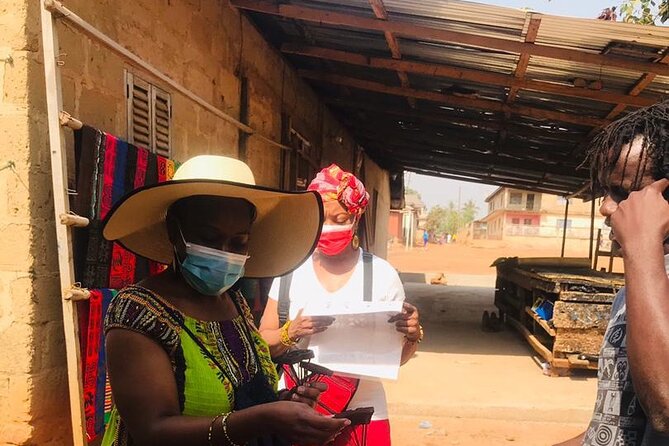
The strongest part is the combination of explanation and participation. You do not just hear that Adinkra symbols carry meaning. You learn about their use, see the materials, and try stamping the designs yourself.
I also like the contrast between Ntonso and Bonwire. Ntonso focuses on carved symbols and locally made dye, while Bonwire centers on woven kente and the story of how the cloth developed. Together, they show two different ways Ghanaian artisans turn material into language, memory, and identity.
The tour also offers a useful introduction for a first visit to Kumasi. Museums and markets are mentioned as part of the city’s cultural focus, but the detailed activity description centers on Ntonso and Bonwire. If you want a broad city sightseeing tour, ask for clarification about any additional museum or market stops before booking.
Points to consider before booking
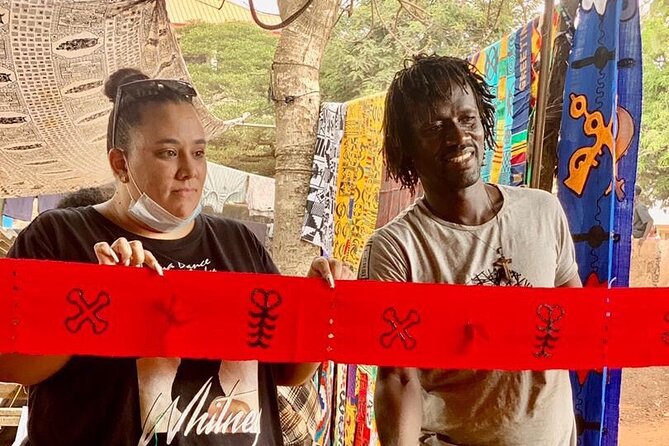
The experience is cultural and craft-focused, not a general Kumasi highlights tour. You should book it if Adinkra, kente, local history, and making something by hand appeal to you.
The review score supplied for the experience is 4.7 from three reviews. That is encouraging, but the sample is small. I would use the rating as a positive sign, not as proof that every departure will be identical.
The tour requires good weather. If conditions make the outing impossible, you will be offered another date or a full refund. For a full refund under the normal policy, cancel at least 24 hours before the 9:30 am start. Cancellations or changes made within 24 hours are not refunded or accepted.
Most people can participate, according to the booking information. It does not provide detailed accessibility information, so ask the operator about mobility needs before paying if that is important for you.
Who will enjoy this Kumasi tour most
I would recommend it to you if you want:
- A private cultural outing rather than a large group excursion
- A guide to explain the meaning of Adinkra symbols
- A chance to stamp fabric and try kente weaving
- A planned day with lunch, drinks, transport, and entrance fees included
- A useful introduction to Ashanti craft traditions
- Time to look for kente or Adinkra items to take home
It may not suit you if you want a cheap, flexible day, a nightlife experience, or a tour devoted mainly to museums and city landmarks. The six-hour schedule is organized around craft villages, with shopping available but not included.
Should you book the Kumasi Culture and Heritage Tour?
Book this tour if you want to understand Ghanaian textiles by seeing how they are made and by trying the work yourself. Ntonso is the clear highlight: the locally made dye, carved symbols, and farewell traditions give the activity real substance. Bonwire adds a second craft tradition and gives you the chance to see where kente weaving began in Kumasi.
At $140 per person, it is not a bargain-priced orientation tour. Its value comes from the private vehicle, dedicated guide, lunch, drinks, entrance fees, and hands-on access. I would book it for a small group that wants an easy, focused day and is happy to pay for convenience and cultural instruction. If you are mainly looking for independent shopping or a broad tour of Kumasi, compare other options first.
FAQ
How much does the Kumasi Culture and Heritage Tour cost?
The price is $140 per person.
How long does the tour last?
The experience lasts approximately six hours.
What time does the tour start?
The stated start time is 9:30 am.
Where does the tour begin?
The tour begins at Lancaster Kumasi City, Rain Tree Street, Lesley Opoku-Ware Drive, Kumasi, Ghana.
Where does the tour end?
The activity ends back at the meeting point.
Is transportation included?
Yes. An air-conditioned vehicle is included, and pickup is offered.
Is lunch included?
Yes. Lunch, bottled water, and drinks are included.
Can I cancel for a full refund?
Yes, if you cancel at least 24 hours before the experience start time. Cancellations within 24 hours are not refunded. If poor weather causes the tour to be canceled, you will be offered another date or a full refund.
Just added around Kumasi
- Traditional Naming Ceremony For African Americans In Kumasi★ 5.0 · 5 reviews
- Full Day Tour with Traditional Naming Ceremony in Kumasi★ 5.0 · 4 reviews
- Discover kumasi Tours★ 5.0 · 3 reviews
- Kumasi City Tour★ 4.5 · 3 reviews
- Kumasi: City Tour★ 5.0 · 3 reviews
- One day tour at Kumasi★ 5.0 · 6 reviews
- Lake Bosomtwe Boat Cruisely and Kumasi City Tours★ 4.5 · 6 reviews
- Kumasi City Tour★ 4.5 · 7 reviews
Kumasi Cultural Tours, compared.
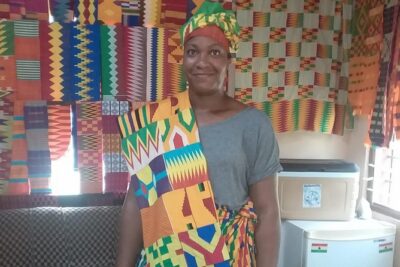
Kumasi Heritage Tours And Naming Ceremony In A Day
Read our review →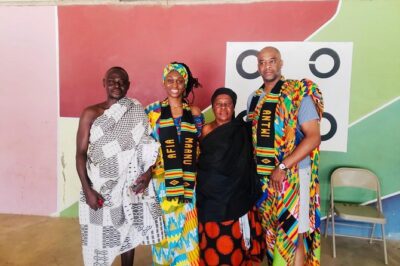
Traditional naming ceremony For African Diasporas in Kumasi
Read our review →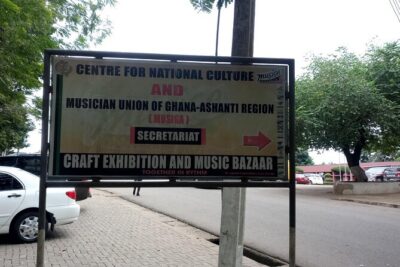
Full-Day Tour to Ashanti Region, Kumasi and Ghanaian History
Read our review →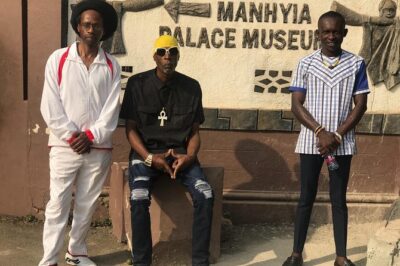
Lake Bosomtwe Boat Cruisely and Kumasi City Tours
Read our review →
Browse the lists this tour appears in