
Reviewed · KUMASI CULTURAL TOURS
Kumasi City Tour
Kumasi’s story comes into focus at four very different places: a sword planted in the ground, two former royal homes, and a market with about 11,000 stalls. This private four-hour tour gives you a clear introduction to Asante culture without asking you to plan each stop yourself.
I like the mix of royal history and everyday Kumasi, and I like that the tour can use local transportation rather than keeping you sealed away from the city. The main consideration is pace. Four one-hour stops leave little spare time for long conversations, shopping, or delays on the road.
Key points to know before booking
- The Okomfo Anokye Sword Site centers on the sword said to have been planted to unite the Asantes and begin the Asante kingdom.
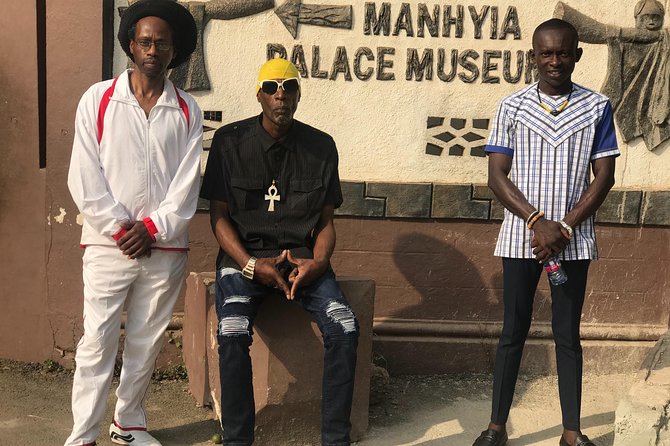
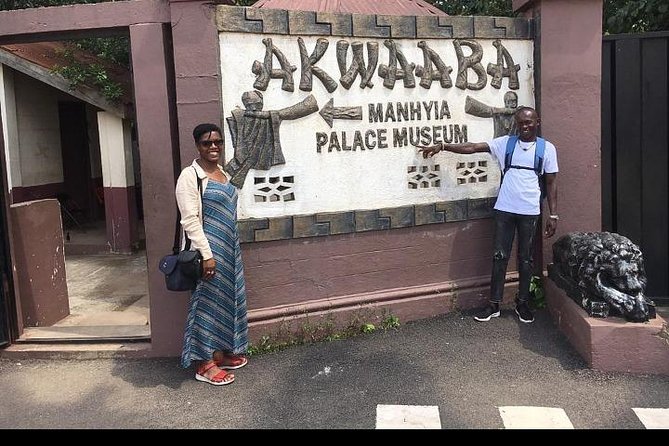
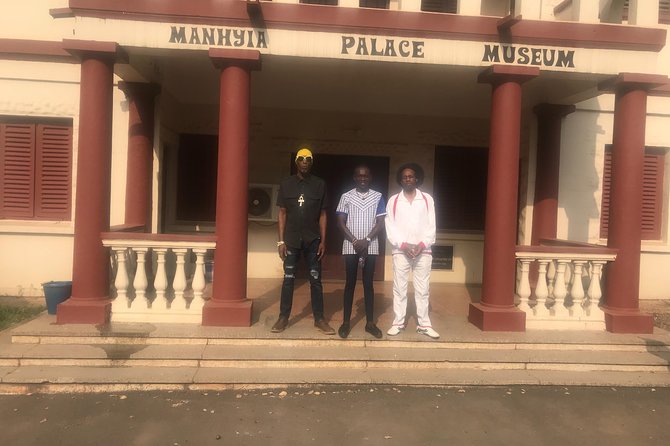
- Manhyia Palace Museum occupies a former royal building used by three Asante kings before becoming a museum in 1996.
- Prempeh II Museum presents palace-style architecture, old royal household items, a bath and kitchen setup, and a mysterious unopened bag.
- Kejetia Market gives you a direct look at daily commerce, with about 11,000 stalls and roughly 44,000 daily visitors.
- The private format lets only your group take part, with transportation and entrance fees included.
- Guide contact comes early, and the provider is Here Is Kumasi Tours. A message from Maclean soon after booking can help reassure you that arrangements are moving along.
Four hours through the Asante capital
This is a compact introduction to Kumasi, not a slow academic tour. You spend about an hour at each of four stops, moving from spiritual tradition to royal collections and then into the daily trade of the city.
That order works well. The first three sites explain how Asante power and identity were shaped. Kejetia then shows how the city functions today. I like this kind of route because it keeps the past connected to ordinary life.
The tour costs $65 per person. For a private outing, that is a reasonable price if you value having transportation arranged and entrance fees covered. The value is less clear if you prefer to wander independently or spend most of your time shopping. Personal purchases are not included, and hotel accommodation is not part of the price.
The tour starts in Kumasi and returns to the meeting point. Pickup is offered, but you should confirm the exact pickup details when booking. The activity is usually reserved about five days ahead, so it is sensible to arrange it before your Kumasi plans become crowded.
More kumasi cultural tours in Kumasi:
- Tour Kumasi City Like a Local
★ 4.5 · 34 reviews - Traditional naming ceremony For African Diasporas in Kumasi
★ 5.0 · 10 reviews - Kumasi City Tour
★ 5.0 · 8 reviews
The sword that represents Asante unity
The Okomfo Anokye Sword Site is the first stop and one of the most symbolic. Okomfo Anokye, the legendary priest of the Asantes, is said to have planted a sword here to ensure unity among the Asantes and begin the Asante kingdom.
The central story is simple and memorable: the sword has remained in place, and attempts to remove it have failed. The tale even includes former heavyweight boxing champion Muhammad Ali, who reportedly tried to uproot it. You do not need a long lecture to understand why the site matters. The sword is treated as a physical sign of political unity and spiritual authority.
Plan on about an hour here. That gives you time to hear the story, look at the site, and ask questions about Okomfo Anokye and the formation of the Asante kingdom. Since the stop is more symbolic than expansive, the quality of the explanation matters. This is a good place to ask your guide to clarify which parts belong to oral tradition, royal memory, or documented history.
The site also sets the tone for the rest of the outing. You are not simply checking off buildings. You are following the way Asante identity is expressed through objects, royal spaces, and ceremonies.
Manhyia Palace Museum and the story of royal power
Next comes Manhyia Palace Museum, one of the strongest stops for understanding the Asante monarchy. The building was constructed by the British as compensation when an Asante king returned from exile in the Seychelles. The Asantes rejected the offer as compensation and instead paid the British before using the building as a palace.
That detail gives the building a political edge. It is not just an attractive old residence. Its origin reflects the uneasy relationship between British authority and the Asante kingdom. Ask your guide to explain the circumstances around the exile and the palace’s later use, since the building’s background is as important as the objects inside.
Three Asante kings used the building as their palace. In 1996, it became a museum under Otumfuo Opoku Ware II. The collections bring together objects accumulated over centuries and items connected to Asante royalty.
You have about an hour here. That is enough for a focused visit, though not for a detailed study of every object. I would pay attention to how the displays present kingship, ceremony, and the daily life of the royal household. The museum is especially useful after the sword site because it moves the story from a sacred founding symbol to the institutions of a working kingdom.
Prempeh II Museum’s palace-style rooms
The Prempeh II Museum offers a different feel. Its design resembles a traditional Asante palace, so the building itself helps explain the setting before you even examine the collection.
The museum houses Asante objects dating back to the 16th century, along with items used by former kings. Two displays are particularly unusual: an ancient royal bathing arrangement and a kitchen setup. These practical objects help you picture royal life beyond public ceremonies and formal portraits.
The museum also contains a mysterious bag made by the legendary priest Okomfo Anokye. It is said not to have been opened. That kind of object can feel puzzling if you expect a conventional museum display, but it shows how spiritual belief and royal memory remain tied together in Asante culture.
Again, the planned time is about one hour. I would use this stop to ask about the difference between a royal museum and an archaeological collection. The objects are not presented only as old things. They carry links to kings, ritual, household practice, and stories that have been passed down.
One practical point: the supplied details do not promise a special demonstration or ceremony inside the museum. You should expect a visit focused on the building and its displays, with interpretation from the guide.
A few more Kumasi trips to weigh up
- Kumasi City Tour
★ 4.5 · 7 reviews - Lake Bosomtwe Boat Cruisely and Kumasi City Tours
★ 4.5 · 6 reviews - Kumasi: City Tour
★ 5.0 · 3 reviews - Accra Detailed City Tour
★ 4.5 · 118 reviews
Kejetia Market, where Kumasi gets loud and practical
The final stop changes the mood completely. Kejetia Market is described as the largest open-air market in West Africa, with about 11,000 stalls and roughly 44,000 people visiting each day. Most traders are women.
You get one hour here, which is enough for a first look but not enough to cover a market of this size. The point is not to see every corner. It is to feel the scale of Kumasi’s commercial life and watch the movement of people and goods around you.
This is also the stop where local transportation can add real value. One previous participant specifically appreciated using local transport, saying it made the tour more impressive. That choice can give you a closer sense of the city than remaining in a private vehicle from start to finish. It can also make the outing less predictable and less polished, which is precisely why some people like it.
Keep your shopping separate from the tour budget. Personal purchases are not included, and the market is likely to tempt you with goods, food, clothing, and household items. The tour information does not specify what kinds of products you will see or whether bargaining assistance is provided, so ask your guide before buying anything costly.
The market may be the most rewarding stop for people who want present-day Kumasi rather than only museum displays. It is also the place where you should expect the most noise, movement, and sensory overload. Stay close to your group and follow your guide’s advice.
What the private format really adds
Only your group takes part, which gives the outing a more personal feel than a large coach tour. You can ask follow-up questions at the sword site, spend more time on an object that catches your attention, or request help understanding the market.
There is a limit, however. Private does not mean unlimited time. The schedule assigns roughly one hour to each stop, and the four-hour total must also allow for movement through Kumasi. If you want extended museum visits or a long market walk, this may feel hurried.
The transportation arrangement is another important feature. Private transportation is included, but one account praised the use of local transportation. That suggests the exact mix may depend on the day and the guide’s approach. If you have a strong preference, confirm it in advance rather than assuming the entire tour will use one method.
The provider is Here Is Kumasi Tours. A guide identified in the supplied information as Maclean sends a message soon after booking, which is useful for confirming the plan and easing uncertainty before the day begins.
An Asante funeral ceremony may be an occasional extra
One account describes an Asante funeral ceremony as a major learning experience. That is worth noting, but it is not listed as one of the four fixed stops.
You should therefore treat a funeral ceremony as a possible event connected to the day, not a guaranteed feature of the tour. If the guide tells you that one is taking place, ask about the appropriate behavior, photography, timing, and whether attendance is suitable for visitors. Funerals are important social and cultural occasions, so respectful conduct matters.
This detail also shows why a private tour can be useful in Kumasi. If an important public event is taking place, a guide may be able to explain what you are seeing in a way that a self-guided visit cannot. Still, the fixed program remains the sword site, two museums, and Kejetia Market.
Timing, transport, and a few practical cautions
The tour lasts approximately four hours and ends back at the meeting point. Pickup is offered, but the exact starting arrangement is not specified, so confirm where the guide will meet you in Kumasi.
All fees and taxes are included. That makes the $65 price easier to judge because you are not adding a separate admission bill at each museum. Personal shopping and hotel accommodation are excluded.
The tour requires good weather. If poor weather causes cancellation, you are offered another date or a full refund. You can cancel for a full refund up to 24 hours before the start time. Changes or cancellations inside that 24-hour window are not accepted for a refund.
The experience is near public transportation, and the supplied information says most people can participate. No special accessibility details are provided, so anyone with mobility concerns should ask the provider for current information about walking surfaces, entrances, and market conditions.
Because the tour is commonly booked about five days ahead, I would not leave it until the last morning if the museums are central to your Kumasi plans. Confirmation arrives at booking, and early contact from the guide is another chance to verify pickup and timing.
Who will get the most from this Kumasi tour
I would recommend it to first-time visitors who want a firm introduction to Asante culture in half a day. The route is especially useful if you have limited time and want both formal museums and a working market.
It also suits you if you prefer a private outing where questions are welcome. The sword site, Manhyia Palace Museum, and Prempeh II Museum can be difficult to place in context on your own, while Kejetia is easier to appreciate when someone helps you understand its scale and purpose.
You may want something else if you dislike busy markets, prefer a slow museum visit, or want a full-day program with extra neighborhoods and meals. The $65 price is fair for private transportation and included fees, but the tour’s main value is its focused introduction, not extensive free time.
Should you book the Kumasi City Tour?
Book it if you want four major Kumasi sights arranged into one private half-day, with the Asante story explained in a logical order. The combination of the planted sword, former royal palaces, unusual household objects, and Kejetia Market gives you a useful view of both tradition and daily life.
I would book with two questions ready: exactly where pickup will occur, and how transportation will work on the day. If you want to shop, ask how much market time is realistic. If you hope to attend an Asante funeral ceremony, confirm that it is actually taking place and understand the rules before making plans around it.
This is a good-value choice for a focused cultural introduction. It is less suitable for anyone seeking a relaxed, open-ended day. The best reason to choose it is the balance between royal heritage and ordinary Kumasi life.
FAQ
How long does the Kumasi City Tour last?
The tour lasts approximately four hours.
What sights are included?
The tour includes the Okomfo Anokye Sword Site, Manhyia Palace Museum, Prempeh II Museum, and Kejetia Market.
Is this a private tour?
Yes. Only your group will participate.
Is transportation included?
Private transportation is included. One account also describes using local transportation as part of the outing.
Are entrance fees included?
Yes. All fees and taxes are included.
How much does the tour cost?
The listed price is $65 per person.
Does the tour include shopping?
No. Personal shopping is not included.
Does the tour include hotel accommodation?
No. Hotel accommodation is not included.
Where does the tour start and finish?
It starts in Kumasi, Ghana, and ends back at the meeting point. Pickup is offered, but the exact pickup details should be confirmed.
Can I cancel for a full refund?
Yes. You can cancel at least 24 hours before the start time for a full refund. Cancellations or changes made less than 24 hours before the start time are not accepted for a refund.
Just added around Kumasi
- Kumasi Culture and Heritage Tours★ 4.5 · 3 reviews
- Traditional Naming Ceremony For African Americans In Kumasi★ 5.0 · 5 reviews
- Full Day Tour with Traditional Naming Ceremony in Kumasi★ 5.0 · 4 reviews
- Discover kumasi Tours★ 5.0 · 3 reviews
- Kumasi: City Tour★ 5.0 · 3 reviews
- One day tour at Kumasi★ 5.0 · 6 reviews
- Lake Bosomtwe Boat Cruisely and Kumasi City Tours★ 4.5 · 6 reviews
- Kumasi City Tour★ 4.5 · 7 reviews
Kumasi Cultural Tours, compared.

Kumasi Heritage Tours And Naming Ceremony In A Day
Read our review →
Traditional naming ceremony For African Diasporas in Kumasi
Read our review →
Full-Day Tour to Ashanti Region, Kumasi and Ghanaian History
Read our review →

Lake Bosomtwe Boat Cruisely and Kumasi City Tours
Read our review →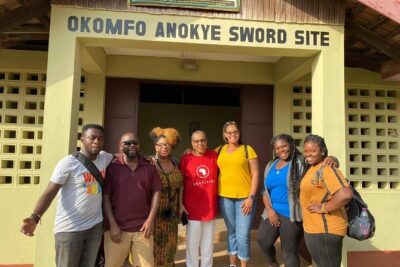
Browse the lists this tour appears in