
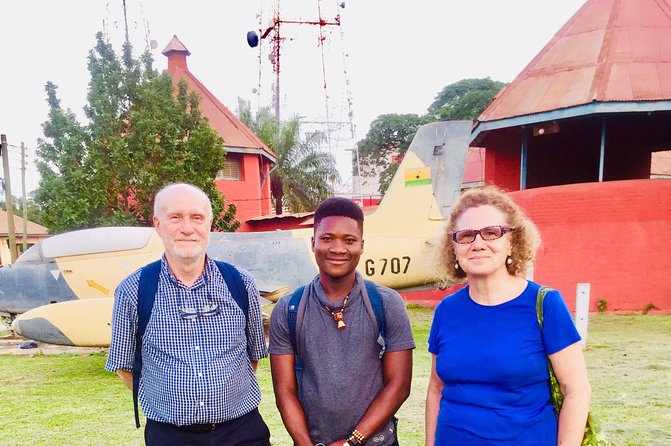
Reviewed · KUMASI CULTURAL TOURS
Tour Kumasi City Like a Local
Kumasi’s story comes alive through its Ashanti royal sites, sacred symbols, and crowded markets. I like that this tour links the Manhyia Palace Museum and Okomfo Anokye Sword Site with everyday Kumasi at Kejetia Market. I also like the included local lunch, which gives you more than a quick look at the city.
The main drawback is the transportation. Bilson does not always use a personal vehicle, so you may move by taxi, tro-tro, tuk-tuk, and on foot. That can feel less tidy than a standard coach tour, and one outing felt more like a walking city trek than expected.
Key points to know before booking
- Ashanti royal history: Manhyia Palace Museum and Prempeh II Museum explain the royal traditions, objects, and leaders of the Ashanti kingdom.
- A sacred national symbol: Okomfo Anokye Sword Site marks the place where the sword is believed to have been driven into the ground nearly 300 years ago.
- Kejetia Market up close: You walk through one of West Africa’s largest markets, with about 11,000 stalls and thousands of people working there.
- A private, flexible outing: Only your group takes part, giving Bilson room to adjust the pace and explain local customs.
- Local food included: Lunch is part of the price, though the setting may be noisy, making conversation difficult.
- A guide who personalizes the day: Bilson is praised for his kindness, photos, local transport help, and willingness to arrange extra visits such as Kente villages.
Why this Kumasi tour works as a first look
Kumasi is Ghana’s second-largest city and the historic center of Ashanti power. It is also known as the Garden City, a name linked to the many flower species associated with the area. You will not see every corner of Kumasi in five or six hours, but this route gives you a clear opening chapter: royal history in the morning, sacred tradition next, and daily commerce at the market.
I like the order of the stops. The museums give you the background needed to understand what you see later. At Kejetia, the city becomes less polished and far more immediate. You are not simply looking at old objects behind glass. You are watching goods move, people work, and local life carry on around you.
The tour is private, so your group does not have to match the rhythm of a large bus. That matters at a market, where you may want extra time to look around or a shorter visit if the noise and crowds become tiring. Bilson has also been praised for making people feel comfortable and for adjusting the outing to suit the group.
More kumasi cultural tours in Kumasi:
- Traditional naming ceremony For African Diasporas in Kumasi
★ 5.0 · 10 reviews - Kumasi City Tour
★ 5.0 · 8 reviews - Kumasi City Tour
★ 4.5 · 7 reviews
Manhyia Palace Museum and the Ashanti royal story
Your first stop is Manhyia Palace Museum, with about an hour set aside for the visit. You begin by sitting down to watch a video about Ashanti history, then continue through rooms holding original artifacts.
This is the place to get your basic bearings. You learn about the Ashanti Empire, the role of the king, and figures such as Yaa Asantewaa, the celebrated war queen. The museum also helps explain the significance of the royal stool, an important symbol of authority and identity in Ashanti tradition.
The setting adds weight to the visit. The museum is near the field where Akwasidae gatherings are held every six weeks, when Ashanti chiefs meet in a traditional ceremony. You may not see the gathering itself during your tour, but knowing that the nearby field still serves this purpose makes the location more meaningful.
I would listen closely during the guided portion rather than rushing from room to room. The value here comes from context. Without an explanation, royal clothing, symbols, and household objects can look like a collection of interesting antiques. With a guide, they connect to living customs and a still-recognized institution.
Okomfo Anokye Sword Site and the Golden Stool
The next hour focuses on one of Kumasi’s most important origin stories. At the Okomfo Anokye Sword Site, you learn about the founding of the Ashanti nation and the role of King Osei Tutu I.
According to the tradition presented here, the Golden Stool descended into the king’s lap at this site. The chief priest Okomfo Anokye then drove a sword into the ground. The sword is believed to have remained there for nearly 300 years, despite attempts to remove it.
This is not just a quick photo stop. The site gives you a way to understand how spiritual belief, political authority, and national identity are tied together in Ashanti history. The story is dramatic, and the physical sword makes it easier to picture than a lecture alone.
The visit also includes the well-known tale of boxer Muhammad Ali trying to remove the sword. That detail adds a bit of modern color to an old story, though the main point is the importance of Okomfo Anokye and the founding of Ashanti power.
Allow roughly an hour, including explanation and sightseeing. I would avoid treating this as a place to hurry through. The story depends on listening, and your guide’s explanation is a major part of what you are paying for.
Prempeh II Museum and royal objects

Prempeh II Museum provides another hour of Ashanti culture and royal history. It focuses on items linked to King Prempeh II and is built to resemble an Ashanti chief’s house.
The displays include war attire, ceremonial clothing, jewelry, protective amulets, furniture, royal insignia, and personal equipment used for bathing and dining. There are also gold-weighing objects, which add a practical side to the royal collection.
I like this stop because it brings royal life down to specific objects. Clothing shows rank and ceremony. Amulets point to protection and belief. Dining and bathing equipment remind you that even powerful figures lived through ordinary routines, though inside a highly formal world.
The museum works best after Manhyia Palace. The first museum introduces the larger royal story, while Prempeh II gives you more detail through personal and ceremonial items. If you enjoy material culture, this may be the quietest and most rewarding stop of the day.
The one-hour timing is useful, but do not expect a large museum complex with endless galleries. The appeal is concentrated. You are seeing a focused group of Ashanti objects in a setting designed to reflect traditional architecture.
A few more Kumasi trips to weigh up
- Lake Bosomtwe Boat Cruisely and Kumasi City Tours
★ 4.5 · 6 reviews - Kumasi City Tour
★ 4.5 · 3 reviews - Kumasi: City Tour
★ 5.0 · 3 reviews - Accra Detailed City Tour
★ 4.5 · 118 reviews
Kejetia Market, Kumasi’s great daily spectacle
Kejetia Market is the tour’s sharpest change of pace. From a distance, its rusting tin roofs can look like a huge circular settlement dropped into the middle of Kumasi. Inside, you find a market often described as the largest in West Africa, with about 11,000 stalls and at least four times as many people working there.
You have about an hour to walk around. That is enough for an introduction, but not enough to see everything. The market can feel disorienting, so stay close to Bilson and agree on a meeting point if your group becomes separated.
This is where the phrase like a local becomes practical. You may move through the market on foot and use local transportation during the wider route. The point is not to observe Kumasi from behind a coach window. You are placed in the middle of its working city center.
I would wear comfortable shoes and keep personal items secure. Those are sensible habits in any huge market, especially one with so many people and narrow, busy passages. The provided information does not promise a shopping list or a particular set of stalls, so think of this as a guided introduction rather than a specialist shopping trip.
The market visit has one important limitation: an hour passes quickly. If you want detailed explanations of how every section operates, you may find the visit too short. One account also found that more explanation about the inner workings of the market would have improved the outing. Ask questions as you walk, and be clear if market detail is your main reason for booking.
Local lunch and the taste of Kumasi

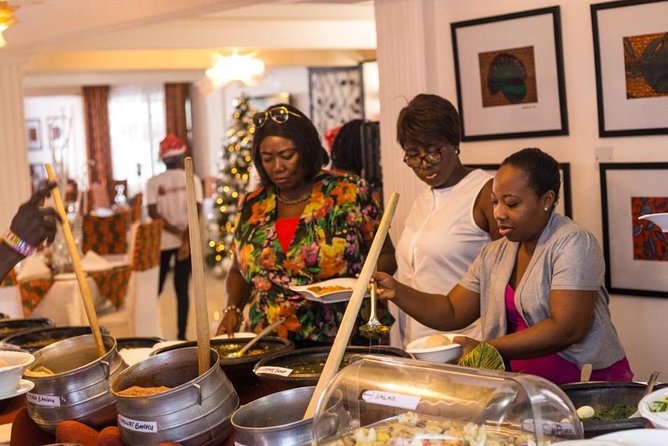
Lunch is included, and that is a real advantage at this price. You get to try local food rather than arranging another meal during a fairly full day.
The available details do not name the dishes or restaurant, so I would not book this expecting a particular menu. Instead, treat lunch as a chance to eat in a local setting and ask Bilson to explain what you are being served.
The atmosphere may be loud. One meal took place with music loud enough to make conversation difficult. If talking with your guide is important to you, ask for a quieter arrangement or use the time before and after lunch to ask questions.
The food is part of the tour’s wider value. You are not only ticking off museums. You are getting a taste of how the city feels, moves, and eats. Just keep your expectations flexible because the setting is local rather than designed for a quiet restaurant experience.
Getting around: useful, local, and sometimes untidy
Transportation is included, but that does not always mean a private vehicle from start to finish. Bilson may arrange taxis, tro-tros, tuk-tuks, or other local transport, and part of the route may be on foot.
I see two sides to this. Local transport can make the day feel more connected to Kumasi. You get a direct look at how people move around the city, rather than traveling in a sealed vehicle. Several parts of the day may feel more memorable because of that.
The tradeoff is comfort and organization. One person found the vehicle arrangements disappointing, and another felt the route involved more walking than expected. If you have mobility concerns, ask about the transport plan before booking. The tour states that most people can participate, but it does not promise a fully vehicle-based route.
Plan on five to six hours, not a rigid five-hour schedule. Traffic, market movement, and changes between local vehicles can affect the pace. Pickup is offered, and the tour is near public transportation, which makes it practical for a Kumasi stay.
Bilson’s guiding style and what to expect
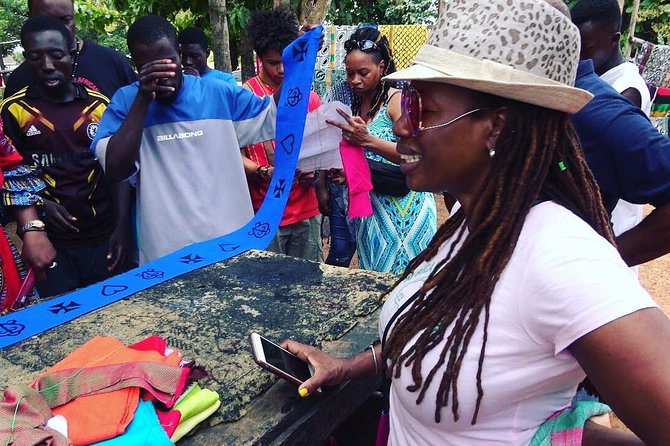
Bilson receives the strongest praise for his warm manner, patience, and ability to make people feel at ease. He is also noted for taking photos, walking with an older parent, and helping his group through local areas and markets.
That personal attention is important here. Kumasi’s historic sites are easier to understand when someone explains the people and beliefs behind them. At the market, a calm guide can help you read the setting without turning every moment into a staged performance.
The guiding depth can vary. One account found Bilson friendly but wanted more explanation about local experiences and the market’s inner workings. Another tour was led by a kind woman who did her best, but the organization of the transport needed improvement. I would ask questions directly and say what interests you most: royal history, food, markets, transport, or modern daily life.
The private format helps. You are not sharing the day with strangers, and the guide can give more attention to your group. Bilson has also helped arrange visits to Kente villages beyond Kumasi for people who wanted to add more textile culture to their time in the area. That extra outing is not part of the stated five-stop route, so confirm any extension and its cost before agreeing.
Is the $80 price good value?
At $80 per person, the tour includes transportation, entrance fees, a guide, and lunch. That makes the price easier to justify than a tour that only provides sightseeing and commentary.
You are also paying for coordination. Kumasi’s museums and market are not simply a neat row of attractions, and local transport can be confusing if you do not know the city. A private guide saves you the work of arranging each stop and gives you a person to help explain cultural details.
The value is strongest if you want a broad first visit. In one half-day, you cover two museums, a historic sacred site, a major market, and a local meal. The value is weaker if you want a slow museum study, a quiet lunch, or a polished private car throughout.
The average booking lead time is about 20 days, so planning ahead is sensible. Free cancellation is available if you cancel at least 24 hours before the start time. A cancellation inside 24 hours is not refundable, and poor weather can lead to a new date or full refund.
Who should book this Kumasi experience?
I would choose this tour if you have limited time in Kumasi and want the city’s main cultural points arranged in one private outing. It suits first-time visitors, couples, families, and anyone who wants a guide for the royal museums and Kejetia Market.
It is also a good match for people who prefer contact with ordinary city life over a polished sightseeing bus. Local transport, walking, and the market are part of the appeal.
I would hesitate if you need predictable vehicle access, dislike crowded markets, or want long, detailed museum visits. You should also ask ahead about the transport plan if walking is difficult, since the day may include several forms of local travel.
Should you book Tour Kumasi City Like a Local?
Book it if you want a friendly introduction to Ashanti history and modern Kumasi in a single half-day. The strongest parts are the private format, the royal museums, the memorable sword story, the Kejetia Market visit, and Bilson’s personal attention.
Go in with realistic expectations. This is not a luxury vehicle tour, and the organization between stops may feel loose. But if you are willing to trade some polish for local transport, a market walk, and a guide who can help you meet the city on its own terms, the $80 price is fair.
FAQ
How long does the tour last?
The tour lasts approximately five to six hours.
What sights are included?
The route includes Manhyia Palace Museum, Okomfo Anokye Sword Site, Prempeh II Museum, and Kejetia Market.
Is lunch included?
Yes. Lunch featuring local food is included in the tour price.
Are entrance fees included?
Yes. Entrance fees for the listed visits are included.
Is transportation provided?
Yes. Transportation is included, and pickup is offered. The tour may use taxis, tro-tros, tuk-tuks, and walking rather than one personal vehicle for the entire day.
Is this a private tour?
Yes. Only your group participates in the activity.
Can most people take part?
The tour information states that most people can participate. Since walking and different forms of local transport may be involved, ask about the route if you have mobility concerns.
How far in advance is the tour usually booked?
It is booked an average of 20 days in advance.
What is the cancellation policy?
You can cancel at least 24 hours before the start time for a full refund. Cancellations or changes made less than 24 hours before the start time are not accepted for a refund. If poor weather causes the tour to be canceled, you will be offered another date or a full refund.
Just added around Kumasi
- Kumasi Culture and Heritage Tours★ 4.5 · 3 reviews
- Traditional Naming Ceremony For African Americans In Kumasi★ 5.0 · 5 reviews
- Full Day Tour with Traditional Naming Ceremony in Kumasi★ 5.0 · 4 reviews
- Discover kumasi Tours★ 5.0 · 3 reviews
- Kumasi City Tour★ 4.5 · 3 reviews
- Kumasi: City Tour★ 5.0 · 3 reviews
- One day tour at Kumasi★ 5.0 · 6 reviews
- Lake Bosomtwe Boat Cruisely and Kumasi City Tours★ 4.5 · 6 reviews
Kumasi Cultural Tours, compared.

Kumasi Heritage Tours And Naming Ceremony In A Day
Read our review →
Traditional naming ceremony For African Diasporas in Kumasi
Read our review →
Full-Day Tour to Ashanti Region, Kumasi and Ghanaian History
Read our review →

Lake Bosomtwe Boat Cruisely and Kumasi City Tours
Read our review →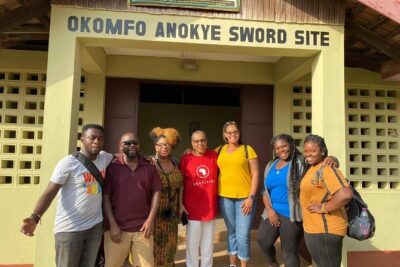
4 Days Trip in Accra, Cape Coast,Kumasi culture & heritage tours
Read our review →Browse the lists this tour appears in