
Reviewed · KUMASI CULTURAL TOURS
Kumasi: City Tour
Kumasi’s story unfolds in a busy market, a royal palace, a mysterious sword site, and a museum devoted to Ashanti life. This five-hour private tour gives you a clear route through the city, with time for Manhyia Palace, Kejetia Market, the Okomfo Anokye Sword Site, and the Prempeh Museum.
I like the way the tour links major sights instead of treating them as separate stops. I also like having a private English-speaking guide, since the meaning behind the sword and the Ashanti kingdom is hard to grasp from a quick look alone. The main drawback is that much of the route involves walking, so it is not a good fit for people with mobility limits or anyone who wants a slow, transport-heavy outing.
Key points to know before you book
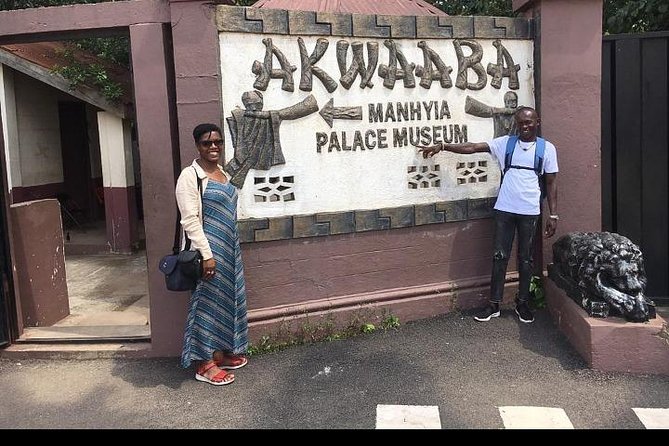
- Four major Kumasi landmarks: Visit Manhyia Palace, Kejetia Market, the Okomfo Anokye Sword Site, and the Prempeh Museum.
- A private five-hour format: Your guide can focus on your questions rather than following a large group.
- Market and city-center walking: The route connects the palace with Kejetia Market and the central business area on foot.
- Ashanti culture in several forms: See royal history, traditional beliefs, local arts, crafts, and everyday life.
- Entry tickets included: Admission to all listed sites and taxes are covered in the $70 price.
- English guidance: The tour is conducted in English, with pickup available from your destination at an extra planning point to check.
Why this Kumasi route works so well
Kumasi can feel like several cities at once. It is a commercial center, a royal capital, a place of religious tradition, and a home for artists and craftspeople. This tour makes sense because it moves through those parts in a natural order.
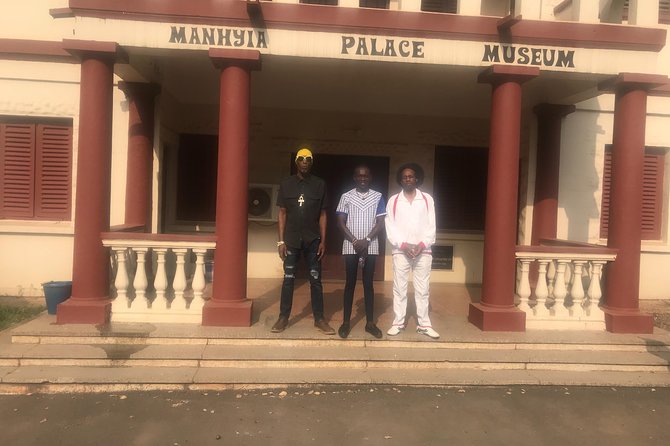
You begin at Manhyia Palace, the seat of the Ashanti kingdom. From there, you walk toward Kejetia Market and the central business area before continuing to the Okomfo Anokye Sword Site. The final part shifts toward arts, crafts, and museum displays at the Cultural Center and Prempeh Museum.
That order matters. You first get the royal setting, then the daily commercial life of Kumasi, then the sacred story of the sword, followed by objects and traditions connected to Ashanti culture. I would choose this route for a first introduction to the city because it gives you a broad picture in half a day without scattering you across distant stops.
The experience costs $70 per person. Since the group is private and admission tickets are included, the price is easier to justify if you value personal attention and a planned route. It is less compelling if you mainly want a quick market visit or prefer to explore independently. Food, drinks, and hotel pickup are not included, so allow for those costs and arrangements separately.
More kumasi cultural tours in Kumasi:
- Tour Kumasi City Like a Local
★ 4.5 · 34 reviews - Traditional naming ceremony For African Diasporas in Kumasi
★ 5.0 · 10 reviews - Kumasi City Tour
★ 5.0 · 8 reviews
Manhyia Palace: begin with the Ashanti kingdom
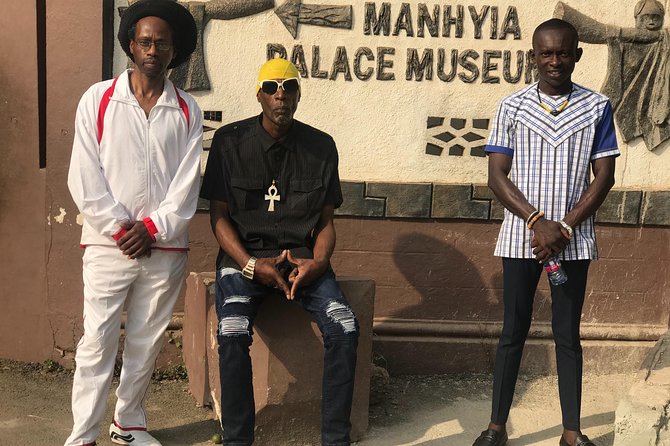
Manhyia Palace is the tour’s starting point and one of its most important stops. It is described as the seating area of the Ashanti kingdom, giving you a direct setting for learning about royal power and the kingdom’s traditions.
A guide is especially useful here. A palace is not just a building to walk through. The value comes from understanding what the site represents, how the Ashanti kingdom was organized, and why the palace remains central to Kumasi’s identity. Your English-speaking guide can explain the setting as you move through it and respond to your questions.
The stop also gives you a calm starting point before the city streets become more intense. After the palace, the tour heads toward Kejetia Market on foot. Wear shoes you can comfortably use for several hours, and bring water. Those are simple preparations, but they matter in a walking itinerary that combines formal sites with crowded commercial streets.
The exact amount of time spent at each stop is not specified. If one part of the palace interests you most, use the private format to tell your guide early. A private group gives you more room to ask about royal customs or the Ashanti kingdom than a fixed large-group outing usually allows.
Kejetia Market: Kumasi at street level
The walk through Kejetia Market is where the tour shifts from royal history to the working city. Kejetia is presented as the biggest open market in West Africa, and the experience includes the market as well as Kumasi’s central business area.
This is not a polished museum visit. You will be moving through a busy public market, taking in the sights and sounds of daily trade. The market helps explain Kumasi as a living commercial center rather than only a historic capital. After learning about royal authority at the palace, you see the city’s everyday energy up close.
The route is a good choice if you want more than isolated attractions. You get the contrast between palace grounds and market lanes, between formal history and ordinary commerce. That contrast is one of the tour’s strongest features.
Keep your belongings secure and stay close to your guide. The supplied information does not promise a shopping session, specific stalls, or time for a meal, so do not book this expecting a guided food tour or a dedicated buying stop. You may have opportunities to see local goods, but the stated purpose is to explore the market and central business area.
Because the itinerary continues on foot, Kejetia can be tiring for people who struggle with crowds, uneven walking, or long periods on their feet. The tour is specifically listed as unsuitable for people with mobility impairments and pregnant women.
Okomfo Anokye Sword Site and its enduring mystery
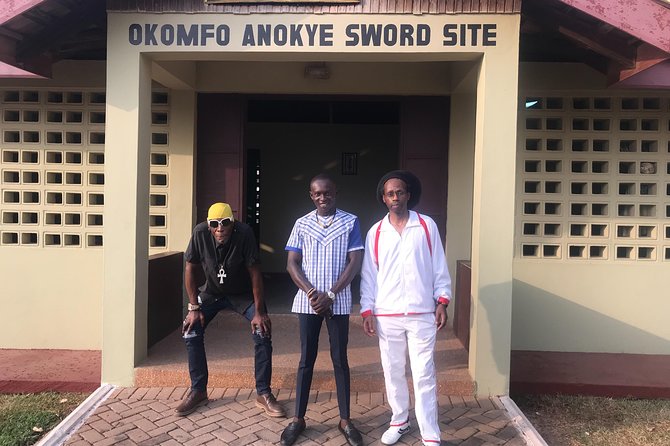
The next stop is the Okomfo Anokye Sword Site, where the tour explores the mystery surrounding the sword. This is the point where Ashanti tradition, belief, and historical memory come together.
The site is not presented as a quick photo stop. Its purpose is to help you understand the story attached to the sword and why it matters. The guide’s explanation is central here, since the significance may not be clear from the object or site alone.
I like this part of the route because it adds a different kind of history. Manhyia Palace introduces the Ashanti kingdom through royalty and political tradition. The sword site brings in spiritual and cultural meaning. Together, the stops show that Kumasi’s past cannot be reduced to dates and buildings.
You should approach this stop with curiosity rather than expecting a conventional museum display. The information provided does not specify how long the sword has remained at the site, the exact form of the mystery, or what the viewing area contains. Your guide is the person to ask for the full account.
The private setting helps here. You can pause, ask for clarification, and discuss what you are seeing without worrying about holding up a large group. Guides named Ibrahim and Prussia have led previous tours, and the strongest comments about the experience focus on friendly, upbeat, helpful guiding. The assigned guide can differ, but the tour is designed around live English guidance.
A few more Kumasi trips to weigh up
- Kumasi City Tour
★ 4.5 · 7 reviews - Lake Bosomtwe Boat Cruisely and Kumasi City Tours
★ 4.5 · 6 reviews - Kumasi City Tour
★ 4.5 · 3 reviews - Accra Detailed City Tour
★ 4.5 · 118 reviews
Cultural Center: local art and useful browsing time
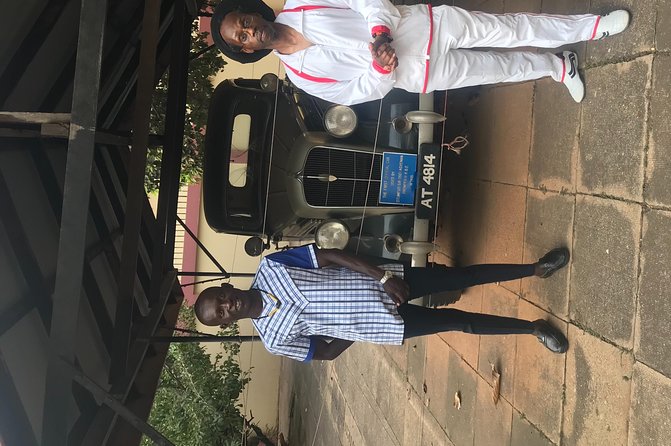
After the sword site, the tour heads to the Cultural Center. Here you can admire artworks and crafts made by local artisans.
This stop broadens the experience beyond royal and spiritual history. Art gives you another way to see Ashanti culture, through objects made for use, display, or sale. The Cultural Center is also a natural place to look at local craftsmanship if you are considering a purchase.
The supplied details do not list particular artists, galleries, or types of objects, so I would keep expectations open. You might find a range of handmade work, but the tour does not promise a specific demonstration or shopping allowance. Ask your guide about the pieces that catch your eye and confirm prices and payment details directly with sellers if you decide to buy.
I see the Cultural Center as a lighter stop after the palace, market, and sword site. It gives your eyes a break from historical interpretation and lets you focus on visual details. It also helps connect the past to present-day creative work in Kumasi.
Prempeh Museum: finish with Ashanti daily life
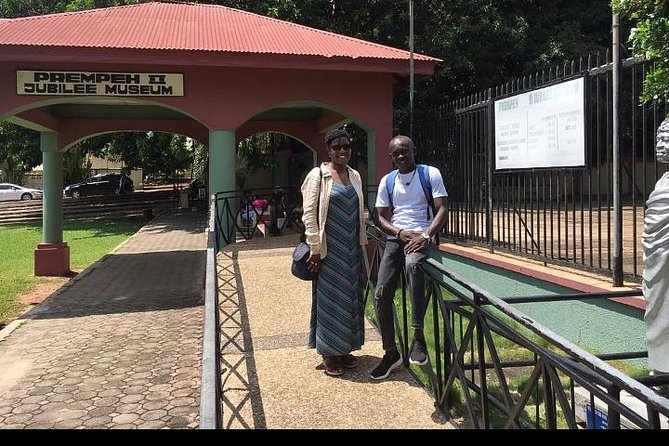
The final stop is the Prempeh Museum, where you learn about ancient Ashanti ways and how people in the kingdom lived. Ending here is sensible because the museum can bring together themes introduced earlier in the tour.
At Manhyia Palace, you encounter the kingdom’s royal center. At Kejetia, you see the city’s present-day commercial life. At the sword site, you consider belief and tradition. The Prempeh Museum then turns toward objects, customs, and daily life. That final perspective helps keep the tour from being only a royal-history lesson.
The museum is also a useful place to slow down and review what you have seen. The information supplied does not describe individual exhibits, so I would rely on the guide to explain the displays and point out items tied to Ashanti life. If you are interested in how people lived, dressed, worked, or organized their homes, this is likely to be one of the most useful stops.
Since it is the last stop, you may be ready for a rest by this point. Bring water from the start rather than counting on refreshments along the route. Food and drinks are not included.
What the $70 price covers
At $70 per person, this is not the cheapest way to see Kumasi, but the price includes entry tickets to all sites and taxes. You are also paying for a five-hour private tour with a live English-speaking guide.
That combination makes the cost reasonable for a couple, family, or small private group that wants structure and explanation. You do not have to work out the sequence of sights yourself, and you can ask questions throughout the route. The value is strongest if this is your first time in Kumasi and you want the city’s main cultural stops connected into one story.
The value is weaker if you already know the city, dislike guided touring, or mainly want free time at Kejetia Market. The tour does not include food, drinks, or hotel pickup. Pickup from your destination may be available according to the booking arrangement, but the central meeting point is Manhyia Palace, so confirm that detail before paying.
The reserve-now, pay-later option can help if your plans are still changing. You can cancel up to 24 hours in advance for a full refund, which gives you some practical flexibility.
Who will enjoy this private city tour
I would recommend this experience to you if you want a focused first look at Kumasi and prefer a guide to explain what you are seeing. It suits people interested in Ashanti royalty, traditional beliefs, local art, and markets rather than visitors seeking only a scenic drive.
The private format is useful for families, couples, and small groups with different levels of interest. Someone fascinated by the Okomfo Anokye Sword Site can ask more questions, while another person can focus on palace objects or crafts at the Cultural Center.
It is less suitable if you have mobility problems, are pregnant, or find long walks and busy markets uncomfortable. The tour lasts five hours, and the route includes walking from the palace through Kejetia Market and the central business area. Comfortable shoes are essential.
Bring water, comfortable shoes, and a passport or ID card. The tour is in English, so it works best if you can follow explanations and ask questions in English.
Should you book the Kumasi City Tour?
Book it if you want Kumasi’s main cultural sights explained in one private half-day. The combination of Manhyia Palace, Kejetia Market, the Okomfo Anokye Sword Site, the Cultural Center, and Prempeh Museum gives you more range than a simple market outing.
The strongest reason to choose it is the guide-led connection between places. You are not only looking at a palace, a sword, a market, or museum objects. You are moving through different parts of Ashanti identity, from royal tradition to daily trade and local craft.
Skip it if you want a relaxed, vehicle-based tour, extensive shopping time, or included meals. For an active visitor who wants context, a private guide, and admission covered, the $70 price is fair. Just plan for walking, bring water, and confirm pickup details before you set out.
FAQ
How long does the Kumasi City Tour last?
The tour lasts five hours.
What places are included?
The route includes Manhyia Palace, Kejetia Market, the Okomfo Anokye Sword Site, the Cultural Center, and the Prempeh Museum.
Is the tour private?
Yes. The tour is operated as a private group experience.
What language is the tour conducted in?
The live tour guide speaks English.
Is hotel pickup included?
Hotel pickup is not included. The central meeting point is Manhyia Palace, so confirm any pickup arrangement from your destination when booking.
Are entry tickets included in the price?
Yes. Entry tickets to all listed sites and all taxes are included.
What should I bring?
Bring water, comfortable shoes, and a passport or ID card.
Just added around Kumasi
- Kumasi Culture and Heritage Tours★ 4.5 · 3 reviews
- Traditional Naming Ceremony For African Americans In Kumasi★ 5.0 · 5 reviews
- Full Day Tour with Traditional Naming Ceremony in Kumasi★ 5.0 · 4 reviews
- Discover kumasi Tours★ 5.0 · 3 reviews
- Kumasi City Tour★ 4.5 · 3 reviews
- One day tour at Kumasi★ 5.0 · 6 reviews
- Lake Bosomtwe Boat Cruisely and Kumasi City Tours★ 4.5 · 6 reviews
- Kumasi City Tour★ 4.5 · 7 reviews
Kumasi Cultural Tours, compared.

Kumasi Heritage Tours And Naming Ceremony In A Day
Read our review →
Traditional naming ceremony For African Diasporas in Kumasi
Read our review →
Full-Day Tour to Ashanti Region, Kumasi and Ghanaian History
Read our review →

Lake Bosomtwe Boat Cruisely and Kumasi City Tours
Read our review →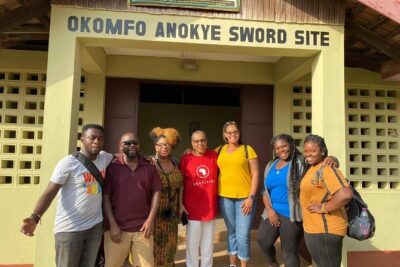
Browse the lists this tour appears in