
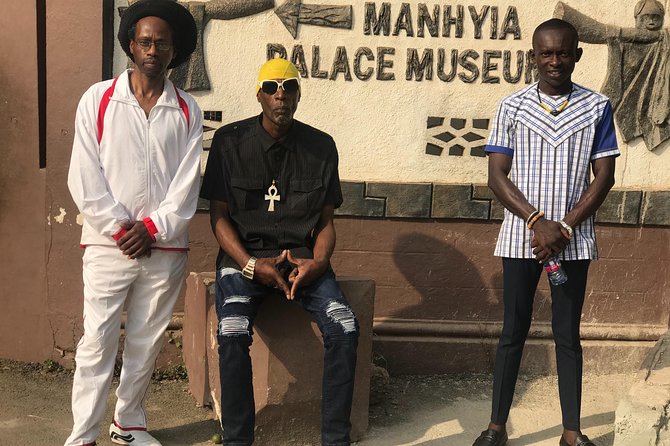
Reviewed · KUMASI CULTURAL TOURS
Kumasi City Tour
Kumasi’s story comes alive through royal objects, military relics, sacred symbols, and the daily movement of central Ghana. This four-hour tour links the Manhyia Palace Museum, three compact historical sites, and the Okomfo Anokye Sword Site into a focused introduction to Ashanti culture.
I like the included admission at every listed stop, and I like the small group size, capped at 15 people. The guide is praised for clear English, strong local knowledge, and a warm manner. One point to check before booking is the route order: the meeting point is Manhyia Palace, while the first listed stop is Kumasi Fort and the stated end is the Prempeh II Jubilee Museum.
Key Points
- Four major Kumasi sights in about four hours: The tour covers Kumasi Fort, Manhyia Palace Museum, Prempeh II Museum, and the Okomfo Anokye Sword Site.
- A close look at Ashanti royalty: Palace objects include royal clothing, jewelry, war items, furniture, talismans, and ceremonial pieces.
- Admission is included: You do not need to budget separate entry fees for the listed attractions.
- A useful military history stop: Kumasi Fort holds weapons, flags, photographs, armored vehicles, and other material from Ghana’s colonial and wartime past.
- Small-group format: The maximum is 15 people, which should allow more room for questions than a large coach outing.
- Pickup is offered: Confirm the exact pickup arrangement and meeting point when booking.
Four Kumasi landmarks in one compact morning
This is a history-and-culture tour with little wasted time. Over roughly four hours, you move through museums and sites tied to the Ashanti Kingdom, Ghana’s military past, and one of Kumasi’s best-known sacred traditions.
The plan gives you four substantial stops, each allotted about an hour. That is enough time for a guided introduction and a careful look at the main displays, though not enough for a slow museum visit. I would choose this tour if you want a clear first look at Kumasi rather than an entire day devoted to one palace or market.
The overview also mentions the sounds of local music, the smells of street food, and the busy life of the city. Those details matter because Kumasi is not just a collection of exhibits. The city’s culture is heard and seen on the streets, around markets, and in the way royal traditions still shape public life.
Kejetia Market is named among the city highlights in the tour description, but it is not listed as one of the four timed stops. Ask the guide if a market view or pass through is included on your particular route. That simple question will help you set the right expectations.
More kumasi cultural tours in Kumasi:
- Tour Kumasi City Like a Local
★ 4.5 · 34 reviews - Traditional naming ceremony For African Diasporas in Kumasi
★ 5.0 · 10 reviews - Kumasi City Tour
★ 4.5 · 7 reviews
Kumasi Fort and the Ghana Armed Forces Museum
The Kumasi Fort stop gives the tour a wider frame. Instead of looking only at royal history, you see how Ghana’s past was shaped by military conflict, colonial rule, and the country’s later development.
The Ghana Armed Forces Museum contains military equipment, weapons, flags, medals, photographs, portraits, and armored vehicles. Its displays also refer to the British Asante War of 1900 and the Second World War. Together, these objects help connect Kumasi to events far beyond the palace grounds.
I find this a useful opening because it places Ashanti history in a larger setting. You are not simply seeing old objects behind glass. You are looking at evidence of power, resistance, administration, and changing national identity.
Give yourself time to notice the smaller items. Flags and decorations can seem less dramatic than armored vehicles, but they often explain rank, service, and political authority. Photographs and portraits may also help you connect names and events to real people.
The one-hour allocation is practical, but it can feel short if military history is your main interest. You will probably get the key explanation and a look at the major displays, not a detailed study of every object. If you want more time here, mention that interest to the guide early in the morning.
Manhyia Palace Museum and the Ashanti royal story
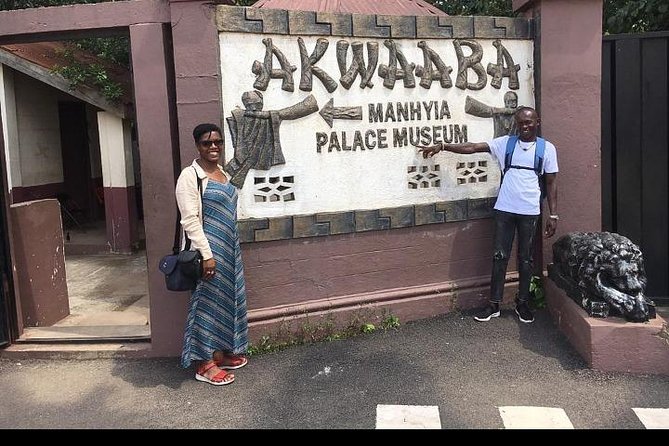
The Manhyia Palace Museum is the tour’s central stop for Ashanti royal history. It opened in 1995 during the Silver Jubilee celebration linked to the ascension of the Golden Stool, one of the most important symbols of Ashanti identity.
The museum is modest in size, but the subject is large. Inside, you may see historic objects, war talismans, and items connected with the Asante Kingdom. A small museum can be an advantage here. You are less likely to rush past a long series of rooms, and a good guide can explain why particular objects matter.
The palace setting adds weight to the visit. This is not an isolated display of antiques. It connects royal authority with the place where that authority has been represented and remembered.
Pay attention to the difference between ceremonial objects and objects linked to conflict. Ashanti royal culture was not only about pageantry. Clothing, emblems, weapons, and protective items can reveal how leadership was displayed and defended.
The guided format is especially useful at this stop. Without context, a talisman or royal ornament may look like an attractive old object. With explanation, it can become part of a larger story about kingship, belief, war, and duty.
The palace museum is also a good place to ask questions. Since the group is limited to 15, you should have a better chance of hearing the guide and asking about the Golden Stool, palace traditions, or the role of the Asantehene. The supplied information does not name the guide, but the guide is described as a gentleman who speaks very good English and explains the places well.
Prempeh II Museum, a small building with personal detail
The Prempeh II Museum offers a more intimate look at Ashanti culture. It is compact and designed to resemble an Ashanti chief’s residence, complete with a front courtyard and walls decorated with traditional carved symbols.
The collection is tied to King Prempeh II. You can expect to see war clothing, ceremonial garments, jewelry, protective talismans, personal bathing and dining items, furniture, royal symbols, and brass weights used to measure gold.
These objects are valuable because they show daily life alongside public ceremony. A royal garment tells you about status. A piece of furniture suggests how a ruler’s surroundings were arranged. Bathing and dining objects bring the story down to ordinary routines, even when those routines belonged to a king.
The brass gold weights deserve special attention. They are small, finely made objects, but they point to trade, measurement, craftsmanship, and the importance of gold in Ashanti society. This is the sort of display you might overlook if you move too quickly.
A personalized tour is included with admission, which makes this stop more useful than its size might suggest. The museum’s compact layout is not a weakness if the guide uses the time well. You receive a focused explanation instead of wandering through a large building with little context.
The main limitation is that one hour may feel generous for the building itself, especially after three other stops. Still, the personal scale makes it a good place to slow down and look closely at carved symbols, royal clothing, and the objects associated with Prempeh II.
A few more Kumasi trips to weigh up
- Lake Bosomtwe Boat Cruisely and Kumasi City Tours
★ 4.5 · 6 reviews - Kumasi City Tour
★ 4.5 · 3 reviews - Kumasi: City Tour
★ 5.0 · 3 reviews - Accra Detailed City Tour
★ 4.5 · 118 reviews
The Okomfo Anokye Sword Site and a living tradition
The Okomfo Anokye Sword Site is built around a famous sacred object: the sword said to have been driven into the ground by Okomfo Anokye and made immovable.
A small museum protects and explains the site. The appeal here is different from the museums. You are not only viewing a collection of objects. You are visiting a place tied to spiritual belief, political founding stories, and the formation of Ashanti identity.
The site works best when you give the story room to breathe. Listen for the connection between Okomfo Anokye, the Ashanti Kingdom, and the meaning attached to the sword. The physical object may be simple, but the tradition around it gives the visit its force.
Because the museum is small, the guide’s explanation matters a great deal. This is a stop where local context can make the difference between a quick photograph and a meaningful visit.
The hour listed for the site gives the guide time to explain the tradition without forcing you to hurry. As with the other stops, the tour is not designed for a long independent study. You are there for a clear introduction, followed by questions and a look at the site itself.
A guide-led visit with room for local context
The strongest reason to choose this tour is the guide. The available feedback describes a courteous gentleman with very good English who explains the places clearly. That praise is important because Kumasi’s museums contain objects that need interpretation.
A guide can also help you notice links between the four stops. Military displays at Kumasi Fort, royal artifacts at Manhyia, Prempeh II’s personal objects, and the Okomfo Anokye sword are not unrelated attractions. Together, they show different sides of authority, belief, conflict, and cultural memory.
The tour description also promises local insights and a connection to the community. You should expect the guide to add color beyond the labels, though the exact amount of walking, street commentary, and market time is not specified.
The group limit of 15 is another practical advantage. It is not a private tour, but it is small enough for a more personal exchange than you would get in a large bus group. If you have questions about Ashanti traditions or the history of a particular object, ask them as you go instead of waiting until the end.
The start time is 8:00 a.m. That early departure helps fit four stops into a half day and may make the city portion easier before the day gets hotter and busier. Pickup is offered, and public transportation is nearby, but confirm the exact arrangement. The stated meeting point is Manhyia Palace, while the final point is the Prempeh II Jubilee Museum. The schedule also lists Kumasi Fort first, so it is sensible to verify where you should physically meet and how the route will run.
Is $60 a fair price for four hours?
At $60 per person, this is not the cheapest way to see Kumasi, but the price can be reasonable if you value structure and interpretation. The fee covers a four-hour guided program, admission to the listed attractions, and a small-group setting of no more than 15 people.
You are paying for more than transport between buildings. The guide’s explanations are central to the tour, especially at the Manhyia Palace Museum, Prempeh II Museum, and Okomfo Anokye Sword Site. Without context, some displays could be difficult to understand.
Pickup is offered, which may add practical value, but the supplied details do not state exactly what transport is included or from which locations. Confirm that before booking if you are counting on hotel pickup.
The value is strongest for a first visit to Kumasi. You can cover several major cultural sites in one morning, receive a guided introduction, and then decide which place deserves a longer return visit. If you already know the city well or prefer to spend an entire afternoon at one museum, the fixed schedule may feel less attractive.
The tour is booked an average of 11 days ahead, so planning a little early is sensible. Confirmation is provided at booking, but a minimum number of participants is required before the tour is confirmed. That condition is worth noting if your schedule is tight.
Who will enjoy this Kumasi tour most?
I would recommend it to anyone who wants a concentrated introduction to Ashanti culture and history. It suits first-time visitors, museum lovers, people interested in royal traditions, and anyone who prefers a guide to explain what they are seeing.
It also works well for a short stay. Four hours is long enough to give Kumasi a proper cultural morning without taking up the entire day.
Families and mixed-interest groups may appreciate the variety. Military equipment, royal clothing, gold weights, carved symbols, and a sacred sword offer different entry points into the city’s past.
You should think twice if you want a relaxed, unstructured day. Four one-hour stops create a firm rhythm, and the museums are visited as a group. You should also ask about the Kejetia Market portion if the market is a main reason for booking, since it is named in the overview but not given its own timed stop.
Free cancellation is available until 24 hours before the start time. Changes or cancellations made within 24 hours are not accepted for a refund, based on local time.
Should you book the Kumasi City Tour?
Book this tour if you want a well-organized cultural introduction with included admission and a guide who can make sense of Kumasi’s royal, military, and spiritual landmarks.
The best parts are the variety of sites, the small group cap, and the chance to see objects tied to Prempeh II, the Asante Kingdom, and Okomfo Anokye in one morning. Before paying, confirm the pickup details, the meeting point, the route order, and how much time is actually given to Kejetia Market.
For a first look at Kumasi, $60 is a fair price when the admissions and guiding are included. If you want long museum visits or a full market-focused outing, choose something with a slower schedule. For a compact, thoughtful introduction to the city’s cultural core, SiBer Tours Ghana offers a useful half-day choice.
FAQ
How long does the Kumasi City Tour last?
The tour lasts approximately four hours.
What time does the tour begin?
The scheduled start time is 8:00 a.m.
Which places are included?
The listed stops are Kumasi Fort and the Ghana Armed Forces Museum, Manhyia Palace Museum, Prempeh II Museum, and the Okomfo Anokye Sword Site.
Are admission tickets included?
Yes. Admission is included for each of the four listed stops.
Is pickup available?
Pickup is offered. The stated meeting point is Manhyia Palace in Kumasi, so confirm the exact pickup details when booking.
How large is the tour group?
The tour has a maximum of 15 travelers.
Can I cancel for a full refund?
Yes. You can cancel at least 24 hours before the experience start time for a full refund. Cancellations or changes made less than 24 hours before the start time are not accepted for a refund.
Just added around Kumasi
- Kumasi Culture and Heritage Tours★ 4.5 · 3 reviews
- Traditional Naming Ceremony For African Americans In Kumasi★ 5.0 · 5 reviews
- Full Day Tour with Traditional Naming Ceremony in Kumasi★ 5.0 · 4 reviews
- Discover kumasi Tours★ 5.0 · 3 reviews
- Kumasi City Tour★ 4.5 · 3 reviews
- Kumasi: City Tour★ 5.0 · 3 reviews
- One day tour at Kumasi★ 5.0 · 6 reviews
- Lake Bosomtwe Boat Cruisely and Kumasi City Tours★ 4.5 · 6 reviews
Kumasi Cultural Tours, compared.


Kumasi Heritage Tours And Naming Ceremony In A Day
Read our review →
Traditional naming ceremony For African Diasporas in Kumasi
Read our review →
Full-Day Tour to Ashanti Region, Kumasi and Ghanaian History
Read our review →

Lake Bosomtwe Boat Cruisely and Kumasi City Tours
Read our review →
4 Days Trip in Accra, Cape Coast,Kumasi culture & heritage tours
Read our review →Browse the lists this tour appears in