
Reviewed · HISTORICAL TOURS
10 Days Ghana Cultural and Heritage Trip
The most moving part of this Ghana journey is its treatment of the slave trade as a personal pilgrimage, not just a history lesson. You’ll walk barefoot to the slave river at Assin Manso, pass through Cape Coast and Elmina castles, and take part in a traditional naming ceremony in Elmina.
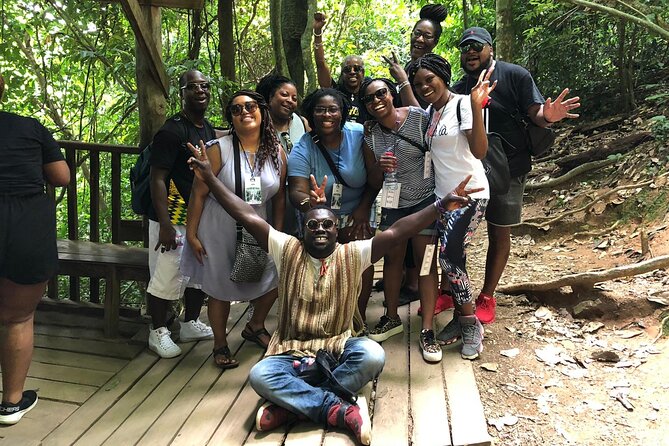
I like the small maximum group of 10 people and the mix of serious heritage sites with hands-on culture, gardens, markets, weaving, and a rainforest canopy walk. I also like that Nana and the local team handle airport pickup and long transfers in an air-conditioned vehicle with Wi-Fi. The main consideration is the price: at $3,500 per person, this is a substantial trip, and only four lunches plus eight breakfasts and one dinner are listed as included.
Five things to know before you book

- The pilgrimage element is central: Assin Manso, Cape Coast Castle, and Elmina Castle carry the emotional weight of the trip.
- Your group stays small: The tour accepts no more than 10 people, a useful size for markets, museums, and cultural visits.
- You see several sides of Ghana: Accra’s city life, coastal history, rainforest, Ashanti traditions, and kente weaving all have a place.
- The naming ceremony is participatory: In Elmina, you receive a Ghanaian name based on your birth day and wear traditional clothing.
- Transport is built for a full itinerary: Airport transfers and an air-conditioned vehicle with Wi-Fi help make the long route more manageable.
- You can book in three languages: The experience is offered in English, Spanish, and French.
Why this 10-day route matters
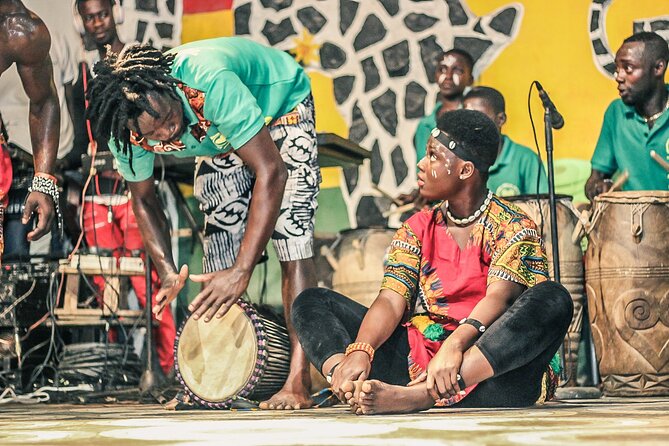
This is not a beach holiday with a few cultural stops added on. The route asks you to spend real time with Ghana’s history, especially the Atlantic slave trade and its continuing meaning for people of African descent.
You begin and end in Accra, but the journey moves well beyond the capital. You’ll travel through the Central Region to Cape Coast and Elmina, continue inland toward Kumasi, and return to Accra for final shopping and your airport transfer. The changing settings give the trip shape: political history in Accra, colonial forts on the coast, rainforest in Kakum, and Ashanti culture around Kumasi.
I would describe the pace as full rather than frantic. Many visits last one hour, but the distances between towns matter. The air-conditioned vehicle and small group help, yet you should still expect road time and several days with more than one major stop.
A few more Accra trips to weigh up
- Experience the Beauty, History and the Culture Of Accra in a Day
★ 5.0 · 323 reviews - Ghana Heritage Tours – Beyond The Return
★ 5.0 · 36 reviews - Cape Coast Historical Day Tour
★ 5.0 · 24 reviews
Days 1 and 2: Accra’s independence story and daily life
Your first day is simple by design. You arrive at Kotoka International Airport, meet the transfer, and go to your hotel. A welcome dinner and drinks give you a chance to meet Nana, the in-country leaders, and the rest of the group.
That opening meal is useful because the trip carries emotional and historical weight. Meeting the people guiding you before the touring begins can help you settle in and understand how the next days will work.
Day 2 begins at the Kwame Nkrumah Memorial Park, the final resting place of Ghana’s first president. The displays include Nkrumah’s personal belongings, the smock he wore when declaring independence, correspondence, and photographs with world leaders.
I like this stop because it places Ghana’s modern identity beside the older history you’ll encounter later. The visit lasts about an hour, so it gives you context without taking up the entire morning.
At Independence Square, you’ll see the Independence Arch, Black Star Gate, Liberation Day Monument, and the parade ground used on Ghana’s Independence Day. The stop is shorter, about 40 minutes, but it helps explain the importance of national symbols in Accra.
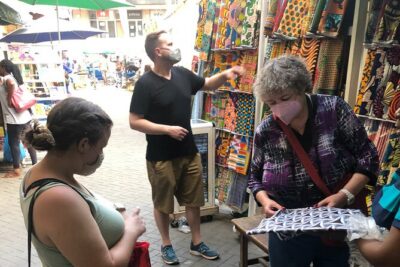
Makola Market then shifts the mood from official history to everyday commerce. This is an open-air market with narrow passageways, goods stacked close together, and plenty of movement. Your guide takes you through the more interesting sections and points out places suited to photographs.
Give yourself patience here. The market is crowded, and the tight alleys are not a place to rush. Keep your belongings secure and stay close to your guide. You may also want to save shopping decisions for later, since the Accra Arts Center on Day 10 is set aside for souvenirs.
The National Museum of Ghana completes the day. Its collections include chiefs’ regalia, musical instruments, gold weights, beads, textiles, stools, pottery, and material linked to traditional dance, farming, and iron making. Exhibits on the slave trade help connect Accra’s story to the coastal castles still ahead.
Day 3: Plants and Pan-African thought
The Aburi Botanical Gardens offer a quieter change after the city. The focus here is on African herbs and plants, their origins, age, medicinal uses, and role in society.
This is not simply a scenic garden visit. It gives you a chance to consider how plants fit into local knowledge and daily life. The scheduled visit lasts one hour, so do not expect an extended botanical study, but it is a useful pause in the route.
At the W.E.B. DuBois Center, the subject shifts to Pan-Africanism. Du Bois was an American sociologist, socialist, and historian, and the memorial center helps connect Ghana to the wider movement for Black political and cultural identity.
I find this pairing effective. Aburi introduces the natural and practical side of Ghanaian culture, while the DuBois Center places the country in a larger international story.
Days 4 and 5: Cape Coast, Kakum, and Elmina
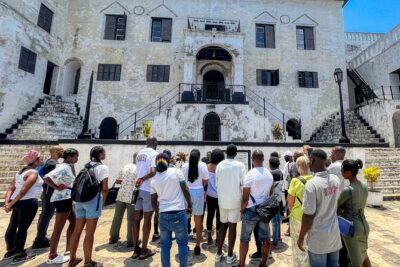
Cape Coast Castle is one of the trip’s hardest stops. You’ll see the dungeons where enslaved people were held while ships waited offshore, along with the Door of No Return.
The visit lasts about an hour, but the subject is not something to measure by clock time. Expect cramped spaces and a serious atmosphere. A guide’s explanation matters here, so take your time and ask questions if the pace allows.
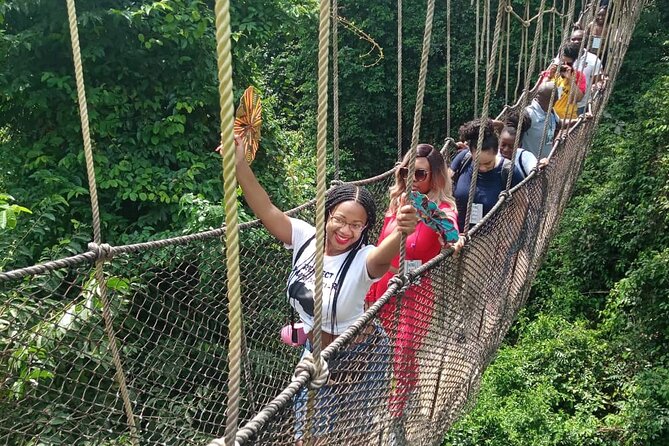
Day 5 begins at Kakum National Park, where you’ll walk on a canopy bridge through the rainforest. The visit is scheduled for about 90 minutes. The elevated walkway gives you a different view of the forest, but this is still a physical activity, so wear sensible shoes and expect outdoor conditions.
Kakum adds needed contrast to the castle visits. After several days of political and historical sites, you spend time among trees and wildlife habitat. The canopy walk is also one of the most memorable visual moments on the route.
In Elmina, a walking tour introduces the town’s historic buildings, a 17th-century Dutch cemetery, the Posuban Shrine, and an Asafo post. Because this portion is listed without an admission fee, it feels more like a town walk than a formal museum visit.
Elmina Castle follows, with another visit to slave dungeons, the forecourt, and the Door of No Return. Seeing both Cape Coast and Elmina castles can feel repetitive in subject, but the pairing is valuable. Each site offers a different setting and story, and together they show how European fortifications shaped the coast.
You should also prepare emotionally for two castle visits close together. If you prefer a lighter itinerary, this may be the most demanding part of the tour. If understanding Ghana’s role in the slave trade is your main reason for coming, these are essential stops.
Same coastline, a completely different kind of day:
- The Cape Coast Day Tour
★ 5.0 · 525 reviews - The Cape Coast Tour
★ 5.0 · 177 reviews - From Accra: Cape Coast, Elmina Castle & Kakum Park Day Tour
★ 4.6 · 144 reviews - Accra Detailed City Tour
★ 4.5 · 118 reviews
Day 6: A naming ceremony in Elmina
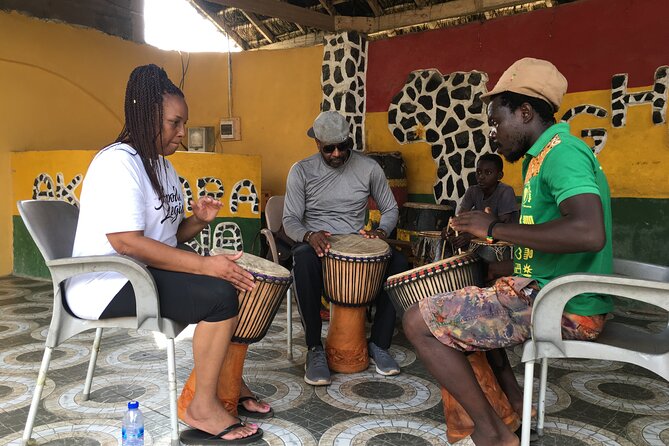
Day 6 gives you a slower morning for rest and relaxation. Later, you visit a chief’s palace and learn about local traditions before taking part in a naming ceremony.
You receive a name based on the day you were born, following Ghanaian custom. You’ll also wear traditional African clothing during the ceremony. This is the kind of activity that turns cultural information into a personal memory, but it should be approached with respect rather than treated as a costume photo opportunity.
I like the placement of this day after the castle visits. The route moves from painful history toward living culture without pretending that the past has disappeared. The two-hour program gives more time than many of the museum stops, so you can expect a fuller cultural exchange.
Day 7: Walking barefoot at Assin Manso
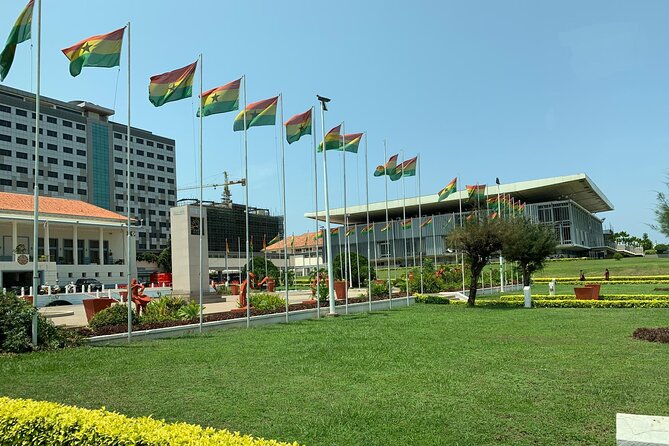
Assin Manso is one of the most solemn stops on the route. It is identified as the last place where enslaved people took a bath before being taken to the castles and transported across the Atlantic.
You’ll take part in a reverential Walk of Return toward the slave river. The walk is done barefoot, a physical way of connecting with the soil and paying respect to those who made that journey and to the people who died along the way.
You’ll also visit the Memorial Wall of Return, where names are written to mark a return to the ancestral homeland. This experience is not a quick photo stop. It asks you to slow down, listen, and consider the human scale of the history presented at the castles.
Wear clothing suited to outdoor walking and be ready for a reflective day. The activity is listed as free of admission, but its value lies in the ceremony and the setting rather than a formal ticketed attraction.
Days 8 and 9: Ashanti power, Kumasi markets, and kente
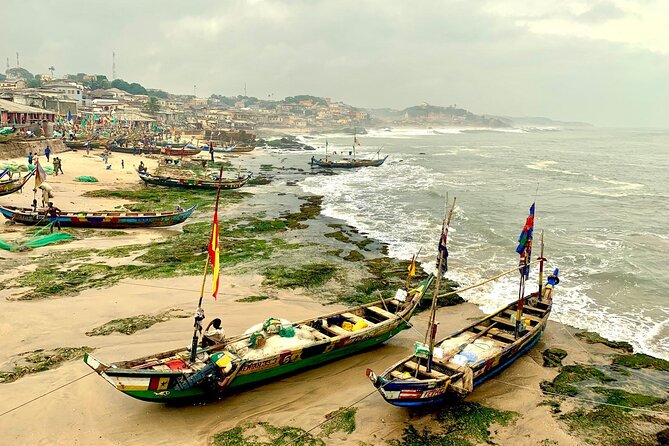
The route reaches Kumasi on Day 8. At Manhyia Palace Museum, you learn about the Asante Empire and visit the seat of the Ashanti kingdom. The museum visit lasts about an hour and gives you a direct look at royal history and tradition.
The day also includes time at West Africa’s largest and busiest open-air market. The supplied schedule does not give the market a name or a separate visit length, so be prepared for a lively shopping and walking stop rather than a tightly timed museum visit.
At the Okomfo Anokye Sword Site, you’ll learn about the 400-year-old sword said to be impossible to remove from the ground. The visit lasts about 45 minutes and is tied to the Kumasi Cultural Center.
This part of the trip is important because Ghana’s story is not only about European forts and the Atlantic trade. The Ashanti kingdom had its own political structures, symbols, leaders, and traditions. Kumasi helps correct a coastal-only view of Ghana.
Day 9 takes you to Bonwire Kente Weaving Centre. You’ll learn about Ghanaian cloth, the symbols woven into it, and the meaning those designs carry in Ghanaian culture.
This is a good place to buy fabric or a finished piece if you have been waiting to shop. More importantly, you learn why kente is not just colorful material. Its patterns and symbols communicate status, occasions, beliefs, and cultural identity.
Day 10: Final shopping in Accra
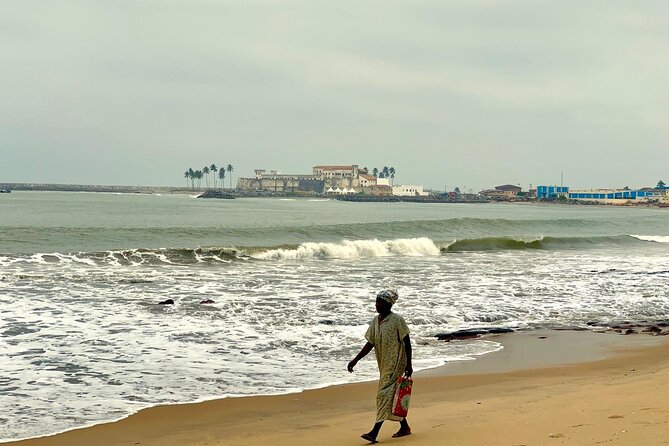
Your last day returns you to Accra for shopping at the Accra Arts Center. The scheduled visit is about 45 minutes, so this is a final chance to pick up souvenirs rather than a long market expedition.
I recommend keeping your shopping list focused. Earlier stops may offer market goods and textiles, while the Arts Center gives you a final opportunity before the airport transfer. The tour then drops you at the airport in time for your flight.
Because departure timing can vary, have your flight details ready when booking. The schedule promises an airport drop-off with enough time to catch your flight, but exact timing will depend on the day’s road conditions and your departure hour.
What $3,500 includes, and what it does not
The price is $3,500 per person, which places this trip in the premium range for a 10-day Ghana program. Its value depends on what you want from the visit.
You are paying for a planned route, airport pickup and drop-off, an air-conditioned vehicle with Wi-Fi, trip leaders, and a small group capped at 10 people. Admission is included at the major listed sites, including the Kwame Nkrumah Memorial Park, Independence Square, National Museum, Aburi Botanical Gardens, Kakum, Cape Coast Castle, Elmina Castle, Manhyia Palace Museum, Okomfo Anokye Sword Site, and Bonwire.
The food package is partial. You receive eight breakfasts, four lunches, and a welcome dinner, but the information does not list every meal. Budget separately for meals not included, drinks beyond the welcome dinner, personal purchases, and souvenirs.
For someone who wants to arrange every hotel, transfer, ticket, and guide independently, the price may feel high. For you if you value a coordinated cultural route and do not want to manage long intercity travel, the cost may be easier to justify.
Group discounts are available, and the tour is generally open to most participants. Service animals are allowed, and the starting point is Kotoka Airport in Accra at 8:30 a.m.
Who will get the most from this Ghana trip?
I would choose this tour if your main interests are Ghanaian heritage, the history of the slave trade, Pan-African identity, and local cultural traditions. The route gives those subjects more attention than a standard sightseeing holiday.
It also suits you if you prefer a structured trip. You will not need to organize separate transport between Accra, Cape Coast, Elmina, Assin Manso, and Kumasi. The vehicle has air conditioning and Wi-Fi, and the small group should make communication easier.
The tour may be less suitable if you want long, unplanned stretches of free time. Several days contain multiple stops, and the route covers a lot of ground. The itinerary is also not centered on beaches, nightlife, or extended wildlife viewing.
The emotional side deserves equal attention. Cape Coast Castle, Elmina Castle, and Assin Manso can be painful places to visit. The naming ceremony, palace visit, and weaving center provide warmth and connection, but they do not erase the difficult history. Come ready for both.
Should you book this 10-day Ghana experience?
Book it if you want Ghana explained through its people, political history, royal traditions, markets, textiles, and places tied to the slave trade. The most distinctive elements are the Walk of Return at Assin Manso, the naming ceremony in Elmina, and the combination of coastal history with Kumasi’s Ashanti culture.
The strongest practical reason to choose it is the small group and organized transport. The strongest reason to pause is the price, especially since several meals are not included.
If Nana and the in-country team provide the attentive support promised by the program, you’ll have a well-shaped introduction to Ghana rather than a string of disconnected stops. I would book this for a first Ghana visit focused on culture and heritage, provided you are comfortable with a full schedule and serious subject matter.
FAQ
Where does the tour begin?
The tour begins at Kotoka Airport in Accra, Ghana. The stated start time is 8:30 a.m.
How long does the experience last?
The tour lasts approximately 10 days, from airport pickup on Day 1 through airport drop-off on Day 10.
What languages are available?
The experience is offered in English, Spanish, and French.
How large is the group?
The tour has a maximum of 10 participants.
Is airport pickup included?
Yes. Airport pickup is provided when you arrive in Ghana, and airport drop-off is arranged on the final day.
What meals are included?
The package includes breakfast on eight days, lunch on four days, and a welcome dinner. Other meals are not specified as included.
Is admission included at the main attractions?
Admission is included at listed sites such as the Kwame Nkrumah Memorial Park, Independence Square, National Museum of Ghana, Kakum National Park, Cape Coast Castle, Elmina Castle, Manhyia Palace Museum, Okomfo Anokye Sword Site, and Bonwire Kente Weaving Centre.
Can I cancel for a full refund?
Yes. You can cancel at least 24 hours before the experience start time for a full refund. Cancellations or changes made less than 24 hours before the start time are not accepted for a refund. Poor weather may lead to a different date or a full refund.
Just added around Accra
- Visit Aburi Garden, Tetteh Quarshie Cocoa Farm & Waterfall★ 4.0 · 4 reviews
- Historical Day Tour to Cape Coast, Elmina and Kakum★ 5.0 · 3 reviews
- Local Ghanaian Food Tasting Tours★ 5.0 · 3 reviews
- Private Airport Transfer to from ACC Kotoka by Business Car★ 5.0 · 4 reviews
- Private Slave Castles and Dungeons Tour in Cape Coast, Ghana★ 5.0 · 3 reviews
- Historical tour in Cape Coast Ghana★ 5.0 · 3 reviews
- The Door Of No Return/ Dungeon & cape Coast Castle★ 5.0 · 4 reviews
- Cape Coast Castle and Kakum National Park 2-Day Private Tour★ 5.0 · 3 reviews
Historical Tours, compared.

Experience the Beauty, History and the Culture Of Accra in a Day
Read our review →
Full-Day Private Culture and History Tour of Accra
Read our review →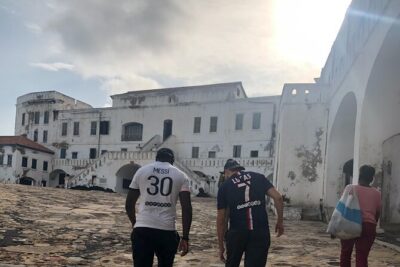
Ghana Private Historic Tour through Castles and Nature
Read our review →
7-Day Private Cultural and Heritage Tour in Ghana
Read our review →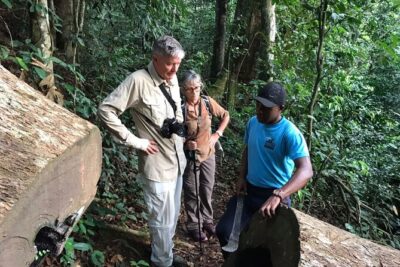
The Historic Cape Coast and Elmina Tour (The Land of History).
Read our review →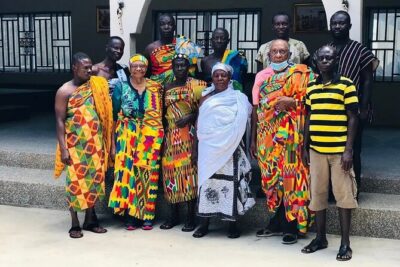
Naming Ceremony and Heritage Homecoming Experience for Diasporas
Read our review →Browse the lists this tour appears in