
Reviewed · CITY TOURS
Ghana City 2-day Tour
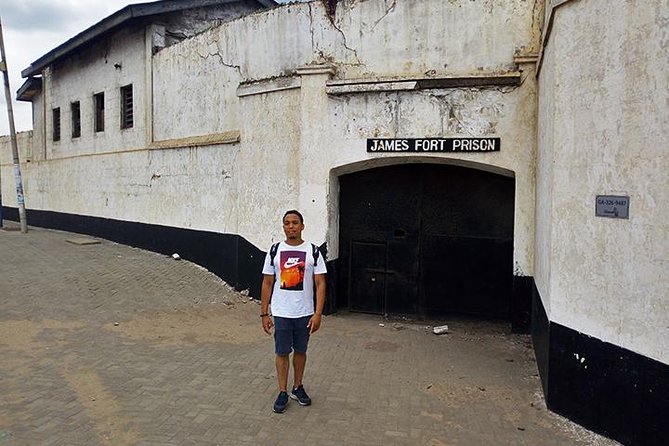
The most powerful part of this two-day Ghana tour is its clear route through the slave trade, from the Ancestral Slave River at Assin Manso to Cape Coast Castle and its Gate of No Return. On the second day, you shift to Accra, where James Town and Ussher Fort show how the capital’s coastal communities were tied to that same history.
I like the private format, which keeps the pace and questions suited to your group. I also like the practical setup: hotel pickup, admission tickets, and a guide who explains the sites rather than leaving you to read plaques alone. One consideration is the amount of driving and serious subject matter on day one, so this is not a light sightseeing outing.
Key points to know before booking
- Assin Manso begins the historical route: Visit the Ancestral Slave River, the Last Bath site, and a place tied to the forced march toward the coast.
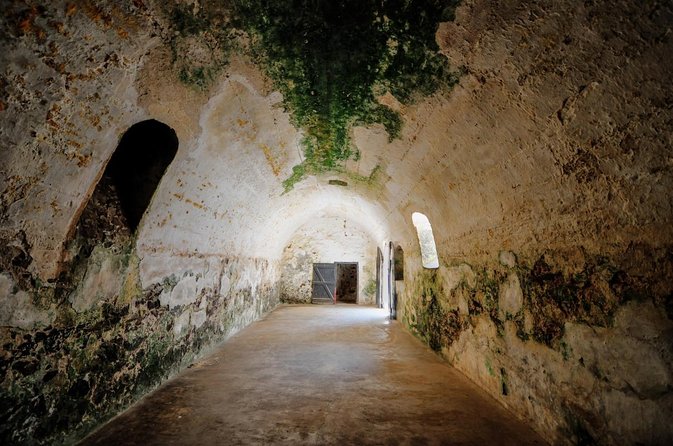
- Cape Coast Castle is the emotional center: The UNESCO World Heritage Site includes rooms, artifacts, and stories connected to people held before shipment across the Atlantic.
- Day two stays in Accra: James Town Lighthouse and Ussher Fort focus on the city’s coastal past and local community life.
- A private group of up to four gets a personal pace: You can ask questions and spend more time at the sites that matter most to you.
- The price works best for a full group: At $307.70 per group, four people pay about $76.93 each before considering any separate personal costs.
- The tour has strong practical appeal: Hotel transfers are offered, public transportation is nearby, and admission is included at the listed stops.
Following the route from Assin Manso to the coast
Day one is built around movement. You leave Accra for Ghana’s Central Region and follow part of the route associated with enslaved Africans who were taken from inland areas toward the coast.
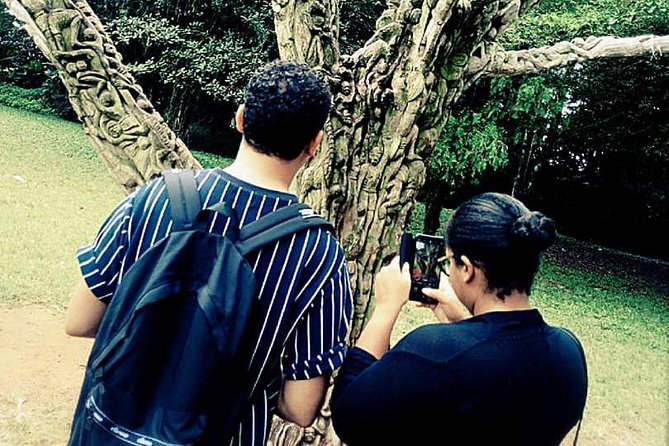
The first stop, Assin Manso Ancestral Slave River Park, is not simply a place to take photographs. The river is tied to the last bathing of enslaved people before they continued toward the forts and castles on the coast. The site is also connected with the wider slave trek that carried people into an unknown future.
You have about four hours here, including admission. That is a substantial amount of time, and it matters. This is a place where a guide’s explanation gives the setting meaning. You can ask how the river, the inland routes, and the coastal forts fit together instead of treating each stop as an isolated monument.
Expect the tone to be sober. The material concerns atrocities carried out from the 16th through the 19th centuries, and the visit works best when you allow time for reflection. This is not the sort of stop to rush through between photo opportunities.
The site is especially useful for setting up Cape Coast Castle. At Assin Manso, you begin with the inland movement of people. At the castle, you see the coastal holding point before ships left for the Americas. That sequence gives the first day a strong historical shape.
A few more Accra trips to weigh up
- 2-Day Private Tour to the Mount Afadjato and Wli Waterfalls
★ 5.0 · 17 reviews - 2 Days (1 night) Elephants Safari at Mole Park with Round – trip flights
★ 5.0 · 4 reviews - 2Days private explore volta region
★ 5.0 · 4 reviews
What to expect at Cape Coast Castle
Cape Coast Castle receives about three hours of the first day. It is the tour’s UNESCO World Heritage Site and one of Ghana’s most important places for understanding the transatlantic slave trade.
The castle was the final coastal confinement point for many people before their forced shipment across the Atlantic. The Gate of No Return is central to the visit, but it is only one part of the site. You can also expect historical artifacts, surviving structures, and accounts of the abuse carried out there.
The castle has a direct connection to modern public memory as well. President Barack Obama visited in 2009. That detail does not replace the site’s own history, but it helps explain why Cape Coast Castle has become such a significant place for people tracing the story of slavery and its continuing impact.
I would plan to listen closely during the castle visit. The buildings alone cannot explain what happened inside them. A guide can connect the rooms and fortifications to the larger story, while also answering questions in plain language.
The main drawback is emotional rather than practical. You may find the castle difficult, particularly after the earlier visit to Assin Manso. That is part of its value, but you should not book this first day expecting casual sightseeing. The schedule also leaves little room for unrelated stops, since the two major sites together account for roughly seven hours.
Why the private format matters on day one
A private tour changes the feel of a difficult subject. Your group, rather than a large mixed crowd, travels together, and the guide can respond to your questions as they come up.
The tour allows up to four people per group. At $307.70 for the group, the value improves sharply when four people share it. That works out to roughly $76.93 per person, making private transport, a guide, and the listed admissions a more appealing package than the headline price may first suggest.
For two people, the per-person cost is higher. Still, you are paying for a private experience rather than a seat in a large group, along with transfers to and from your Accra hotel. You should confirm the exact pickup details when booking, but pickup is offered and daily transfers are part of the setup described for the tour.
A guide named Isaac has been associated with this service and has been praised for explaining Ghana and adjusting a visit to suit the group’s interests. If Isaac is assigned to your booking, you can expect an informed guide who may help you fit additional interests into the day when time allows. Do not assume every extra site mentioned in one account is part of this fixed two-day plan, however. The core schedule here is Assin Manso, Cape Coast Castle, James Town Lighthouse, and Ussher Fort.
James Town shows Accra from the shoreline
Day two brings you back to Accra and changes the focus from the long inland-to-coast route to the city itself. James Town is one of the capital’s oldest and most historic areas, with fishing at the center of local life.
The neighborhood also shows how coastal communities lived around the forts and trade routes. Families and neighbors formed close local ties, and the sea shaped both work and outside contact. The tour explains how James Town’s position made it part of the slave trade, while the lighthouse served ships arriving along the coast.
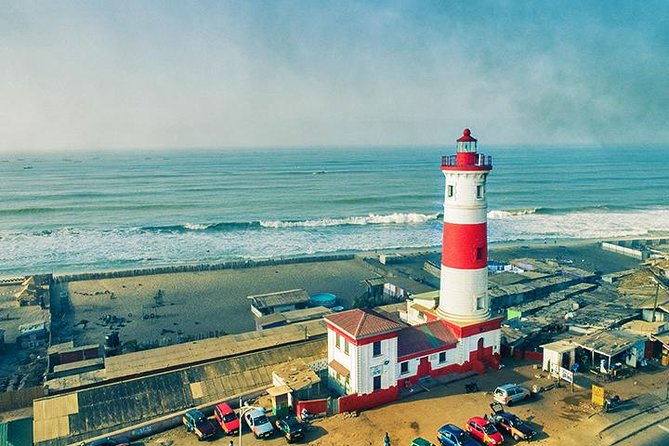
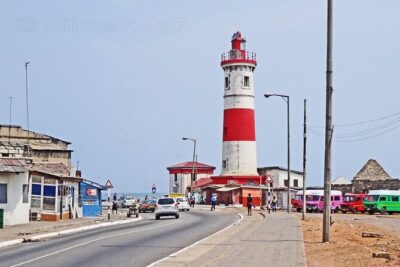
James Town Lighthouse is about 28 meters, or 92 feet, high. The present stone tower was built in the 1930s and replaced an earlier lighthouse from 1871. It has a lantern and gallery, with a keeper’s house attached.
The lighthouse is not a polished attraction with gift shops and a large ticketing complex. That is part of its appeal. You get a more direct sense of the neighborhood, and the spiral staircase leads to a panoramic view from the top.
The stop is scheduled for about three hours with admission included. That gives you time for the climb, the view, and the surrounding area rather than only a quick photograph outside. The staircase may make the visit less comfortable for some people, but the available information says most people can participate in the tour.
Do not expect the lighthouse to tell the whole story by itself. Its value comes from the guide’s context and its position within James Town. You see a working coastal neighborhood, a navigational structure, and a site connected to the arrival of slave ships, all in one stop.
Same coastline, a completely different kind of day:
- The Cape Coast Day Tour
★ 5.0 · 525 reviews - Experience the Beauty, History and the Culture Of Accra in a Day
★ 5.0 · 323 reviews - The Cape Coast Tour
★ 5.0 · 177 reviews - From Accra: Cape Coast, Elmina Castle & Kakum Park Day Tour
★ 4.6 · 144 reviews
Ussher Fort and the work of preservation

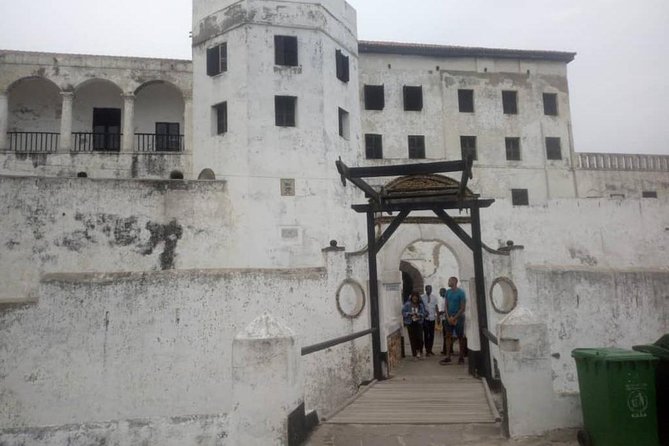
The second stop on day two is Ussher Fort, also in James Town. The Dutch built it in 1649 as Fort Crêvecoeur, and it later became one of the most prominent forts in the area.
The fort adds another layer to the coastal story. Cape Coast Castle presents the slave trade on a grand and internationally recognized scale. Ussher Fort helps you understand that Accra, too, was filled with fortified trading sites linked to the coast and the movement of people and goods.
A major restoration project involving the Ghanaian government, the European Union, and UNESCO began in 2007. The restored site now functions as a museum. That gives the visit a useful preservation angle: you are not only looking at an old fort, you are seeing an effort to protect and explain a difficult part of Ghana’s past.
The scheduled visit lasts about three hours, with admission included. Take advantage of the time to ask how Ussher Fort relates to James Town and to the other coastal forts. The four stops work best when you see them as parts of one connected route, not four separate attractions.
The phrase abdominal historical slave trade appears in the supplied description, but the intended point is clear: Ussher Fort is an important place to learn about the brutal slave-trade system in Accra. The subject deserves careful language and attention. This is another serious stop, not a quick architectural photo call.
Timing, transport, and the real value of $307.70
The tour lasts about two days, with the first day devoted to the Central Region and the second to Accra. Each day includes roughly six to seven hours at the listed sites, before accounting for the transfer between Accra and the Central Region on day one.
That first day is the demanding one. The long transfer and two extended visits mean you should keep your schedule open. A private vehicle and hotel pickup remove much of the local transport planning, which is useful when the day includes distant sites.
The second day is easier to organize because both stops are in Accra. Public transportation is available near the experience, but the included transfers make the private arrangement simpler, especially if you want to move between James Town Lighthouse and Ussher Fort without figuring out local connections.
Admission tickets are included at each listed stop. That is important when judging the price. You are not paying $307.70 only for a driver or a guide. For a group of four, the package offers a practical way to combine transport, private guiding, and entry at four major sites.
The price is less attractive if you are alone, since it is charged per group rather than per person. A solo visitor still gets privacy, but the per-person cost rises. If you are a couple or a small family, compare the private convenience with the cost of joining a larger group tour.
The tour is booked, on average, about 65 days ahead. That suggests you should not leave it until the last moment if your dates are fixed. Free cancellation is available until 24 hours before the start time, but changes or cancellations inside that window are not refunded. The experience also requires good weather. If poor weather forces a cancellation, you are offered another date or a full refund.
Who will get the most from this tour
I would choose this experience if you want Ghana’s slave-trade history to be the main thread of your visit. The route is focused, and the guide’s explanations are important at every stop.
It also suits you if you value a private group. You can ask direct questions about Ghana, Accra, the forts, and the communities around them without being tied to a large group’s pace.
This is a good match for first-time visitors who want an organized introduction to both Accra and the Central Region. You get major historic sites without having to arrange separate transport, admissions, and local guiding.
You may want a different plan if you prefer food, markets, nightlife, or nature attractions. The supplied account of Isaac’s guiding also mentions places such as Elmina Castle, Boti Waterfalls, and Umbrella Rock, but those are not part of the core two-day schedule described here. Confirm any extra requests before booking rather than assuming they are included.
The experience is also not ideal for anyone seeking a carefree day out. The first day deals with forced removal, confinement, and death. The second day continues that subject in an Accra setting. You should be ready for a thoughtful and sometimes painful visit.
My booking verdict
Book this tour if you want a private, tightly organized introduction to Ghana’s slave-trade sites, with hotel pickup and admission included. Its strongest feature is the route itself: Assin Manso explains the inland passage, Cape Coast Castle shows the coastal imprisonment system, and James Town with Ussher Fort connects that past to Accra.
The best value comes when three or four people share the $307.70 group price. If you have only one day, this is not the right choice, since its structure depends on two full days. If you can spare the time and want serious history explained by a local guide, this is a strong, focused way to begin understanding Ghana.
FAQ
How long is the Ghana City 2-day Tour?
The experience lasts approximately two days. Day one includes Assin Manso Ancestral Slave River Park and Cape Coast Castle. Day two includes James Town Lighthouse and Ussher Fort and Museum.
How much does the tour cost?
The listed price is $307.70 per group of up to four people. The exact per-person cost depends on how many people are in your private group.
Is hotel pickup available?
Yes. Pickup is offered, and the tour includes daily transfers to and from your Accra hotel.
Is this a private tour?
Yes. Only your group participates, with a maximum of four people per group.
Are admission tickets included?
Yes. Admission is included for Assin Manso Ancestral Slave River Park, Cape Coast Castle, James Town Lighthouse, and Ussher Fort and Museum.
Which sites are visited?
The tour visits Assin Manso Ancestral Slave River Park, Cape Coast Castle, James Town Lighthouse, and Ussher Fort and Museum.
Can most people participate?
The tour information says most people can participate. It is also near public transportation.
What is the cancellation policy?
You can cancel at least 24 hours before the experience starts for a full refund. Cancellations or changes made less than 24 hours before the start time are not refunded or accepted. If poor weather causes a cancellation, you are offered another date or a full refund.
Just added around Accra
- Visit Aburi Garden, Tetteh Quarshie Cocoa Farm & Waterfall★ 4.0 · 4 reviews
- Historical Day Tour to Cape Coast, Elmina and Kakum★ 5.0 · 3 reviews
- Local Ghanaian Food Tasting Tours★ 5.0 · 3 reviews
- Private Airport Transfer to from ACC Kotoka by Business Car★ 5.0 · 4 reviews
- Private Slave Castles and Dungeons Tour in Cape Coast, Ghana★ 5.0 · 3 reviews
- Historical tour in Cape Coast Ghana★ 5.0 · 3 reviews
- The Door Of No Return/ Dungeon & cape Coast Castle★ 5.0 · 4 reviews
- Cape Coast Castle and Kakum National Park 2-Day Private Tour★ 5.0 · 3 reviews
City Tours, compared.


Escape Accra City to Aburi Gardens and Tetteh Quarshie Cocoa Farms
Read our review →
Browse the lists this tour appears in