
Reviewed · ACCRA TOURS
Travel Back In Time(The door of no return)
The most powerful part of this long day is the movement from the Assin Manso Slave River to the coastal castles. You first see where captives were forced to take a final bath, then follow the story to the dungeons and the Door of No Return. It gives the past a physical shape that a museum display cannot.
I like the private format, especially with a guide such as Nii, who sets a thoughtful tone and can adjust the pace for your group. I also like the mix of solemn sites and lighter moments, including Kakum’s canopy walkway, lunch, and the changing scenery on the road from Accra.
The main drawback is the schedule. A 5 a.m. start and 10 to 14 hours on the road make this a demanding day. There has also been at least one serious pickup failure linked to a booking-calendar problem, followed by a refund, so confirm your pickup details before the morning of departure.
Key points to know before booking

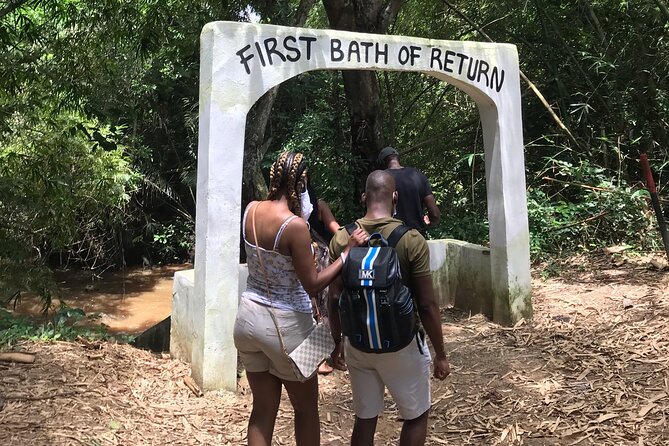
- Assin Manso begins the story at the Slave River, where a symbolic First Bath of Return may connect the visit to remembrance and healing.
- Elmina Castle and Cape Coast Castle show two different parts of the coastal trade, from holding cells and dungeons to the rooms occupied by colonial officials.
- Nii Ghana provides a private guide, with past feedback praising Nii’s patience, flexibility, kindness, and ability to explain difficult subjects.
- Kakum National Park adds a change of pace, with a canopy walk after several emotionally heavy hours.
- The $300 price includes more than admission, including private transport, fuel, lunch, bottled water, and an air-conditioned vehicle.
- The day is best for travelers of African descent and anyone prepared for painful history, not for a casual sightseeing outing.
Why the Door of Return is the heart of the day
This tour is built around remembrance. At Cape Coast Castle, the passage once called the Door of No Return is now treated symbolically as the Door of Return. That change in meaning matters most if you see the trip as a personal connection to African ancestry, not simply as a historical excursion.
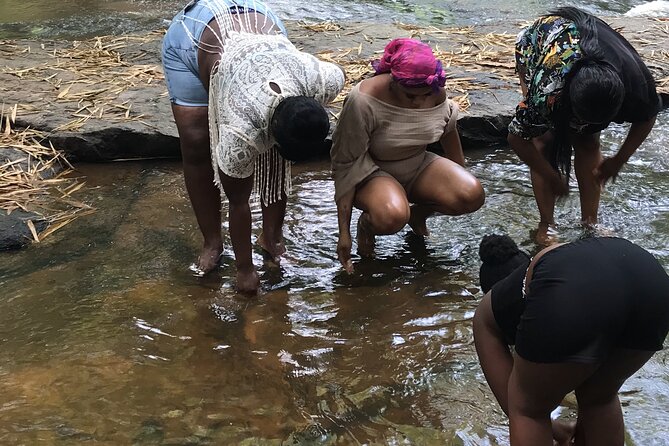
You will not be asked to treat these places as ordinary monuments. The tone is serious from the beginning, and the Assin Manso visit may include storytelling, traditional rites, and a symbolic cleansing in the river. The First Bath of Return represents spiritual renewal and reconnection with heritage.
That ritual will not suit every visitor. Some people prefer a strictly academic visit, while others find a symbolic act helpful when facing the scale of enslavement. You should decide in advance how you feel about taking part in a traditional or spiritual ceremony. The visit remains meaningful even if you approach it quietly and respectfully.
I find the order of the stops effective. You begin away from the ocean, at a place tied to the forced movement of captives, and later reach the castles where people were held before shipment. The story gains weight as the day progresses.
Other Accra days people book alongside this one:
- The Cape Coast Day Tour
★ 5.0 · 525 reviews - Experience the Beauty, History and the Culture Of Accra in a Day
★ 5.0 · 323 reviews - The Cape Coast Tour
★ 5.0 · 177 reviews
Assin Manso and the last bath at Ndonkor Nsuo
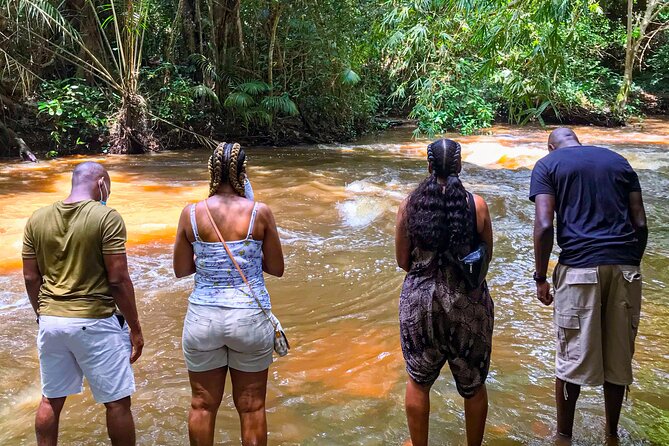
Assin Manso Ancestral Slave River Park is the emotional opening. The route leads to Ndonkor Nsuo, known as the Slave River, where enslaved Africans were forced to take their last bath before being marched toward the coast.
The important point is that this is not just a river beside a road. The site connects a landscape to a human process: capture, forced movement, bathing, confinement, and removal from Africa. Local historians guide the visit with stories about the people who passed through the area and the meaning of the memorials.
Plan on about an hour here. That sounds brief, but the subject matter is heavy, and the visit is focused rather than sprawling. You will have time to listen, reflect, and take part in the symbolic First Bath of Return if that is part of your chosen experience.
I would not rush this stop for photographs. The value is in the explanation and the personal meaning, not in collecting another picture. Wear clothing and shoes suitable for walking near a river, though the tour information does not specify the exact conditions underfoot.
For people of the African diaspora, this can be the most personal portion of the tour. It offers a chance to frame the day around ancestors and survival rather than only around the institutions that profited from slavery.
Elmina Castle and the contrast between power and suffering
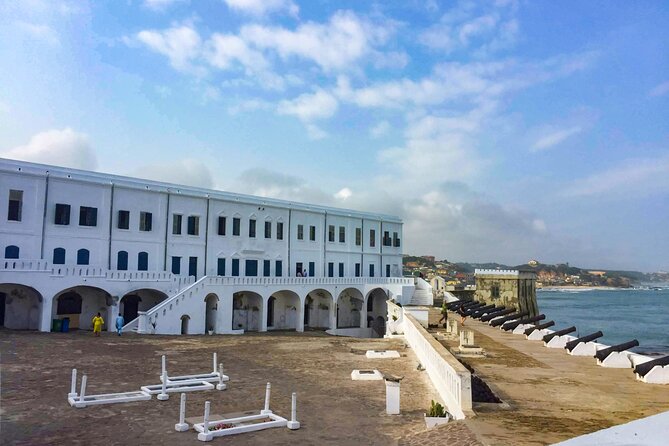
Elmina Castle was built by the Portuguese in 1482, making it one of the oldest European buildings in sub-Saharan Africa. Its seaside position is striking, but the setting should never soften what happened inside.
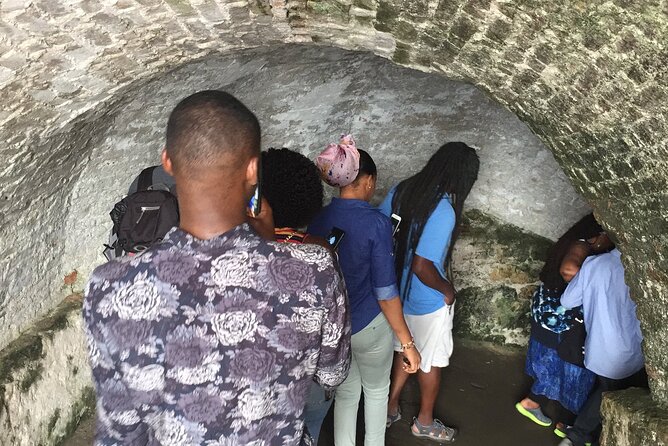
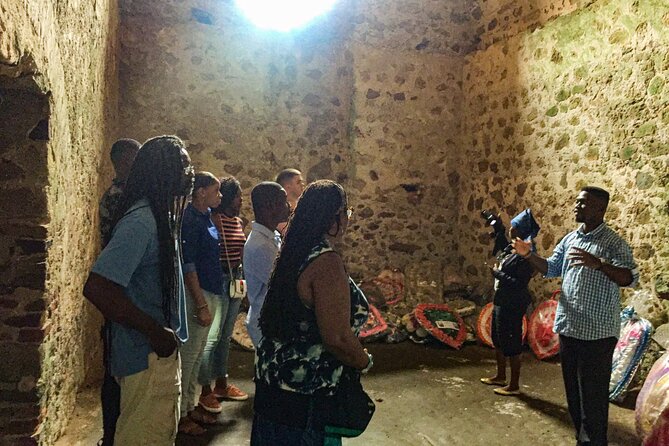
Your guided visit takes you through narrow dungeons where enslaved people were held in terrible conditions. You also see the governor’s quarters, where the rooms and living conditions contrasted sharply with the suffering below. That physical arrangement tells the story without needing much decoration: comfort and authority above, confinement and abuse beneath.
You will also pass through the Door of No Return. The doorway is not powerful because of its architecture. It is powerful because of what it represented to people who were forced through it toward ships and an unknown future.
A guide matters here. The castle can be visually impressive, and it is easy for a quick visit to become a tour of walls, courtyards, and ocean views. Nii’s role is to keep the human story in front of you, while the local castle guide supplies the site-specific history.
Give yourself room to feel unsettled. This is not a place where you need to search for a cheerful ending at every stop. The strength of the visit comes from facing the cruelty directly and recognizing the resistance and endurance of the people held there.
Cape Coast Castle and the Door of Return
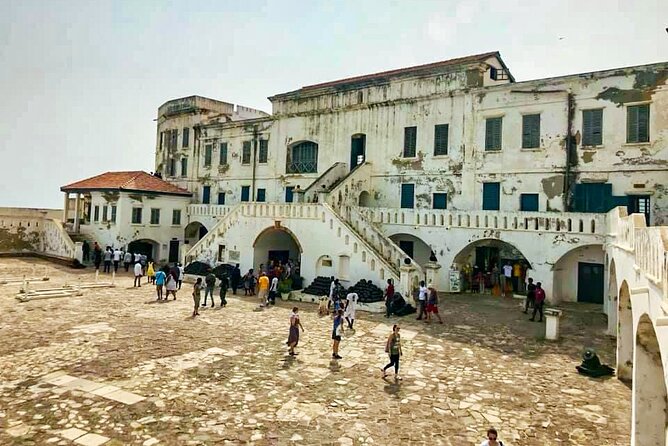
Cape Coast Castle continues the story, but it is not simply a repeat of Elmina. Seeing both castles lets you compare two major sites connected to the transatlantic slave trade and understand how the coastal system operated.
You will explore the dungeons, the governor’s quarters, and the Door of No Return, now given a new symbolic meaning as the Door of Return. The route from the dark holding areas to the doorway carries the day’s central message: people were confined, separated from their homes, and sent across the ocean, yet their descendants and cultural ties endured.
The visit is likely to be emotionally exhausting by this point. That is not a flaw, but it is something to plan for. You are not simply fitting in two old forts between meals. You are spending hours with sites tied to forced labor, family separation, death, and displacement.
A private tour helps because you can ask questions without feeling rushed by a large group. You may also find it easier to pause when you need a quiet moment. The information provided does not promise a fixed amount of free time, so tell Nii if you need a slower pace.
The castles are listed as UNESCO sites in the tour description, which adds recognition but should not be the main reason you book. The real value is the chance to see the rooms, paths, and doorways connected to the trade, with historical guidance rather than a self-guided walk.
Same coastline, a completely different kind of day:
- From Accra: Cape Coast, Elmina Castle & Kakum Park Day Tour
★ 4.6 · 144 reviews - Accra Detailed City Tour
★ 4.5 · 118 reviews - Accra Guided City Tour Experience
★ 4.7 · 88 reviews - Accra Guided City Tour Experience
★ 5.0 · 76 reviews
Kakum National Park gives the day a needed change of pace
Kakum National Park is included as a highlight, with a walk through the forest canopy. This creates a welcome shift after the Slave River and castles.
The park does not cancel out the difficult parts of the day. Instead, it gives you a short mental reset and a different way to experience Ghana. After hours focused on the coast and the slave trade, the canopy walkway brings you into the natural world and lets the day breathe a little.
The tour details do not give a precise time for Kakum or describe the walkway’s exact layout, so you should not plan your own schedule around a fixed park duration. Treat it as one part of a very full day rather than as a separate national park visit.
One practical point comes from the early start and the long drive: bring enough patience for transitions. The air-conditioned vehicle is valuable here. You may appreciate a cool, quiet ride between stops more than you expect, especially after walking and standing at the historic sites.
Lunch, transport, and the real value of $300
The price is $300 per person. That is a substantial amount, but the tour includes a private, air-conditioned vehicle, private transportation, fuel surcharge, lunch, bottled water, and admission to the listed sites.
The private vehicle is the largest part of the value. This is a long day beginning at 5 a.m., and public transport would make the route far less practical. You avoid piecing together connections between Accra, Assin Manso, Elmina, Cape Coast, and Kakum.
A private guide also changes the day. You can ask about the meaning of the First Bath of Return, the history of the castles, or the Door of Return without waiting for a general group explanation. Nii has been praised for patience and flexibility, which is especially useful when the subject matter affects people in different ways.
Lunch is included, though the supplied details do not name the restaurant or specify the menu. One account describes lunch near a beautiful beach, but you should not book this expecting a beach day. Food is a practical pause in a history-focused outing, not the main attraction.
Group discounts may improve the value if you are traveling with family or friends. Since this is a private activity, the cost may make more sense for several people sharing the vehicle and guide than for one person traveling alone.
The tour is commonly booked well ahead, with an average booking lead time of 88 days. That suggests you should reserve early if your Ghana itinerary is fixed, especially if you want a private day on a particular date.
The 5 a.m. start and what the long road means
The advertised duration is about 10 to 14 hours. That wide range is important. Traffic, road conditions, time at the castles, and the pace of your group can all affect when you return to Accra.
You will need to be ready at 5 a.m. This is not a late-start cultural outing. The early departure is necessary because the route covers several distant stops, but it can still be hard on anyone adjusting to a new time zone or recovering from a late arrival.
Arrange your previous evening with the morning in mind. Keep your belongings ready, avoid scheduling anything important that night, and carry water even though bottled water is included. Comfortable shoes are sensible because the day involves walking through historic sites and the national park.
Pickup reliability deserves attention. One booking was missed because the provider’s calendar did not properly register it, and the money was refunded after the problem. That does not prove a regular pattern, but it is enough reason to confirm your reservation, pickup location, and start time directly with Nii Ghana before 5 a.m.
The tour offers mobile tickets and pickup, and the meeting information lists the 5 a.m. start. It is also described as near public transportation, though the private pickup is the useful option for this particular route.
Who will get the most from this experience
I would recommend this tour most strongly to people of African descent returning to Ghana, especially those who want a guided connection to ancestry rather than a general city tour. The combination of Assin Manso, the castles, and the Door of Return gives the day a clear emotional purpose.
It also suits anyone who wants a concentrated introduction to Ghana’s role in the transatlantic slave trade. You see the process from several angles: the river, the holding sites, the colonial quarters, and the coastal doors.
You should think twice if you dislike early starts, long drives, or emotionally difficult subjects. This is not a relaxed day of sightseeing with a few historic stops added for variety. Kakum and lunch provide contrast, but the core of the day is remembrance.
Families and private groups may appreciate the ability to set their own tone. Still, the difficult subject matter means adults should decide how to prepare younger members of the group. The tour details say most travelers can participate, but they do not provide a specific age recommendation.
Booking, cancellation, and weather considerations
Free cancellation is available if you cancel at least 24 hours before the local start time. Changes or cancellations made less than 24 hours before departure are not refunded, so do not leave decisions until the last minute.
The experience may be canceled in poor weather or if the minimum number of participants is not met. In either case, you should be offered another date or experience, or a full refund.
Because the day begins so early, read the confirmation carefully and make sure the pickup details are clear. A mobile ticket is convenient, but it does not replace checking the meeting point and start time.
Should you book the Door of No Return tour?
Book it if you want a serious, personal day centered on Ghana’s slave-trade sites, and if you value a private guide and door-to-door transport. Nii Ghana’s patient and flexible approach is a strong reason to choose this format, particularly for a group with personal ties to the history.
The $300 price is fairer when you consider the private vehicle, fuel, lunch, water, admissions, and the distance covered. It is less attractive if you mainly want Kakum or a quick look at one castle.
Before paying, confirm the pickup directly and prepare yourself for a 5 a.m. departure and a potentially 14-hour day. If you are ready for difficult history, quiet reflection, and a long road through central Ghana, this tour offers a meaningful way to encounter the Door of Return rather than merely photograph it.
FAQ
What time does the tour start?
The tour starts at 5:00 a.m.
How long does the tour last?
The approximate duration is 10 to 14 hours.
What sites are included?
The tour includes Assin Manso Ancestral Slave River Park, Elmina Castle, Cape Coast Castle, and Kakum National Park.
Is transportation included?
Yes. Private transportation in an air-conditioned vehicle and the fuel surcharge are included.
Is lunch provided?
Yes. Lunch and bottled water are included.
Is this a private tour?
Yes. Only your group participates in the private tour or activity.
Can I cancel for a full refund?
Yes, if you cancel at least 24 hours before the experience’s local start time. Cancellations made less than 24 hours before departure are not refunded.
Just added around Accra
- Visit Aburi Garden, Tetteh Quarshie Cocoa Farm & Waterfall★ 4.0 · 4 reviews
- Historical Day Tour to Cape Coast, Elmina and Kakum★ 5.0 · 3 reviews
- Local Ghanaian Food Tasting Tours★ 5.0 · 3 reviews
- Private Airport Transfer to from ACC Kotoka by Business Car★ 5.0 · 4 reviews
- Private Slave Castles and Dungeons Tour in Cape Coast, Ghana★ 5.0 · 3 reviews
- The Door Of No Return/ Dungeon & cape Coast Castle★ 5.0 · 4 reviews
- Historical tour in Cape Coast Ghana★ 5.0 · 3 reviews
- Cape Coast Castle and Kakum National Park 2-Day Private Tour★ 5.0 · 3 reviews
Accra Tours, compared.


Experience the Beauty, History and the Culture Of Accra in a Day
Read our review →

Cape Coast, Elmina Castle & Kakum Park Day Tour
Read our review →
Browse the lists this tour appears in