
Reviewed · HALF-DAY
Half-Day Guided Fabric Tour in Ghana
Accra’s fabric culture comes alive in two very different places: the crowded stalls of Makola Market and the hands-on workshop at Exmac Fabrics. You’ll learn how prints are sold, what their symbols mean, and how cloth connects to weddings, celebrations, and daily life. Then you’ll make a batik design of your own to take home.
I like the direct access to local textile buying, and I like that the three-hour workshop lets you create something rather than only watch. Guide Albert is a fashion designer with 12 years in the industry, so he can talk about cloth, clothing, and wider Ghanaian society. The main drawback is pace: six hours in a market and workshop may feel long if fabric is not a major interest.
Key points to know before booking
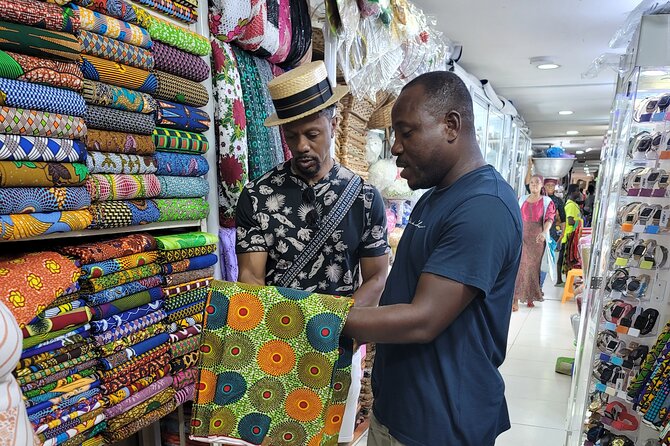
- Makola Market gives you a practical look at African print shopping, including cloth names, symbols, prices, and the way buyers and sellers negotiate.
- The Exmac Fabrics workshop is hands-on, with time to choose, design, and make your own batik tie-dye fabric.
- Albert brings fashion experience to the tour, and he can also arrange custom African wear with a 20 percent discount.
- Pickup and drop-off within Accra are included, along with private transport, bottled water, and soft drinks.
- Your finished fabric goes home with you, giving the day a useful souvenir rather than another shelf ornament.
- The group is capped at 10 people, but you still need to walk around a busy market for about two hours.
Why this fabric tour is different from a standard Accra outing
Many city tours let you look at local products from a distance. This one asks you to understand how fabric is selected, sold, worn, and made. That change matters. Instead of treating African print as colorful decoration, the tour presents it as part of social life and personal style.
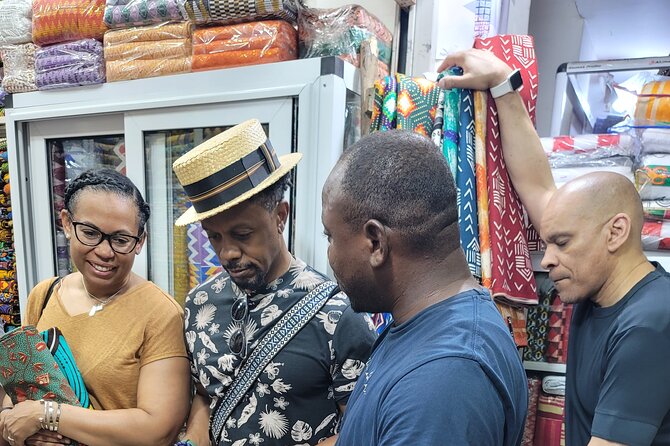
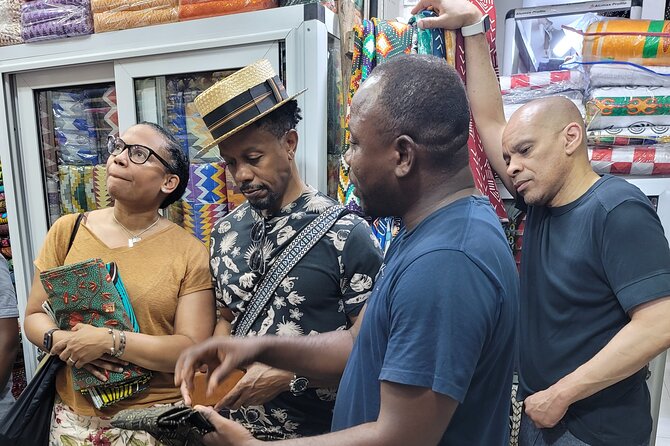
You begin with the market side of the story. At Makola Market, you see how sellers display cloth and how buyers examine patterns, ask questions, and compare prices. You learn that fabrics can carry names and symbols, and that particular designs may be chosen for specific occasions.
The second half shifts from commerce to craft. At Exmac Fabrics, you work through the process of making batik tie-dye cloth by hand. You choose a design and make the piece yourself, then take the completed fabric home.
I find that combination well judged. The market explains how cloth enters people’s lives. The workshop shows how a piece is created. You get both the cultural context and the physical work.
The tour is also private transportation based, with hotel or residence pickup and drop-off within Accra. That removes the need to arrange a taxi between stops, which is useful when your day already includes a market and a hands-on activity.
A few more Accra trips to weigh up
- Half-Day Private History Tour in Nkyinkyim Museum
★ 5.0 · 9 reviews - Half-day Accra Guided Tour
★ 4.5 · 8 reviews - Half-day Accra Safari Tour
★ 4.5 · 6 reviews
Starting at Makola Market with a fashion guide
Makola Market is the largest open market in Accra, and it is not a quiet museum-style introduction. You will walk through active sales areas where people buy and sell African prints. Expect movement, conversation, and plenty to look at.
Your guide’s role is important here. Albert is a designer, not simply a driver or general city escort. He can explain the difference between fabric types, point out symbols, and connect the cloth to the occasions when it is worn or used.
That fashion background gives the first two hours a clear focus. You are not just being shown a market stall. You are learning how to read fabric as a local product and as a social choice.
Pay attention to the language around the cloth. The tour includes information about fabric names and the meaning of symbols printed on the designs. Those details can change the way you shop. A pattern that first catches your eye may also have a message, association, or customary use worth knowing.
The buying portion is another practical benefit. You have the chance to purchase local fabric at affordable or wholesale prices. The tour does not require you to buy anything, so you can treat the shopping as optional. Still, if you hope to bring home cloth, having a designer explain what you are seeing can help you make a more informed choice.
I would keep your expectations sensible. The market visit is about seeing how the trade works, not about browsing a polished boutique. You need to walk, stay alert, and keep track of your belongings. The activity is not recommended for someone who has difficulty walking in a market setting.
Two hours is enough time to get a useful introduction without spending the entire day among stalls. If you are passionate about textiles, you may wish for longer. If you are only mildly curious, this is the part most likely to test your attention.
Making batik at Exmac Fabrics
The three-hour workshop at Exmac Fabrics is the heart of the experience. Here, you move from looking at finished cloth to taking part in the process.
You are guided through hand-made batik tie-dye. The activity includes choosing a design and making your own fabric by hand. The exact design choices are not specified in advance, which is helpful if you want room to create something personal rather than reproduce a fixed sample.
This is a good fit for people who enjoy practical activities. You do not need to be an experienced artist based on the tour requirements. The most important thing is a willingness to work with your hands and follow the process.
The value of the workshop is partly emotional and partly practical. A purchased textile can be beautiful, but fabric you help make carries a clearer memory of the place. You leave with something you designed, not just something you selected from a shelf.
The workshop also gives context to the labor behind the finished cloth. Prints in a market can look effortless when neatly folded in a stack. Making batik by hand reminds you that patterns require choices, time, and physical work.
Three hours is generous for a half-day tour. It should allow room for instruction and for your own design work rather than a rushed demonstration. The tradeoff is that the workshop leaves less spare time for other Accra sights on the same day.
Your finished batik fabric is yours to take home. The information does not specify its final size or whether it will be ready for clothing immediately, so think of it as a handmade textile souvenir unless the guide explains another use during the activity.
Albert’s fashion experience adds real value
The strongest feature of this tour is the guide’s connection to the fashion industry. Albert has 12 years of experience and is a designer himself. That gives him a useful viewpoint across the whole process, from fabric selection to finished clothing.
He can answer questions about textiles, but his role is not limited to cloth. He can also discuss Ghanaian society, which gives the market visit more depth. You can ask how fabric choices relate to social occasions, personal style, or local customs.
The tour also includes 20 percent off custom African wear clothing. That offer may appeal if you want to have fabric turned into a garment, though custom clothing is separate from the listed tour activities. Be clear about the design, cost, timing, and delivery arrangements before committing to an order.
I would treat the clothing discount as a useful extra, not the reason to book. The main experience is the market visit and batik workshop. The custom-wear option is best for someone already considering a made-to-measure outfit.
The small maximum group of 10 should also help. A group this size is more manageable in a market than a large coach party, and workshop instructions are easier to follow when the guide can give people individual attention. The tour may still feel different depending on how many people book that day.
Same coastline, a completely different kind of day:
- The Cape Coast Day Tour
★ 5.0 · 525 reviews - Experience the Beauty, History and the Culture Of Accra in a Day
★ 5.0 · 323 reviews - The Cape Coast Tour
★ 5.0 · 177 reviews - From Accra: Cape Coast, Elmina Castle & Kakum Park Day Tour
★ 4.6 · 144 reviews
What the $160 price covers
At $160 per person, this is not a bargain-basement market visit. The right question is what you receive for that price.
The fee includes private transportation, pickup and drop-off within Accra, the listed activities, all fees and taxes, bottled water, and soft drinks. It also covers the work involved in making the batik fabric. You are not paying only for an escort through a market.
The six-hour duration helps explain the cost. You receive roughly two hours at Makola Market and three hours at Exmac Fabrics, with transport arranged around the stops. The guide’s fashion background adds another layer that a basic shopping trip would not provide.
Lunch and breakfast are not included. Plan to eat before or after the tour, or ask about timing when you book. No meal stop is listed, so you should not assume that lunch will be built into the day.
I see the best value here for someone who would otherwise pay separately for transport, a market guide, and a craft class. If you only want to buy fabric, $160 may feel high. If you want explanations, personal assistance, and your own handmade textile, the price becomes easier to justify.
The tour is booked about 20 days ahead on average. That suggests you should not leave it until the last minute if the workshop is important to your plans, particularly if you are visiting Accra on a tight schedule.
Practical planning for a six-hour outing
Pickup is offered from your hotel or residence within Accra, and the tour uses an air-conditioned vehicle for private transportation. That is a welcome feature in a city day that includes walking and time in a workshop.
The experience is available with a mobile ticket, and confirmation is received when you book. You should still check the pickup time and location carefully, especially if your accommodation has more than one entrance or sits on a large property.
Wear clothing and shoes that let you walk comfortably. The market portion requires walking, and the activity is not recommended for people who have walking difficulties. The workshop is hands-on, so you may also prefer clothes that you do not mind wearing during a fabric-making activity.
The group maximum is 10. That is small enough for a personal feel, though the word private transportation does not necessarily mean the entire tour is reserved only for you unless your booking confirms that arrangement.
Since food is not included, have breakfast before pickup. Bottled water and soft drinks are supplied, but they are not a substitute for a meal during a six-hour activity.
The cancellation terms are friendly but firm. You can receive a full refund if you cancel at least 24 hours before the local start time. Cancellations or changes made less than 24 hours ahead are not accepted for a refund.
Who will enjoy this most
I would recommend this experience to you if fabric is more than a shopping item. It suits people interested in fashion, design, craft, African print traditions, and the everyday meaning of clothing.
It is also a strong choice if you like taking home something you made. The batik workshop gives the day a clear purpose, and the finished piece can serve as a personal reminder of Accra.
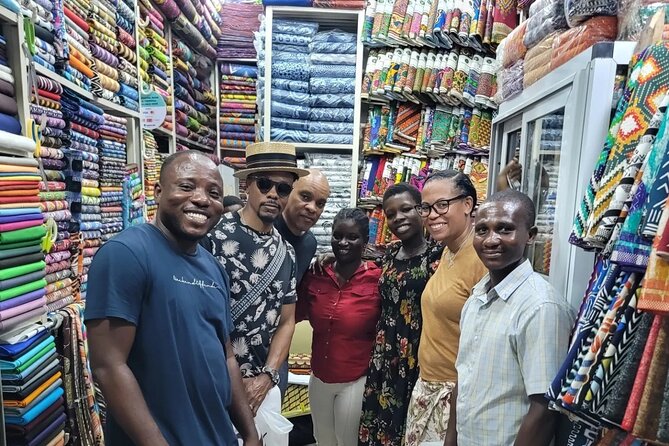
The tour works for solo participants and groups. One review describes a visit with two colleagues, and the format clearly allows a small group to share the activity. A solo booking could also work because the workshop gives you a task and a natural focus.
You may want to skip it if your main goal is to cover many famous sights in one day. Six hours is a substantial block of time, and the tour does not include a broad city sightseeing route. It is focused, not general.
It may also be a poor match if you dislike shopping environments, walking through markets, or creative activities. Makola Market is active and practical, while batik-making requires participation. This is not a sit-back-and-watch excursion.
What the strongest praise points to
The most convincing positive detail is the combination of craft instruction and expert guidance. Albert’s design background gives the experience a clear link between the fabric stall, the workshop, and the custom clothing option.
The other strong point is the chance to make your own batik. The activity is not merely a demonstration. You choose, design, and produce a fabric to take home.
The available rating is 5 out of 5 from three reviews. That is encouraging, but it is still a small sample, so I would read the rating as a sign of strong early satisfaction rather than a guarantee that every person will feel the same.
One review also highlights the option to order custom clothes after the tour. That may be especially useful if you have been looking for African wear made from fabric selected in person. Just remember that the garment order is an additional decision, and you should confirm its separate terms.
Should you book this fabric experience?
Book it if you want a focused, personal look at Ghanaian textiles and prefer making something to simply photographing it. The market explanations, Albert’s fashion experience, and the three-hour batik session give the tour more substance than a quick shopping stop.
Think twice if you are short on time, avoid walking, or want lunch and a wider Accra sightseeing program included. You will need to arrange your own food, and the day is built around textiles from start to finish.
For the right person, the $160 cost buys a clear chain of experiences: see how fabric is sold, understand what its designs mean, make your own cloth, and take it home. That is a fair exchange if textiles are high on your Accra list.
FAQ
How long does the fabric tour last?
The experience lasts approximately six hours. About two hours are scheduled at Makola Market, followed by about three hours at Exmac Fabrics for the batik tie-dye activity.
What is included in the price?
The price includes an air-conditioned vehicle, private transportation, all fees and taxes, bottled water, soft drinks, the listed activities, and hotel or residence pickup and drop-off within Accra. A 20 percent discount on custom African wear clothing is also included.
Is lunch included?
No. Lunch and breakfast are not included, and no meal is listed as part of the experience.
Can I take home the fabric I make?
Yes. The batik fabric you create or design during the workshop is yours to take home.
Is hotel pickup available?
Yes. Pickup and drop-off are offered at hotels or residences within Accra.
Is the tour suitable for someone who has difficulty walking?
No. The experience is not recommended for people who cannot walk comfortably or who have walking difficulties in a market setting.
Just added around Accra
- Visit Aburi Garden, Tetteh Quarshie Cocoa Farm & Waterfall★ 4.0 · 4 reviews
- Historical Day Tour to Cape Coast, Elmina and Kakum★ 5.0 · 3 reviews
- Private Airport Transfer to from ACC Kotoka by Business Car★ 5.0 · 4 reviews
- Private Slave Castles and Dungeons Tour in Cape Coast, Ghana★ 5.0 · 3 reviews
- Local Ghanaian Food Tasting Tours★ 5.0 · 3 reviews
- Historical tour in Cape Coast Ghana★ 5.0 · 3 reviews
- The Door Of No Return/ Dungeon & cape Coast Castle★ 5.0 · 4 reviews
- Cape Coast Castle and Kakum National Park 2-Day Private Tour★ 5.0 · 3 reviews
Half-Day, compared.
Half-Day Private History Tour in Nkyinkyim Museum
Read our review →
City Highlights Half-day Guided Tour with Transfers
Read our review →
Half-Day Private African Drumming Lessons with Pick Up
Read our review →Browse the lists this tour appears in