
Reviewed · ACCRA CITY TOURS
Accra City Tour, explore the history, and local flavours.
Accra’s story comes into focus through its people, political landmarks, and busy streets. This private city tour links the W.E.B. DuBois Center, Makola Market, Jamestown Lighthouse, National Museum, and Kwame Nkrumah Memorial Park into one full day of history and local life.
I like the personal scale, since only your group takes part, and I like the mix of museum time with a walk through Makola Market. Guides including Biney and Makafui have been praised for careful service, while driver George has helped make longer outings run smoothly.
The main consideration is its length. The planned visits add up to about five and a half hours before driving, pauses, and market time, so the total can stretch toward nine hours. Also, the tour title mentions local flavours, but the supplied schedule does not specify a food tasting or restaurant stop.
Key points to know before booking
- Five major Accra stops: You visit political, cultural, commercial, and coastal parts of the city in one outing.
- A private experience: Only your group participates, which makes it easier to ask questions or adjust the pace.
- Strong guide focus: Biney, Makafui, and George are named among the available team members, with Biney also serving as guide and driver on some trips.
- A useful history lesson: The National Museum and Kwame Nkrumah Memorial Park explain Ghana’s move from colonial rule to independence.
- A city view from Jamestown: The 28-metre lighthouse gives you a broad look over the Jamestown community and Accra.
- Allow most of a day: The advertised duration is about 5 to 9 hours, depending on the day’s pace and transport.
Why this Accra tour works as a first look
Accra can feel like several cities at once. It has colonial-era districts, national monuments, old coastal communities, markets, museums, and neighborhoods shaped by the wider African and Atlantic world. This route gives you a guided introduction rather than leaving you to connect those pieces on your own.
The order of stops also gives the day a useful rhythm. You begin with W.E.B. DuBois and Pan-African thought, move through everyday commerce at Makola, look over the city from Jamestown Lighthouse, then return to formal collections at the National Museum and the Nkrumah memorial.
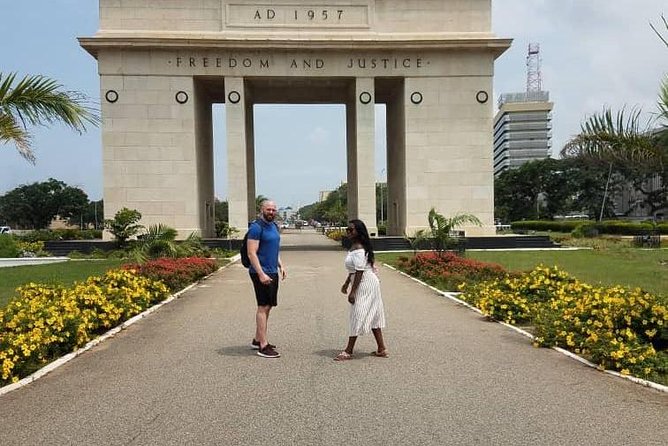
You will not simply be ticking off famous buildings. The point is to see how Ghana’s political story, African American connections, trade, and city life overlap. That makes the tour especially useful if you have only one day in Accra or want an orientation before exploring on your own.
Because this is a private tour, you can ask for more explanation at the places that matter most to you. If you care about independence history, the guide can give extra attention to Nkrumah. If markets and local life interest you more, Makola and Jamestown may become the heart of your day.
More accra city tours in Accra:
- Know Ghana in 4 hrs – Accra City Tour
★ 4.5 · 47 reviews - Escape Accra City to Aburi Gardens and Tetteh Quarshie Cocoa Farms
★ 4.5 · 32 reviews - Accra City Tour
★ 5.0 · 21 reviews
W.E.B. DuBois Center: Pan-African ideas in a quiet setting
The first stop is the W.E.B. DuBois Center, where you spend about an hour. The site explores the history of the Gold Coast, Afro-American connections, and the transatlantic slave trade through the life and work of W.E.B. DuBois.
The setting is deliberately calm. An open-air theatre sits behind DuBois’s former home in a pastoral setting, offering a sharp change from the noise and movement of central Accra. The quiet helps you think about why DuBois valued this place during the final period of his life.
The museum library and seminar room contain his personal library and a collection of his works. This gives the visit a more personal quality than a simple monument. You are looking at the intellectual tools and surroundings connected with a major Pan-African figure.
I would pay attention here to the connection between Ghana and the African diaspora. The stop is not only about one man. It introduces the idea of Accra as a meeting point for African political thought and international Black identity.
Admission is included. Give yourself time to listen rather than rushing through the rooms. The subject can be emotional, especially when the conversation turns toward forced migration and the slave trade, so this is a place where a good guide adds real value.
Makola Market: Accra’s commercial heart for 30 minutes
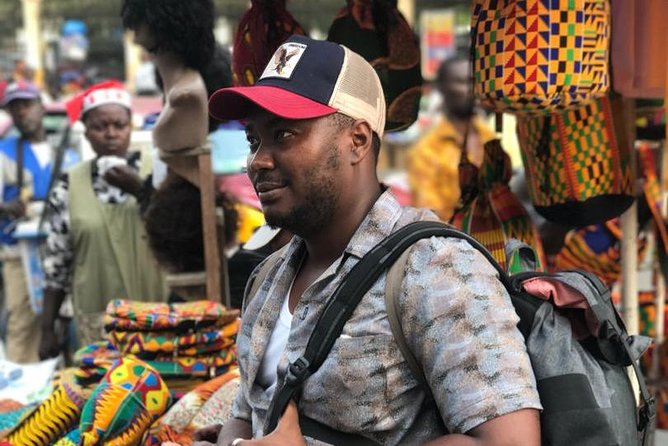
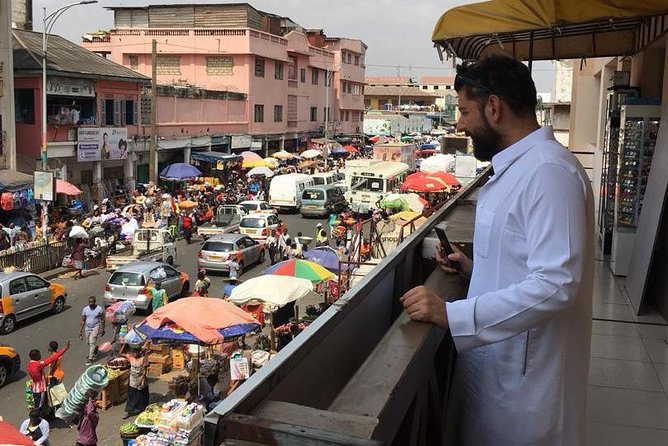
Makola Market was constructed in 1924 and remains a central shopping district in Accra. Your visit is a 30-minute walk and talk through the market, with time to speak with traders.
This is the tour’s most direct encounter with present-day Accra. Museums explain the past, but Makola shows you how the city works through buying, selling, conversation, and movement. Your guide can help you understand what you are seeing and make the walk less confusing.
Thirty minutes is enough for a first look, but not enough to explore every corner of a major market district. That is not necessarily a fault. A shorter stop keeps the day moving and avoids turning the visit into a long shopping session.
If you want to buy something, ask your guide about timing before the walk begins. The supplied details do not promise a dedicated shopping period, so you should treat Makola as a guided introduction rather than a full retail excursion.
This is also the place to clarify the local flavours part of the tour description. The schedule says you will walk and talk with traders, but it does not name a food tasting or meal. If tasting Ghanaian food is important to you, ask the provider before booking so your expectations match the actual plan.
Admission is free. Keep the market portion flexible, since the pace may depend on the group and the day’s conditions.
Jamestown Lighthouse: A high view over old Accra
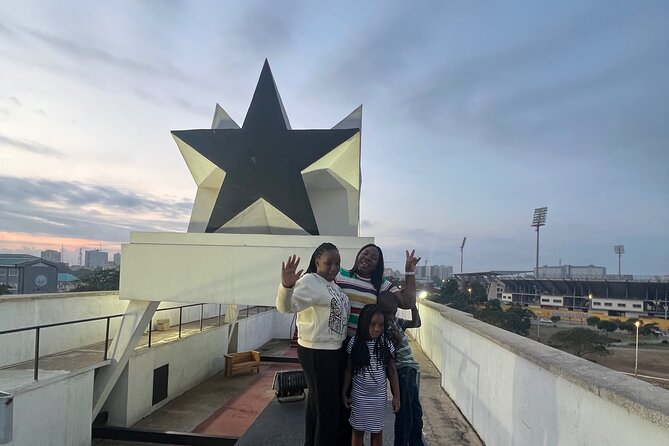
Jamestown Lighthouse is a 28-metre, or 92-foot, structure originally built in the 1930s. The stop lasts about an hour and offers a general view of the Jamestown community and Accra.
The height gives this part of the tour a welcome change of perspective. After walking at street level in Makola, you can look across the area and see how the community fits into the wider city. The view helps turn names on a map into a physical sense of place.
Jamestown is an important part of Accra’s coastal identity. The lighthouse itself is the main feature listed here, but the surrounding community is part of what makes the stop meaningful. You are not only seeing an old structure, you are looking at a lived-in urban district with a long connection to the coast.
The details provided do not explain the exact arrangements for climbing the lighthouse, so ask the guide what access is available on your date. The listed hour may include time in the surrounding area, explanations, and photographs rather than a full hour at the top.
This is one of the better spots for pictures, and one guide, Biney, has been praised for taking impressive photographs on other Ghana trips. That does not guarantee a photography service on every booking, but it is worth asking if you want help with group shots.
A few more Accra trips to weigh up
- Experience the Beauty, History and the Culture Of Accra in a Day
★ 5.0 · 323 reviews - Ghana Heritage Tours – Beyond The Return
★ 5.0 · 36 reviews - 10 Days Ghana Cultural and Heritage Trip
★ 5.0 · 31 reviews - Cape Coast Historical Day Tour
★ 5.0 · 24 reviews
National Museum of Ghana: From archaeology to fine art

The National Museum receives about an hour of your time and covers archaeology, ethnography, and fine art. Its objects trace Ghana and the wider region from the Stone Age to the recent past.
This is the stop that gives the tour its broadest historical frame. Instead of focusing on one president or one district, the museum brings together objects from different parts of life and different periods. You can use it to place the other stops in context.
The museum matters because Ghana’s story is not limited to the colonial period or independence in 1957. The collections point to older societies, cultural practices, and artistic traditions. That wider view keeps the day from becoming only a political tour.
An hour is a sensible introduction, but it will not allow you to study every display at length. If you already have a strong interest in archaeology or fine art, you may want a separate visit with more time. For a first visit, the guide can help you focus on the objects most connected to the day’s themes.
The National Museum is also a good place to ask questions that arise at earlier stops. After seeing the old coastal district and hearing about the Gold Coast, you may understand the museum displays in a more connected way.
Admission is included. Since this is an indoor stop, it can also provide a useful change of pace during a long day.
Kwame Nkrumah Memorial Park: The independence story’s main chapter
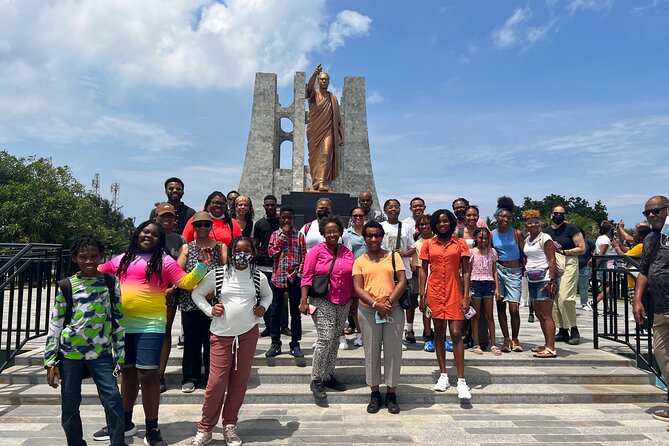
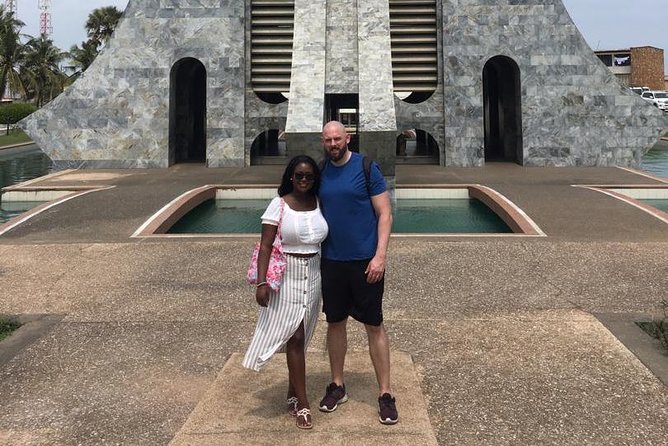
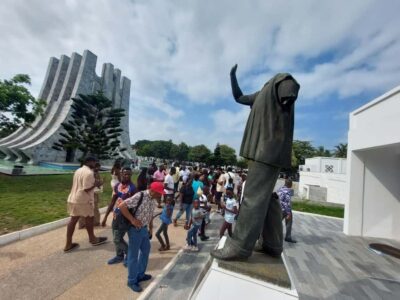
The final listed stop is Kwame Nkrumah Memorial Park, with about two hours set aside. The park is the burial place of Osagyefo Dr. Kwame Nkrumah, Ghana’s first president and the leader associated with independence from colonial rule on 6 March 1957.
This is likely the most important stop for anyone wanting to understand modern Ghana. The memorial is dedicated to Nkrumah’s campaign to free the Gold Coast from colonial rule, and the site gives that political turning point a physical presence.
The mausoleum provides a front for Nkrumah’s statue, while the museum is built below ground so it does not compete visually with the mausoleum. The design uses rhythm, contrast, and harmony as its main principles. Even if architecture is not your main interest, the arrangement makes the memorial feel considered rather than simply decorative.
The museum contains Nkrumah’s personal effects and publications. These details help move him from a name in a history book to a political figure with working papers, possessions, and ideas. Your guide can also explain how the independence movement fits into the broader history introduced at the DuBois Center and National Museum.
Two hours is the longest scheduled stop, and that makes sense. You have enough time to see the mausoleum, spend time in the museum, and ask questions without treating the visit as a quick photo stop.
If the independence story is your main reason for booking, make sure the guide knows that at the beginning of the day. The private format allows you to give this stop the attention it deserves.
Guides and the value of a private group
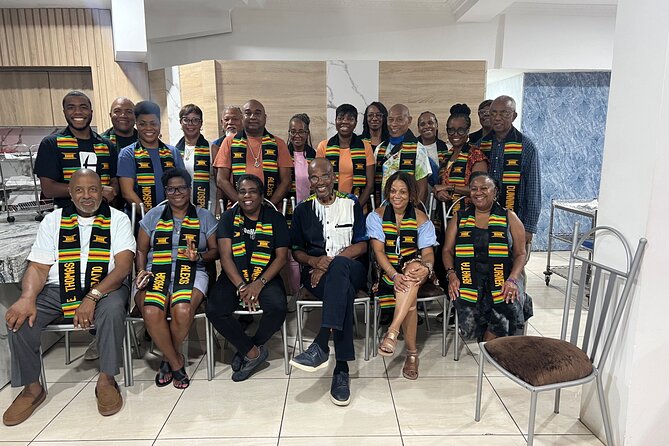
The human side of this tour is important. You are accompanied by a trained Ghanaian guide, and only your group participates. That makes a difference in a city where context often matters as much as the object in front of you.
Biney, Makafui, and driver George are named among the team members connected with this experience. Biney has worked as both guide and driver on Ghana trips and is also known for helping with photographs. Makafui and George have been described as professional and attentive, with George handling driving duties.
I would confirm who will guide and drive your group when you book, since the exact team may vary. The names are useful because they give you a point of contact, but they should not be treated as a guarantee that all three people will be present.
The private format suits families, couples, and small groups with different interests. You can ask for clearer explanations, pause for photographs, or tell the guide when you need a slower pace. It also avoids the rigid feel of a large coach outing.
The trade-off is that you are relying more heavily on the assigned guide for the day’s flow. Ask practical questions early, including the pickup location, expected driving time, and how much time you will have at Makola Market.
Is $80 good value for a full day in Accra?
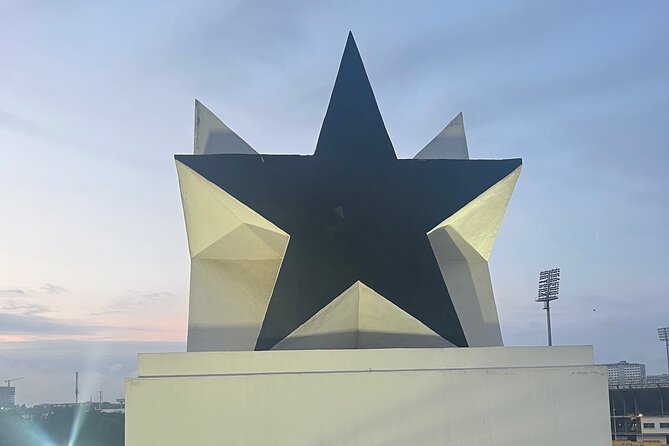
The price is $80 per person. Its value depends on how many people are in your group and what is included beyond the listed admission tickets.
You are paying for a private activity lasting about 5 to 9 hours, pickup being offered, a local guide, transport arrangements, and admission to the W.E.B. DuBois Center, Jamestown Lighthouse, National Museum, and Kwame Nkrumah Memorial Park. Makola Market does not charge an admission fee.
For a solo participant, $80 may feel less attractive than joining a larger group. For a couple, family, or small private party, the cost can make more sense because you are buying personal attention and a dedicated itinerary rather than only a seat on a bus. Group discounts are available, so ask how the final price changes with your party size.
The broad route also saves you the work of arranging several separate visits. You get major landmarks, a market walk, a city view, and museum time in one booking. The price is strongest for someone who values structure and local explanation.
The main thing to clarify is what the price covers besides admission. The supplied details do not specify meals, food tastings, or every transport condition. Since the activity title refers to local flavours, ask directly if any food is included or if that part simply refers to the market visit.
Timing, comfort, and who should book
The tour operates Monday through Sunday from 7:00 a.m. to 5:00 p.m. The listed duration is approximate, so plan for most of a day rather than assuming a short city loop.
Pickup is offered, but the exact pickup details are not stated. Confirm the meeting arrangement before the day begins. The tour is near public transportation, though the private pickup option may be easier if you are carrying bags or staying outside the central area.
Most people can participate, and service animals are allowed. The itinerary includes walking at Makola Market and time at Jamestown Lighthouse, so tell the provider about any mobility needs before booking. The details do not specify stair access at the lighthouse or the amount of walking between each stop.
This tour fits you best if you:
- Have limited time in Accra and want a broad introduction.
- Care about Ghana’s independence and Pan-African history.
- Prefer a private group and direct access to a local guide.
- Want both formal museums and ordinary city life.
- Are comfortable setting aside most of a day.
You may want another option if your main goal is a dedicated food tour, since no specific tasting or meal is listed. You may also prefer a shorter outing if five to nine hours feels too long.
Cancellation and booking advice
You can cancel free of charge up to 24 hours before the experience starts for a full refund. Cancellations made less than 24 hours before the start time are not refunded, and changes inside that window are not accepted.
The cut-off is based on Accra local time. Confirmation is received at booking. Since the duration and pickup details can vary, send the provider your questions before the cancellation window closes.
FAQ
How long does the Accra City Tour last?
The experience lasts approximately 5 to 9 hours. The exact length can depend on the pace of the day, driving, and time spent at each stop.
What places are included?
The route includes the W.E.B. DuBois Center, Makola Market, Jamestown Lighthouse, the National Museum of Ghana, and Kwame Nkrumah Memorial Park.
Is this a private tour?
Yes. Only your group participates in the activity.
Is pickup offered?
Yes, pickup is offered. The exact pickup arrangements are not provided, so confirm the details with the provider before the tour.
Are admission tickets included?
Admission is included at the W.E.B. DuBois Center, Jamestown Lighthouse, the National Museum of Ghana, and Kwame Nkrumah Memorial Park. Makola Market has no admission charge.
Does the tour include food tasting?
The supplied details do not specify a food tasting or meal. The market visit includes walking and talking with traders, so ask the provider whether any food experience is planned.
What is the cancellation policy?
You can cancel at least 24 hours before the start time for a full refund. Cancellations or changes made less than 24 hours before the start time are not accepted for a refund.
Should you book this Accra tour?
Book it if you want one private day that connects Ghana’s independence story, Pan-African history, museums, market life, and Jamestown views. The route is broad, and the local guide is central to making those separate places fit together.
I would especially recommend it for first-time visitors, families, and small groups that want a guided introduction without joining strangers. The strongest parts are the private format, the carefully chosen historical stops, and the chance to ask direct questions of a Ghanaian guide.
Before paying, confirm two points: who will guide and drive your group, and whether local flavours means a planned tasting or only the Makola Market visit. If you are happy with those details and can spare most of a day, the $80 price offers a practical way to get your bearings in Accra while meeting the city through both its major landmarks and its daily life.
Just added around Accra
- Visit Aburi Garden, Tetteh Quarshie Cocoa Farm & Waterfall★ 4.0 · 4 reviews
- Historical Day Tour to Cape Coast, Elmina and Kakum★ 5.0 · 3 reviews
- Private Airport Transfer to from ACC Kotoka by Business Car★ 5.0 · 4 reviews
- Private Slave Castles and Dungeons Tour in Cape Coast, Ghana★ 5.0 · 3 reviews
- Local Ghanaian Food Tasting Tours★ 5.0 · 3 reviews
- Historical tour in Cape Coast Ghana★ 5.0 · 3 reviews
- The Door Of No Return/ Dungeon & cape Coast Castle★ 5.0 · 4 reviews
- Cape Coast Castle and Kakum National Park 2-Day Private Tour★ 5.0 · 3 reviews
Accra City Tours, compared.

Escape Accra City to Aburi Gardens and Tetteh Quarshie Cocoa Farms
Read our review →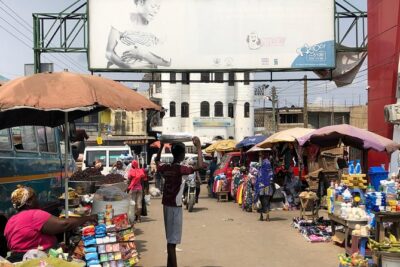

Experience Authentic Ghana in a Personalized Accra City Tour
Read our review →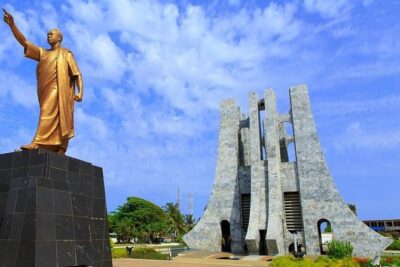
Browse the lists this tour appears in