
Reviewed · ACCRA TOURS
Trails of the transatlantic slave trade in Ghana
The most powerful part of this 8-day Ghana tour is its clear route through places tied to the transatlantic slave trade. You move from Accra to Assin Manso, Cape Coast, Elmina, Axim, and the western coast, seeing castles, forts, a slave river, and an ancestral graveyard rather than treating Ghana’s past as a single museum stop.
I like the private air-conditioned car, which gives your group room to set the pace, and I like the mix of serious history with places such as Nzulezo Stilt Village and Kakum National Park. The main drawback is the price, $1,955 per person, plus the long touring days and the heat and humidity noted by one guest.
Key points at a glance
- Assin Manso connects the route to the last bath given to enslaved people before shipment overseas.
- Cape Coast and Elmina castles offer two different but equally difficult encounters with the slave trade.
- Nuru-Deen and Tony are named members of the team, with careful planning and comfortable transport highlighted as strengths.
- Nzulezo Stilt Village adds a rare living community experience reached by canoe across Amansari Lake.
- Kakum’s canopy walkway rises 30 meters above the rainforest, giving the final transfer day a welcome change of pace.
- The price covers a private car, guide, taxes, accommodation, breakfast, and 24-hour support, but not flights, visas, lunch, or dinner.
What this Ghana route is really about
This is not a quick Accra sightseeing package. It is a private journey through three regions, with the history of forced migration at its center and Ghanaian culture, coastal life, and nature woven into the route.
The castles and forts matter because they show how European trading powers operated along the coast. Cape Coast Castle, Elmina Castle, Fort St. Jago, Fort Appollonia, Fort Santo Antonio, Fort Batenstein, and Fort Metal Cross are not interchangeable ruins. Each belongs to a different point in the history of European trade and control.
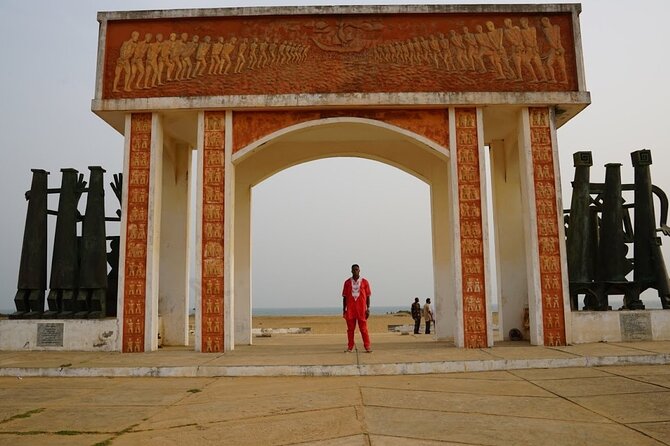
You will also see places that give the story a human scale. Assin Manso Ancestral Slave River Site recalls the final washing of enslaved people before they were taken overseas. The Ancestral Graveyard adds a place for remembrance, not just interpretation.
The private format suits you if you want a guide focused on your group. It also gives you one useful advantage on a sensitive trip: you can ask questions, pause, and discuss what you are seeing without being tied to a large bus group.
Other Accra days people book alongside this one:
- The Cape Coast Day Tour
★ 5.0 · 525 reviews - Experience the Beauty, History and the Culture Of Accra in a Day
★ 5.0 · 323 reviews - The Cape Coast Tour
★ 5.0 · 177 reviews
Day 1: A simple arrival in Accra
On arrival at Terminal 3 of Kotoka International Airport, a staff member meets you and takes you to your hotel. The listed airport transfer lasts about 30 minutes and has no admission charge.
That first day is intentionally light. After an international flight, you will appreciate not having a formal sightseeing program. The tour includes air-conditioned accommodation and ongoing support, which can make arrival easier, especially if you are unfamiliar with Accra.
The stated start time for the touring program is 7:00 am. Confirm the exact pickup arrangement with the operator before arrival, since your first transfer and hotel check-in are part of the practical side of the trip.
Day 2: Du Bois, Nkrumah, Independence Square, and Osu Castle
The first full day begins in Accra with a seven-hour program. You visit the W.E.B. Du Bois Centre for Pan-African Culture, linked to Dr. W.E.B. Du Bois and his work on the Encyclopedia Africana after accepting an invitation from Ghana’s first president, Kwame Nkrumah.
This stop helps place Ghana within the wider Pan-African story. It is a useful opening because the tour is not only about the period of European enslavement. It also considers African intellectual life, independence, and the ideas that shaped modern Ghana.
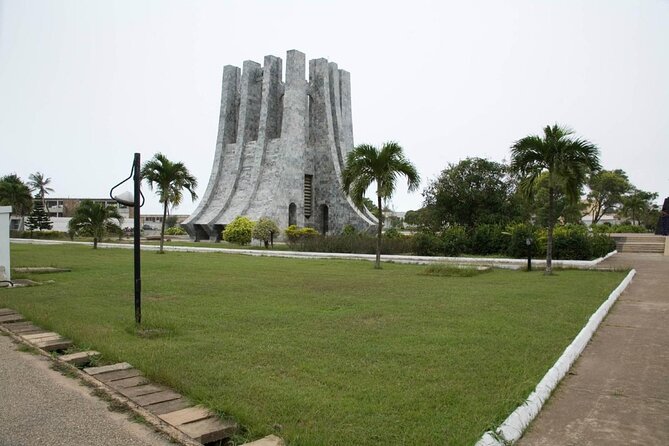
At Kwame Nkrumah Memorial Park, you visit the memorial, mausoleum, and nearby Independence Square. These sites connect the country’s independence story to the earlier history you will study on the coast. I like this pairing because it gives you more than a sequence of colonial buildings. You see both the damage caused by colonial systems and the political work that followed.
The day continues to Osu Castle, once the administrative seat of the colonial governor. This is a full Accra day, so expect history, city traffic, and several stops rather than a slow walk through one district.
Day 3: Assin Manso and Cape Coast Castle
The route leaves Accra for Ghana’s Central Region. The first major stop is Assin Manso Ancestral Slave River Site, where the river served as the last bath for enslaved people before shipment overseas. You also visit the Ancestral Graveyard.
This is one of the most important stops on the tour because it broadens the story beyond the castles. A castle can feel like a solid monument. A river and burial ground make the movement of people and the loss of lives feel more immediate.
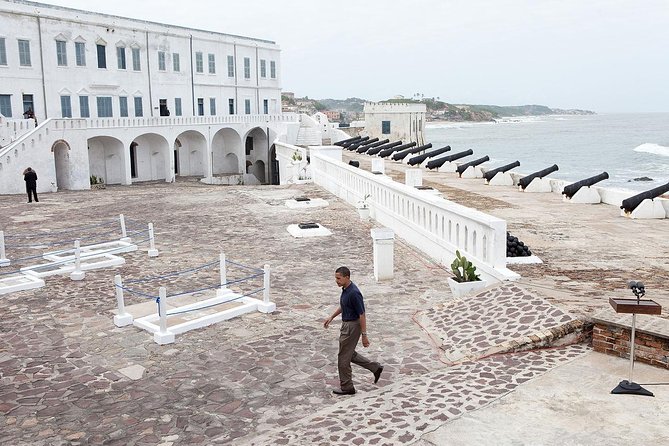
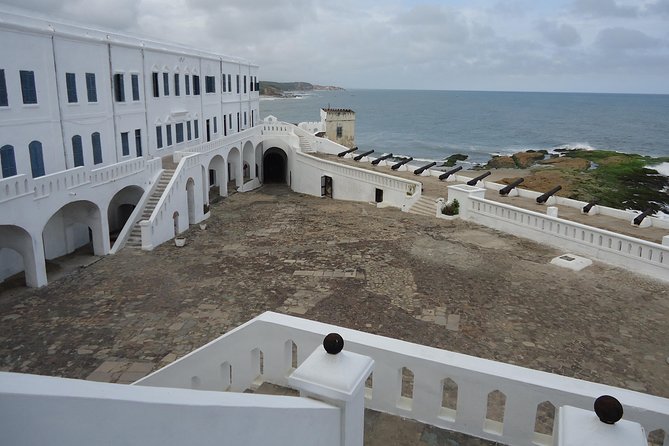
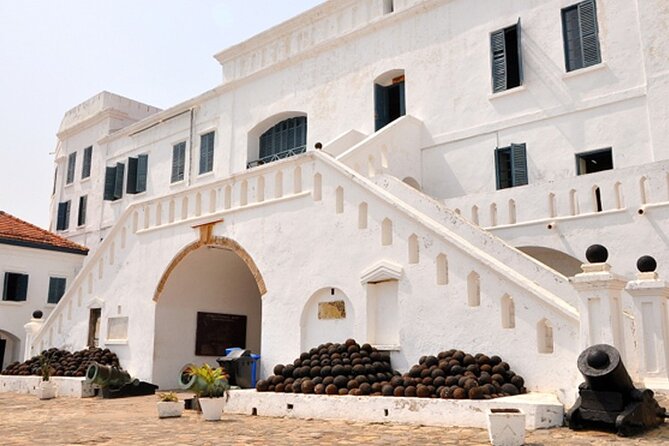
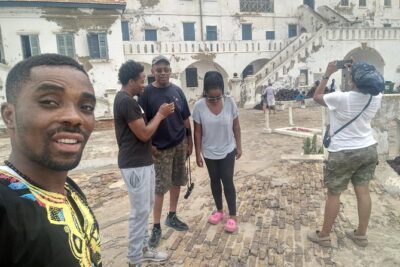
Cape Coast Castle follows. The site is a UNESCO World Heritage Site, built in 1653 by the Swedish and later taken over by the British. Its place in the tour is central, and the guided visit is intended to explain how enslaved people were held, treated, and sent toward the coast.
Allow yourself time to take in the setting. The castle is not simply an old fort with good views. Its rooms and passageways carry a difficult record, and the guide’s explanation will shape how much you understand. This is a day for listening and asking direct questions.
The program lasts about seven hours. The combination of road travel and an emotionally heavy castle visit can leave you tired, so keep the evening quiet if possible.
Same coastline, a completely different kind of day:
- From Accra: Cape Coast, Elmina Castle & Kakum Park Day Tour
★ 4.6 · 144 reviews - Accra Detailed City Tour
★ 4.5 · 118 reviews - Accra Guided City Tour Experience
★ 4.7 · 88 reviews - Accra Guided City Tour Experience
★ 5.0 · 76 reviews
Day 4: Elmina Castle and Fort St. Jago
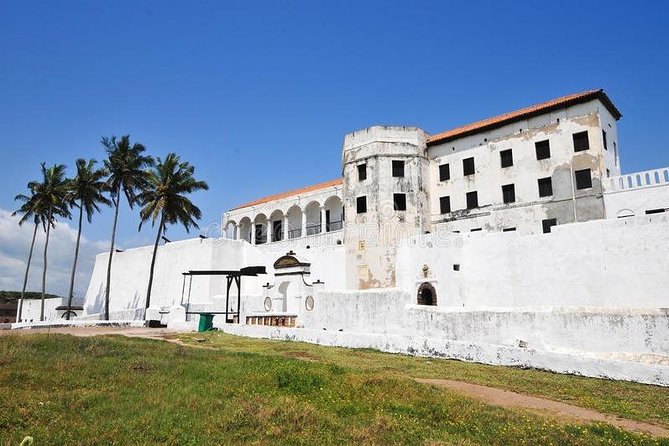
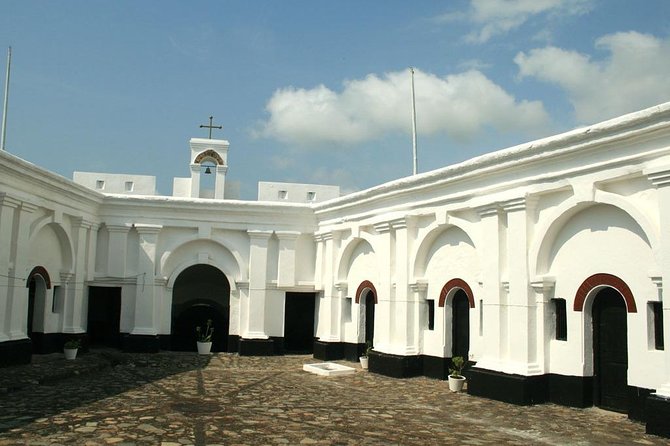
Day four focuses on Elmina, a colonial coastal community with both historic and cultural interest. The main visit is Elmina Slave Castle, also called St. George Castle, described as Ghana’s oldest and largest slave castle. Like Cape Coast Castle, it is a UNESCO World Heritage Site.
Seeing both castles is worthwhile. If you visited only one, you would miss the chance to compare their scale, setting, and presentation. The two sites help show how extensive the coastal system was, and a second visit can make details from the first day easier to understand.
You then continue to Fort St. Jago, set on a hill overlooking Elmina. The hilltop position adds a different visual angle to the day. Instead of only entering a fort, you also see how military sites watched over the town and coast.
The touring portion lasts about five hours, followed by time at a beachfront hotel. That slower afternoon is well placed. After two demanding history days, you can rest rather than rush into another formal attraction.
The accommodation is listed as overnight in Elmina, with air conditioning included. One practical caution: the supplied information includes a warning that a selected beach was not clean for swimming or walking along the shore. Treat beach time as a chance to rest, not as a guaranteed swimming stop.
Day 5: Canoeing to Nzulezo Stilt Village
After breakfast, you travel west to Beyin in the Western Region. From there, a canoe carries you across Amansari Lake to Nzulezo, a community built on top of the lake.
This is one of the tour’s most distinctive changes of pace. The castles tell you about systems imposed from outside. Nzulezo gives you a look at a community organized around water and daily life on the lake. The canoe ride is part of the experience, not just transport to the next stop.
The village visit is followed by Fort Appollonia, built by English merchants. Placing the fort after Nzulezo creates a useful contrast between a local community and a European trading structure.
The day lasts about seven hours, then continues to overnight accommodation in Axim. You should expect this to be an active day. The canoe trip, village visit, fort, and road travel make it one of the fuller sections of the itinerary.
Day 6: Fort Santo Antonio, Fort Batenstein, and the coast
Day six visits Fort St. Anthony, also called Fort Santo Antonio, near Axim. The Portuguese built it in 1515, making it one of the earliest European forts on this route.
You then continue to Fort Batenstein in Butre. The two forts help show that the coast was shaped by competing European powers, not one single colonial presence. The dates and builders matter here, so use your guide to connect the buildings to the wider trade system.
After the fort visits, you go to a beach for the rest of the day and stay overnight in Busua. At about five hours, this is one of the shorter touring days. That is welcome after the longer transfer and sightseeing periods.
The coastal break also gives the itinerary some breathing room. Still, beach conditions are not presented as uniform, and one account specifically warned about cleanliness at a selected beach. If swimming matters to you, ask ahead which beach is planned and what conditions are expected.
Day 7: Fort Metal Cross, Kakum, and the return to Accra
The morning begins in Dixcove with Fort Metal Cross, originally called Fort Dixcove. It was a military structure, so this stop adds another layer to the route of coastal forts.
You then start the return to Accra, with a detour to Kakum National Park. This protected rainforest area is home to endangered mammals including forest elephants and monkeys. The main activity is the canopy walkway, suspended 30 meters above the ground.
Kakum is a smart addition to a history-focused tour. After several days of castles and forts, the forest gives you a physical change of scene and a chance to focus on Ghana’s natural setting. You can also choose a nature walk with an experienced park guide.
The full day is listed at about seven hours, and you stay overnight in Accra. Since this includes a fort, a transfer, and a national park, it is not a lazy final sightseeing day. Wear suitable footwear and keep your schedule flexible within the day.
Day 8: Accra’s Arts Centre and departure
After checking out, you visit the Accra Arts Centre, a large market selling different kinds of artifacts. This is the place to shop for souvenirs and practice bargaining.
The market experience is part of the cultural program, but it can also be intense. Shopkeepers and hawkers will try to persuade you to buy, so decide what you want before you arrive and keep your bargaining friendly. The advice to use Ghanaian currency is practical. ATMs are said to be plentiful, and local currency makes small purchases and tips easier.
If time allows, the schedule includes a recreational center before your airport transfer. The tour ends with your departure from Ghana, so do not assume there will be a long open block after shopping. Your flight time will control the final hours.
What the $1,955 price covers
At $1,955 per person, this is not a budget group excursion. Its value comes from what is bundled into a private eight-day journey:
- Private insured air-conditioned car with fuel
- Professional English-speaking driver-guide
- Accommodation with air conditioning
- Breakfast
- Entrance fees, taxes, and other listed fees
- 24-hour ongoing support
- Airport pickup
For a private group that wants a dedicated vehicle, guide, and multi-region route, the price can make sense. You are not paying only for entrance tickets. You are also paying for the coordination of hotels, transfers, site visits, and support across eight days.
The price does not include international airfare, visa fees, lunch, or dinner. Those meals can affect your total budget, especially on days when the vehicle is moving between regions. Tipping should also be planned. One useful local tip is to carry Ghanaian currency and tip staff generously.
The number of people in your private group will affect how the per-person price feels. A couple will carry more of the cost than a larger family or group of friends, but a small group may value the privacy and flexibility more.
Guides, transport, and the rhythm of the trip
The tour uses a private air-conditioned car, a major comfort advantage in Ghana’s heat and humidity. You spend several days moving between Accra and the coast, so a reliable vehicle matters as much as the attractions.
The named team members include Nuru-Deen, Tony, and other Tripafrica staff. Nuru-Deen is associated with attentive trip planning and adapting to requests from different people in a group. Tony is specifically identified as a punctual, professional driver-guide for Cape Coast. If you have a preference, ask at booking whether one of them will lead your trip.
The program is private, and only your group participates. That means you can ask for clarification at the castles or adjust small parts of the day, though the broad route and listed stops are already set.
Most people can participate, and the tour is near public transportation, though the main touring is by private vehicle. The canopy walkway, canoe ride, fort steps, heat, and long days are the main physical considerations stated by the itinerary. Humidity was a specific concern for one person, so lightweight clothing, water, and sensible pacing will help.
Who should book this experience?
I would choose this tour if your main reason for visiting Ghana is to understand the transatlantic slave trade through actual sites, not only through a city museum. It also suits you if you want nature, coastal towns, markets, and Pan-African history in the same trip.
It is a strong fit for families or friend groups who value a private vehicle and a fixed hotel plan. The guide can focus on your group, and the air-conditioned car is useful during the longer transfers.
You should think twice if you want a slow beach holiday. This is an active route with early starts, several seven-hour days, and a serious subject at its core. It may also feel expensive if you are comfortable arranging your own transport and accommodation.
Should you book the Ghana slave-trade trail tour?
Book it if you want a carefully connected route from Accra through Cape Coast, Elmina, Axim, and the western coast, with the major castles, forts, Assin Manso, Nzulezo, and Kakum included. The strongest reasons are the private format, air-conditioned transport, broad historical coverage, and the personal attention associated with Nuru-Deen and Tony.
Before paying, confirm your hotel names, exact beach stop, guide assignment, meal plans, and airport timing. Also budget for visas, flights, lunch, dinner, tips, and shopping.
I would recommend it most to first-time visitors who want Ghana’s major historical sites organized in one trip. If you prefer fewer scheduled stops, ask whether the route can be slowed down. The tour’s value is highest when you want the whole coastal story and are ready for the long, meaningful days it requires.
FAQ
Where does the tour begin and end?
The tour begins with pickup at Terminal 3 of Kotoka International Airport in Accra and ends with a transfer to the airport for departure from Accra.
How long does the experience last?
The experience lasts approximately eight days.
What time does the tour start?
The stated start time is 7:00 am.
Is this a private tour?
Yes. Only your group participates in the private activity.
Is airport pickup included?
Yes. Pickup is offered, and the arrival transfer from Kotoka International Airport to the hotel is included.
What kind of transportation is provided?
A private insured, air-conditioned car with fuel is provided.
Is a guide included?
Yes. The tour includes a professional English-speaking driver-guide.
Are entrance fees and taxes included?
Yes. All listed fees and taxes are included.
Are meals included?
Breakfast is included. International airfare, visa fees, lunch, and dinner are not included.
Can I cancel for a full refund?
You can cancel at least 24 hours before the experience start time for a full refund. Cancellations or changes made less than 24 hours before the start time are not accepted for a refund.
Just added around Accra
- Visit Aburi Garden, Tetteh Quarshie Cocoa Farm & Waterfall★ 4.0 · 4 reviews
- Historical Day Tour to Cape Coast, Elmina and Kakum★ 5.0 · 3 reviews
- Private Slave Castles and Dungeons Tour in Cape Coast, Ghana★ 5.0 · 3 reviews
- Local Ghanaian Food Tasting Tours★ 5.0 · 3 reviews
- Private Airport Transfer to from ACC Kotoka by Business Car★ 5.0 · 4 reviews
- The Door Of No Return/ Dungeon & cape Coast Castle★ 5.0 · 4 reviews
- Historical tour in Cape Coast Ghana★ 5.0 · 3 reviews
- Cape Coast Castle and Kakum National Park 2-Day Private Tour★ 5.0 · 3 reviews
Accra Tours, compared.


Experience the Beauty, History and the Culture Of Accra in a Day
Read our review →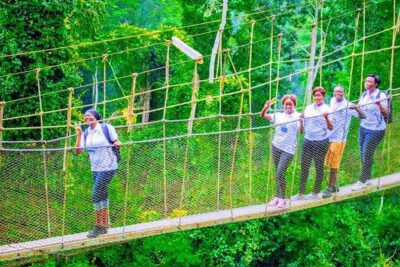

Cape Coast, Elmina Castle & Kakum Park Day Tour
Read our review →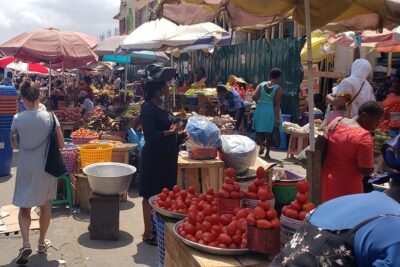
Browse the lists this tour appears in