
Reviewed · ACCRA TOURS
Nima Experience
Nima is not a polished sightseeing district. It is a working Accra neighborhood where market sellers, families, and small businesses keep moving from early morning. This private walk takes you into that daily rhythm, with time for Nima Market, local homes, food, spices, and stories of migration from across Ghana.
I like the private format, which gives you a better chance to ask questions and move at a comfortable pace. I also like the hotel pickup and direct neighborhood access, since you do not have to work out the first unfamiliar taxi or transit connection yourself. The main consideration is that Nima is a poor, crowded urban community, so this is not a comfortable sightseeing stroll for everyone. You should come with respect, patience, and an open mind.
Key points to know before you book

- Nima is a real working neighborhood, not a staged cultural attraction.
- Nima Market offers local foods, spices, and chances to speak with market women.
- Local homes and migration stories add personal context to the area.
- Private guiding keeps the experience focused on your questions and interests.
- Hotel pickup is included, with an 8:00 am start time.
- The $135 price makes the most sense for travelers who value a private, guided introduction to urban Accra.
Nima at 8:00 am: an early look at Accra
The tour begins at 8:00 am, a useful time for seeing Nima at work. The neighborhood is described as a place where things do not slow down, and an early start lets you meet the day as people head to their businesses, markets, and daily tasks.
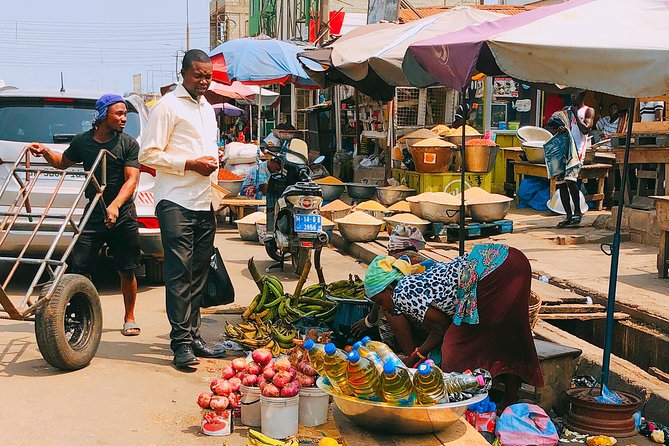
Your guide leads you on foot through the community. This matters because Nima makes more sense at walking pace. From a vehicle, you would see only a busy district through a window. On foot, you can stop at stalls, notice the range of goods, and ask how the neighborhood functions.
The walk lasts about two to three hours, with the market listed as the main stop. The precise balance between walking, conversation, market time, and visits to homes can vary, so I would treat the duration as an approximate range rather than a tightly timed program.
This is a private activity, meaning only your group participates. That setup gives you more room to ask about subjects that interest you, from food and work to family movement across Ghana. It also lets you signal when you need a short pause or when you would rather spend longer at the market.
Other Accra days people book alongside this one:
- The Cape Coast Day Tour
★ 5.0 · 525 reviews - Experience the Beauty, History and the Culture Of Accra in a Day
★ 5.0 · 323 reviews - The Cape Coast Tour
★ 5.0 · 177 reviews
Nima Market: food, spices, and everyday commerce
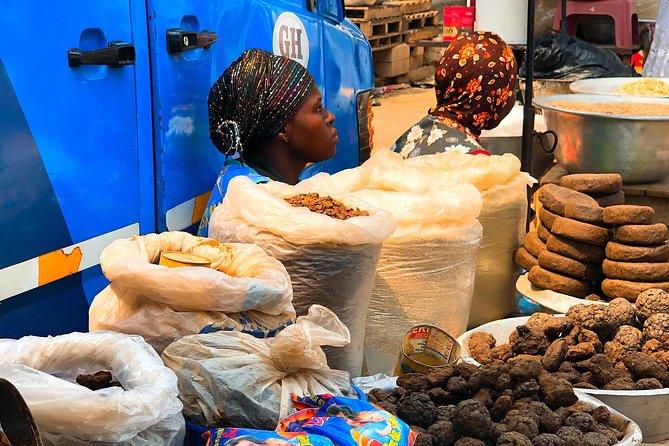
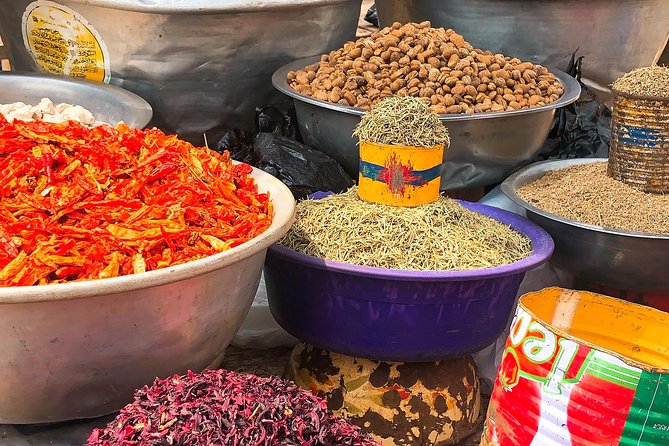
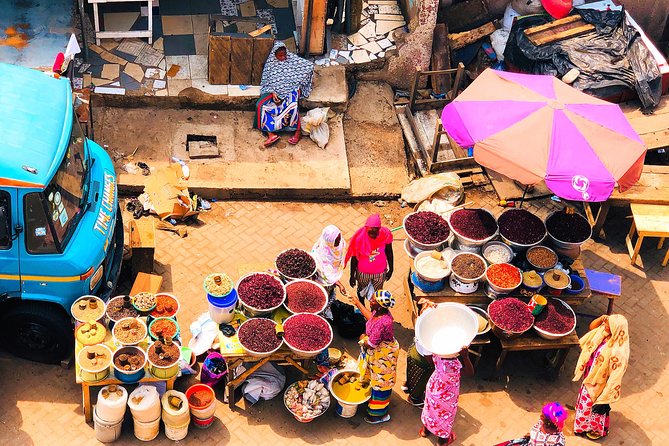
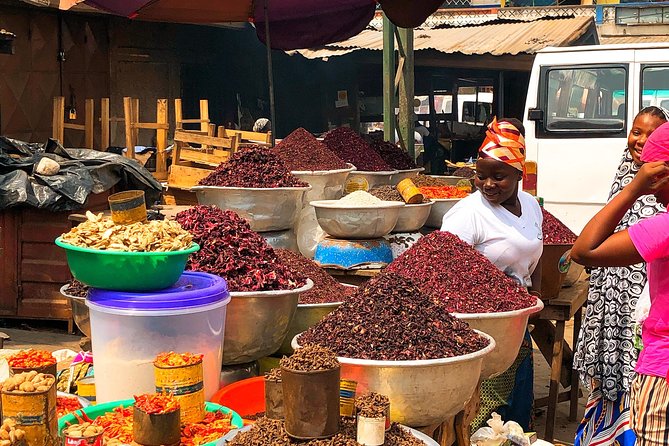
Nima Market is the heart of the visit. You can look for local foods and different spices, and you are welcome to buy items directly from sellers. The market is not simply a place to pass through for photographs. It is where the tour connects you with ordinary commerce and the ingredients used in local cooking.
The market is also a chance to interact with local women who sell goods. That contact should be handled politely. Ask before taking photographs, listen when someone is explaining a product, and buy something if you spend time examining a stall. A small purchase can make the interaction feel more balanced than treating the market as a display.
You might find the market more interesting if you already have a few questions ready. Ask what a spice is used for, how it is prepared, or where a food item comes from. The available details do not name each product, so your guide and the sellers are the best source for what is available on the morning you visit.
I like this part of the tour because it offers a practical way to connect with Accra. Food is less abstract than a general talk about culture. A handful of spices, a tray of ingredients, or the way goods are arranged can lead to a much clearer conversation about daily life.
The drawback is that a market in a dense, working neighborhood may feel intense. You should expect activity around you and accept that the experience is not designed for quiet browsing or a carefully arranged photo stop.
Local homes and stories of migration
The walk also includes local houses and stories about how some residents came to Nima. The important point is not simply seeing buildings. It is hearing how people from different parts of Ghana have made a life in one Accra neighborhood.
Nima is described as home to people from every tribe in the country. That makes the area useful for understanding Accra as a city shaped by movement. People do not live in one place only because of birthplace or tribal identity. Work, family, opportunity, and changing circumstances can bring them to an urban neighborhood such as Nima.
Your guide can help connect the physical setting with those personal stories. A market stall, a home, and a street corner become more meaningful when you understand why people came there and how they support themselves.
A visit to local homes calls for particular care. You should follow the guide’s direction about where to go and what is appropriate to photograph. The supplied information does not promise access to every home or describe the interiors, so think of this as a respectful look at community life, not a formal house tour.
The tour can also show the demands placed on working families. One account describes seeing women working hard with babies on their backs, reflecting childcare choices available while earning a living. That detail may be difficult to see, but it points to the practical pressures behind the market activity. Come prepared to listen rather than judge.
A private walk with Hassan or another local guide
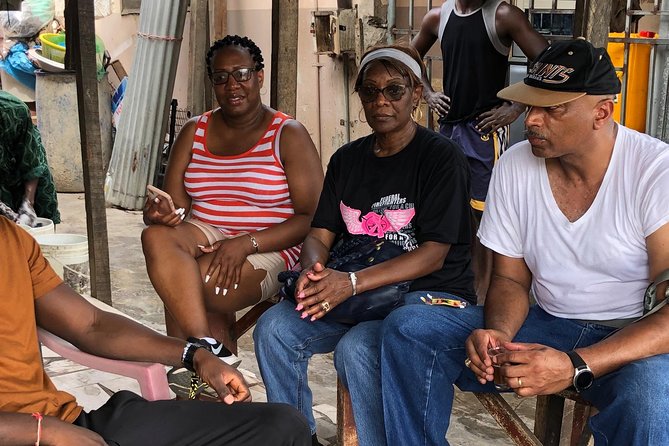
The guide is central to the quality of this experience. Hassan is named as one guide associated with the tour, and the private format means your group can speak directly with the person leading you. If Hassan leads your walk, you can ask him about the people, businesses, and movement that shape Nima.
A local guide can also help you avoid the two common mistakes of neighborhood tours. The first is seeing poverty as entertainment. The second is walking through an unfamiliar place without understanding what you are seeing. Good guiding turns the visit toward people’s work, decisions, and stories.
You should use the private setting well. Ask questions as they arise instead of saving everything for the end. If you are curious about a spice, a type of food, or why a family moved to Nima, ask at the relevant moment.
The small-group format also helps with social courtesy. A large group can block a narrow market area or make local people feel watched. With only your party, you can keep a lower profile and give the guide room to manage introductions.
Still, a private tour does not guarantee a particular guide, exact route, or fixed conversation. The information names Hassan in connection with the experience, but it does not state that he leads every departure. Book this for the access and format, not on the assumption that one named guide is certain.
Same coastline, a completely different kind of day:
- From Accra: Cape Coast, Elmina Castle & Kakum Park Day Tour
★ 4.6 · 144 reviews - Accra Detailed City Tour
★ 4.5 · 118 reviews - Accra Guided City Tour Experience
★ 4.7 · 88 reviews - Accra Guided City Tour Experience
★ 5.0 · 76 reviews
What the $135 price really covers
At $135 per person, this is not a bargain walk if you are measuring only the number of hours. A two to three-hour neighborhood tour can look expensive beside a basic city stroll. The value is in the combination of private guiding, hotel pickup, local access, market time, and interpretation.
Round-trip transfers from your Accra hotel are included. That saves you the trouble of arranging transport to an unfamiliar starting point and makes the early 8:00 am meeting time easier. It also means the price covers more than the walking portion itself.
The private arrangement matters most for couples, families, or small groups who want a direct conversation rather than a standard group route. If several people are booking together, ask about the available group discount. That could improve the per-person value, especially for a larger private party.
You should also remember that the price does not mean every possible expense is included. The details specifically mention purchasing local food and spices, so bring some money if you want to buy from the market. Those purchases are optional, but the chance to support sellers is part of what makes the stop more personal.
For a solo visitor, $135 is a significant spend. I would choose it only if you place a high value on private access, hotel transportation, and local conversation. For two or more people sharing the experience, the cost may feel more reasonable.
The pace, comfort, and tone of the walk
The tour is active but not described as strenuous. It is a two to three-hour walking experience in an energetic urban area, with time spent in a market and around local homes. You should be comfortable walking for much of the morning and managing the normal sensory demands of a busy neighborhood.
Wear practical clothing and shoes. The supplied details do not specify the road or walkway conditions, so sensible footwear is the safest choice. You may also want to carry only what you need, since a market walk is easier when your hands are free.
The tone of the visit depends partly on your attitude. Nima is not presented as a set of monuments with neat historical dates. Its interest comes from people working, selling, cooking, moving through the streets, and explaining how they came to live there.
That makes this a better fit for someone who wants context than for someone seeking classic Accra landmarks. You will not be promised a grand view or a list of major sights. You will get a closer look at one community and the many lives contained within it.
Photography deserves special care. The supplied information does not state a formal photography rule, so ask permission before photographing people, homes, children, or stalls. Even when a photograph seems harmless, the person in it may not see the situation the same way.
Who will get the most from Nima
I would recommend this experience to visitors who want to understand Accra through its residents rather than through a checklist of attractions. It suits curious people who enjoy markets, food, social history, and unplanned questions.
It is also useful for first-time visitors who want hotel pickup and a private introduction. Starting with a guide can help you get your bearings in a neighborhood you might not choose to explore alone.
Families may appreciate the private setup, since the guide can adjust the conversation and pace. Still, parents should decide if their children are ready to see poverty and demanding working conditions without turning the visit into a spectacle.
This tour is less suitable if you want a quiet, polished, or highly predictable outing. It may also disappoint you if you expect an extensive museum-style explanation or a long list of monuments. The attraction here is direct contact with a living community.
Practical booking advice for the morning
Confirmation is provided at booking, and mobile tickets are available. Pickup is offered from your Accra hotel, but you should make sure your hotel details are entered correctly so the morning meeting is clear.
The tour is near public transportation, although the included pickup may be the simpler choice for an early start. The stated meeting time is 8:00 am, and the walk lasts approximately two to three hours.
Free cancellation is available if you cancel at least 24 hours before the start time. Changes or cancellations made inside that period are not accepted for a refund. The experience also requires good weather. If poor weather cancels the tour, you are offered another date or a full refund.
These rules are worth noting because a market walk depends on outdoor conditions. Give yourself enough time to decide if your plans change, rather than waiting until the morning of the tour.
Should you book this Nima experience?
Book it if you want a private, human-scale look at Accra, and if you are willing to approach Nima as a real neighborhood rather than a sightseeing set. The market, local food, spices, homes, and migration stories give the tour a clear purpose, while hotel pickup removes some practical friction.
The strongest reasons to choose it are the private guide, the chance to ask direct questions, and the opportunity to buy from local sellers. The main caution is the setting itself. Nima can expose you to poverty and hard working conditions, including women caring for babies while working. That is meaningful context, but it requires maturity and respect.
At $135 per person, I see the best value for small groups who want personal guiding and included transfers. Solo visitors should compare the price with how much they value private access. If that sounds like your kind of morning, Tichama Tours offers a focused way to see a side of Accra that a standard city tour is unlikely to show.
FAQ
Where does the Nima Experience take place?
The experience takes place in Nima, a neighborhood of Accra, Ghana.
How long does the tour last?
The walking tour lasts approximately two to three hours.
What time does the tour start?
The stated start time is 8:00 am.
Is hotel pickup included?
Yes. Round-trip transfers from your Accra hotel are included.
Is this a private tour?
Yes. Only your group participates in the activity.
What will I see at Nima Market?
You can see local foods and different spices, purchase items from the market, and interact with local women who sell goods.
Does the tour visit local homes?
Yes. The walking experience includes visits to local houses, along with stories about how some residents migrated to Nima.
Can I buy food or spices during the tour?
Yes. The experience allows you to purchase local food and spices from the market.
Is the tour available with a mobile ticket?
Yes. A mobile ticket is available.
What is the cancellation policy?
You can cancel at least 24 hours before the start time for a full refund. Cancellations or changes made less than 24 hours before the start time are not accepted for a refund. If poor weather cancels the experience, you can choose another date or receive a full refund.
Just added around Accra
- Visit Aburi Garden, Tetteh Quarshie Cocoa Farm & Waterfall★ 4.0 · 4 reviews
- Historical Day Tour to Cape Coast, Elmina and Kakum★ 5.0 · 3 reviews
- Private Airport Transfer to from ACC Kotoka by Business Car★ 5.0 · 4 reviews
- Private Slave Castles and Dungeons Tour in Cape Coast, Ghana★ 5.0 · 3 reviews
- Local Ghanaian Food Tasting Tours★ 5.0 · 3 reviews
- Historical tour in Cape Coast Ghana★ 5.0 · 3 reviews
- The Door Of No Return/ Dungeon & cape Coast Castle★ 5.0 · 4 reviews
- Cape Coast Castle and Kakum National Park 2-Day Private Tour★ 5.0 · 3 reviews
Accra Tours, compared.


Experience the Beauty, History and the Culture Of Accra in a Day
Read our review →

Cape Coast, Elmina Castle & Kakum Park Day Tour
Read our review →
Browse the lists this tour appears in