

Reviewed · ACCRA CITY TOURS
Explore the Beautiful History of Accra City
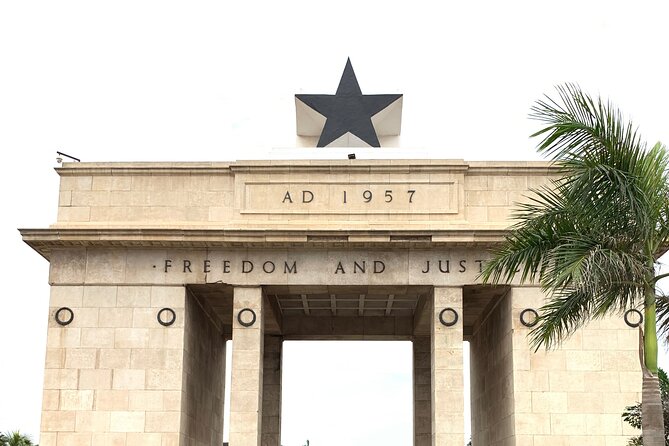
Accra’s story comes into focus through places that still shape daily life: Independence, the National Museum, Makola Market, and Jamestown. In about five hours, you move from Ghana’s national birth to its trade, art, politics, and coastal communities.
I like the private format, since your group can ask questions and adjust the pace. I also like the mix of formal sights and working city spaces, especially Makola Market and the craft stalls at the Centre for National Culture. The trade-off is a fairly brisk schedule, with only 30 to 45 minutes at several major stops.
Key points to know before booking
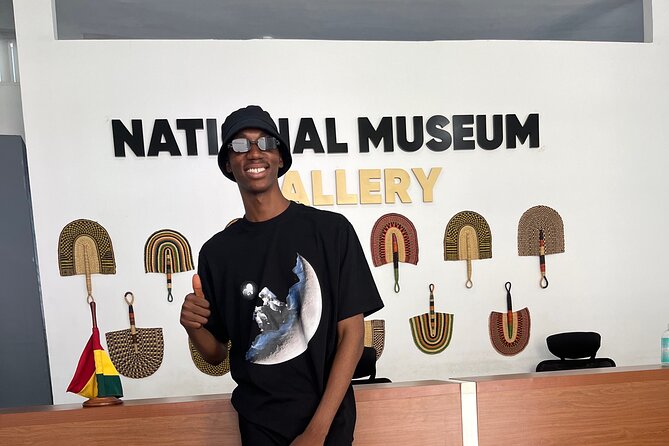
- Six very different Accra stops: The route covers national monuments, a museum, a market, a historic neighborhood, and an arts center.
- Private touring for your group: You do not share the activity with other participants.
- A useful first-day overview: The schedule gives you ideas for places to revisit on your own.
- Jeff is praised for personal service: One account identifies the driver as Jeff, who arrived early and shaped the visit around the group’s interests.
- Five hours with transport included: Bottled water, an air-conditioned vehicle, and entrance fees listed for paid sites are included.
- Makola adds real city life: This is not only a monument tour. You also see where Accra shops, sells, and moves.
A first look at Accra in five hours
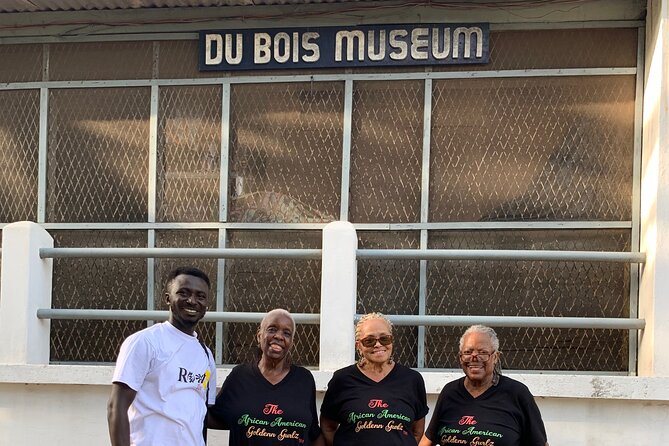
This is a good orientation tour if you want the main pieces of Accra without spending several days planning separate visits. The route begins with Ghana’s independence and then moves through memorial, museum, market, coastal, and craft experiences.
The private setup matters here. Accra can feel large and busy, and a vehicle helps connect sites that are not best treated as one long walk. You start at Afrikiko on Liberation Road at 9:00 a.m., and the activity returns to that meeting point at the end.
The schedule is set up for breadth rather than long visits. You will see many places, but you should not expect extended museum study, a long market wander, or a slow neighborhood walk. Think of it as a well-packed introduction that helps you decide what deserves more time later.
More accra city tours in Accra:
- Know Ghana in 4 hrs – Accra City Tour
★ 4.5 · 47 reviews - Escape Accra City to Aburi Gardens and Tetteh Quarshie Cocoa Farms
★ 4.5 · 32 reviews - Accra City Tour
★ 5.0 · 21 reviews
Independence and the meaning of Ghana’s national story
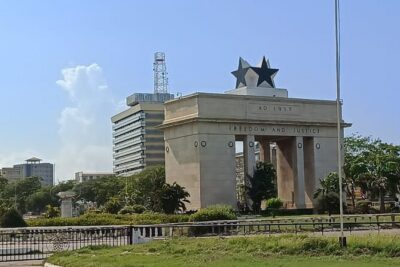
The first stop focuses on Ghana’s independence and lasts about 30 minutes. This gives the tour a clear starting point: before looking at markets, monuments, or art, you begin with the event that defines modern Ghana’s public identity.
The admission is free, and the stop is short. That makes it easy to fit into the morning, though the limited time means your guide’s explanation will shape much of what you take away. If political history interests you, listen closely and ask questions while you are there.
I like this opening because it gives the rest of the day a frame. The National Museum can then add objects and traditions to the national story, while Makola and Jamestown show how Accra functions beyond official monuments.
W.E.B. DuBois Center and a powerful personal connection
The W.E.B. DuBois Center is the most personal stop on the route. It is the final resting place of Dr. W.E.B. DuBois and his widow, Shirley, and the visit includes time to learn about DuBois and look at books written by him.
The stop lasts about 30 minutes, with admission included. That is enough for a focused visit, though not a long reading session. You will want to pay attention to the guide’s context, since the value here comes from connecting the location, the memorial, and DuBois’s own work.
This site also gives the tour a wider reach. The day is not limited to Ghanaian political milestones or local shopping. It brings in a major intellectual and historical figure whose final resting place adds a different layer to Accra.
National Museum of Ghana in a 45-minute visit
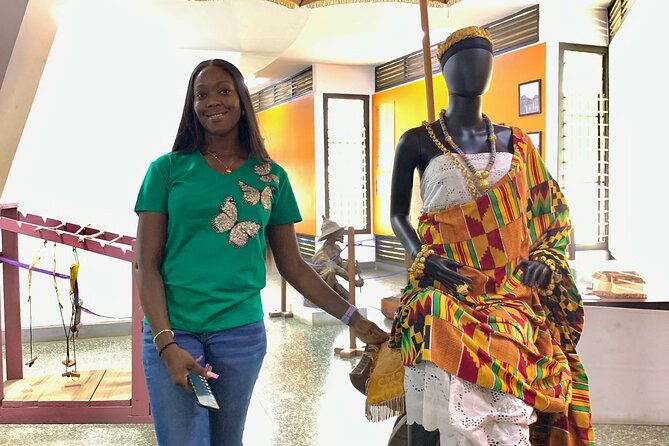
The National Museum of Ghana is the longest formal museum stop, at about 45 minutes. It is described as the largest and oldest of the eight museums run by the Ghana Museums and Monuments Board, and its permanent displays cover a broad range of Ghanaian life.
You might see chief regalia, archaeological objects, models of indigenous architecture, traditional medicines, iron technology, gold weights, jewelry boxes, stools, beads, pottery, old currencies, and a traditional kitchen setup. The collection also includes a chair of state, presidential gifts and cars, material connected with rites of passage, and a children’s area with hands-on activities.
That range is the museum’s strength. Instead of presenting only one period or subject, it gives you a quick look at governance, craft, belief, domestic life, technology, and modern state history. The displays can help you understand objects and customs you may encounter elsewhere in Ghana.
The limitation is time. Forty-five minutes can provide a useful overview, but it is not enough to inspect every display carefully. If you enjoy museums, note what catches your attention and consider returning later if your schedule allows.
Admission is included, so you do not need to budget a separate entry fee for this stop. The museum is also a practical break from the road and market portions of the day.
A few more Accra trips to weigh up
- Experience the Beauty, History and the Culture Of Accra in a Day
★ 5.0 · 323 reviews - Ghana Heritage Tours – Beyond The Return
★ 5.0 · 36 reviews - 10 Days Ghana Cultural and Heritage Trip
★ 5.0 · 31 reviews - Cape Coast Historical Day Tour
★ 5.0 · 24 reviews
Makola Market, where Accra gets practical
Makola Market brings you into one of Accra’s main commercial areas. It is described as one of the biggest and most colorful open markets in West Africa, with imported clothing, local textiles, farm products, beads, and many other everyday goods.
The market is busy from Monday through Saturday, and the visit lasts about an hour. That timing gives you enough room to see several sections and absorb the pace, though you should still expect a quick introduction rather than a full shopping expedition.
This is one of the most useful stops for understanding present-day Accra. Monuments explain national events, but a market shows how people buy, sell, compare, carry, and negotiate in ordinary city life. You may find the goods more interesting than the formal sightseeing, especially if you enjoy fabrics, clothing, food products, or beads.
Makola is also the place to stay alert and follow your guide’s lead. The information provided does not promise a guided food tasting or a planned shopping list, so treat the stop as a look at the market and its goods rather than a special retail package.
Because the market is active Monday through Saturday, the day of your visit matters. The tour starts in the morning, which is helpful for seeing the market during its regular working hours.
Jamestown and the James Town Lighthouse
The Jamestown portion is mainly a drive through the historic neighborhood, with a 30-minute stop connected to the James Town Lighthouse. You will see forts, fishing villages, prisons, and the lighthouse area.
This part of the tour gives you a view of Accra’s coastal past and working communities. It is different from the National Museum because the setting itself carries the story. You are looking at streets, buildings, and waterfront activity rather than objects behind glass.
The wording describes a drive through Jamestown, so do not book this expecting a long walking tour of every lane. The half-hour format is best for getting an introduction, seeing the main sights, and hearing why the area matters.
Jamestown can be especially useful after Makola Market. One shows Accra as a commercial center, while the other points to the city’s coastal neighborhoods and maritime connections. Together, they keep the tour from becoming a string of isolated attractions.
Centre for National Culture and Ghanaian crafts
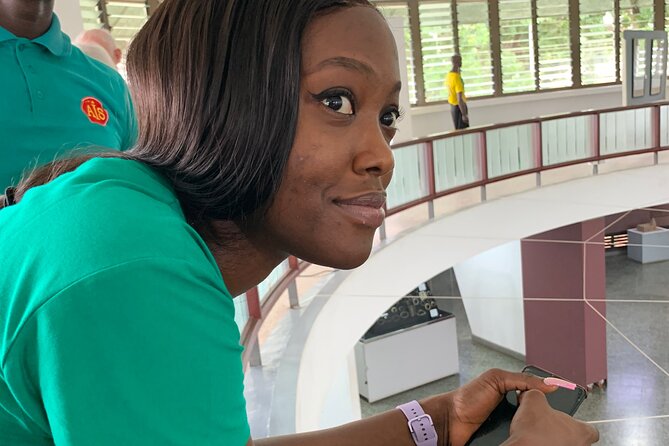
The final listed stop is the Centre for National Culture on 28th February Road, near Kwame Nkrumah Memorial Park and Mausoleum. You spend about 45 minutes walking among stalls selling sculptures, fabrics, jewelry, and clothes.
Admission is free. The main expense here is whatever you decide to buy, so this is the stop where a little shopping restraint can protect both your budget and your luggage space.
I like placing a craft center late in the route. By this point, you have seen historical objects at the museum and local goods at Makola, so the stalls offer a chance to connect Ghanaian design with something you can take home. You can browse without treating the stop as another formal monument.
The information does not specify fixed prices, included purchases, or a dedicated shopping allowance. Ask your guide for practical help if you need it, and remember that the 45-minute stop is shared with browsing, questions, and transport timing.
What the private vehicle changes
The tour includes an air-conditioned vehicle and bottled water, and pickup is offered. The listed meeting point is Afrikiko on Liberation Road, with the activity ending back there. It is also near public transportation.
The private format is the strongest practical feature. Only your group participates, so you can ask for explanations, clarify what you see, and make the day feel less like a rigid bus circuit. One account specifically praises Jeff, who arrived early, drove professionally, and adjusted the tour to suit the group’s preferences.
That personal approach can matter in Accra, where the distance between stops and the pace of city life may affect the schedule. Still, the tour has six planned stops within roughly five hours. If you want to linger at the museum or spend a long time shopping, ask about adjustments before you book.
The vehicle also makes the route more manageable for people who prefer not to handle city connections between each location. The tour states that most people can participate, but no detailed mobility information is provided, so you should confirm any specific needs in advance.
Is $80 per person a fair price?
The price is $80 per person. For that fee, you get about five hours, a private activity, an air-conditioned vehicle, bottled water, and all listed fees and taxes. Admission is included at the W.E.B. DuBois Center and the National Museum, while Independence, Makola Market, Jamestown Lighthouse, and the Centre for National Culture are listed as free.
The value depends on how many people are in your group. A private vehicle and guide can make the price reasonable for a small group that wants a simple introduction without organizing several taxis or separate admissions. Group discounts may also improve the value for larger parties.
Lunch is not included, and neither are alcoholic drinks or tips. The itinerary does not list a scheduled meal stop, so plan to eat before the 9:00 a.m. start or arrange food separately.
I would compare this price with the time and effort needed to connect six places on your own. If you want a compact overview with transport and a private guide, the package is easier to justify. If you prefer to spend a full day at one museum or market, a shorter or more focused outing may suit you better.
Who will get the most from this Accra tour?
I would recommend this for a first visit to Accra, especially if you want an introduction before choosing which areas to explore in greater detail. It also suits families and small private groups that value a vehicle, a set route, and the freedom to ask questions along the way.
The National Museum and DuBois Center give the day substance, while Makola, Jamestown, and the Centre for National Culture keep it connected to daily life and local production. That balance is useful if you do not want a tour made only of official landmarks.
You may want another option if your main goal is extended shopping, detailed museum research, food experiences, or a long walking tour of Jamestown. The schedule covers plenty of ground, but each stop has a firm time limit.
The tour is typically booked about 15 days ahead. Confirmation arrives at booking, and a mobile ticket is available, so you can keep the details on your phone.
Cancellation and planning details
You can cancel free of charge up to 24 hours before the local start time for a full refund. Cancellations or changes made within 24 hours are not accepted for a refund.
Pickup is offered, but the stated start point is Afrikiko, Liberation Road, Accra, and the tour returns there. Confirm the exact pickup arrangement when booking rather than assuming door-to-door service.
Should you book this Accra city tour?
Book it if you want a private, practical introduction to Accra that combines national history, museum objects, local commerce, coastal neighborhoods, and crafts. The route gives you a useful map of the city in one morning, and the flexibility of a private vehicle is a real advantage.
Skip it if you want slow, specialist sightseeing at one or two sites. The schedule is full, and 30 to 45 minutes goes quickly. For most first-time visitors with limited time, though, the mix is well chosen, and the option to return later to your favorite stop makes the tour a sensible starting point.
FAQ
How long does the Accra city tour last?
The experience lasts approximately five hours.
What time does the tour start?
The stated start time is 9:00 a.m.
Where does the tour start?
The listed meeting point is Afrikiko on Liberation Road in Accra, Ghana.
Where does the tour end?
The activity ends back at the meeting point.
Is hotel pickup offered?
Pickup is offered. The listed meeting point is Afrikiko, so confirm the exact pickup arrangement when booking.
Is this a private tour?
Yes. Only your group participates in the activity.
What is included in the price?
The price includes bottled water, all fees and taxes, and transportation in an air-conditioned vehicle. Admission is included for the W.E.B. DuBois Center and the National Museum of Ghana.
Is lunch included?
No. Lunch, alcoholic drinks, and tips are not included.
What is the cancellation policy?
You can cancel at least 24 hours before the local start time for a full refund. Cancellations or changes made less than 24 hours before the start are not accepted for a refund.
Just added around Accra
- Visit Aburi Garden, Tetteh Quarshie Cocoa Farm & Waterfall★ 4.0 · 4 reviews
- Historical Day Tour to Cape Coast, Elmina and Kakum★ 5.0 · 3 reviews
- Private Airport Transfer to from ACC Kotoka by Business Car★ 5.0 · 4 reviews
- Private Slave Castles and Dungeons Tour in Cape Coast, Ghana★ 5.0 · 3 reviews
- Local Ghanaian Food Tasting Tours★ 5.0 · 3 reviews
- Historical tour in Cape Coast Ghana★ 5.0 · 3 reviews
- The Door Of No Return/ Dungeon & cape Coast Castle★ 5.0 · 4 reviews
- Cape Coast Castle and Kakum National Park 2-Day Private Tour★ 5.0 · 3 reviews
Accra City Tours, compared.

Escape Accra City to Aburi Gardens and Tetteh Quarshie Cocoa Farms
Read our review →

Experience Authentic Ghana in a Personalized Accra City Tour
Read our review →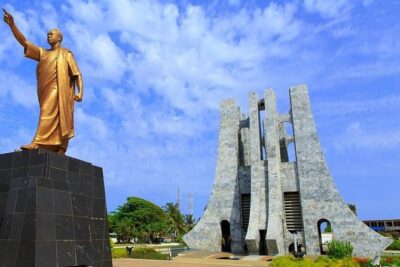
Browse the lists this tour appears in