
Reviewed · HISTORICAL TOURS
Cultural Tour Of Ghana And South Africa 12 Days
This is a powerful two-country journey built around memory, identity, and place. In Ghana, you confront the history of the Atlantic slave trade at Cape Coast and Elmina. In South Africa, you follow the path from apartheid to democracy in Soweto and Robben Island, then shift gears with a safari, Table Mountain, and the Cape Winelands.
I like the private air-conditioned transport, which makes a packed schedule far more manageable. I also like the range of experiences: the trip is not only museums and monuments, but also a forest walk at Kakum, a game drive at Pilanesberg, local craft markets, a township visit, and wine tasting.
The main drawback is the pace. You cover two large countries in 12 days, with flights between Accra and Johannesburg and then Johannesburg and Cape Town. International and domestic flights are not included, so the final cost can rise quickly beyond the listed $8,695 per person.
Key points to know before booking
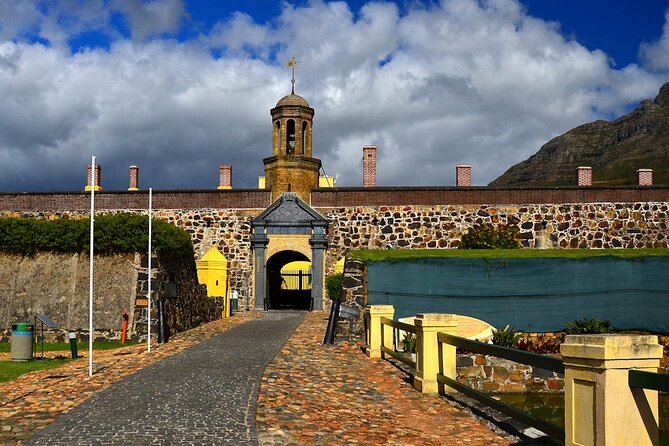
- Cape Coast and Elmina put Ghana’s slave-trade history at the center of the first half. Cape Coast Castle, Elmina Castle, the Door of No Return, and the fiankra ceremony are serious, emotional stops.
- The Ghana portion includes personal guiding from staff such as Elvis, Edith, Michael, Joseph, and Wahab. Their roles include guiding, driving, and practical support.
- Pilanesberg adds a genuine safari day without requiring a long trip to a distant reserve. The park is home to the Big Five and more than 360 bird species.
- Soweto is presented through the people and places of the freedom struggle. Hector Pieterson Memorial, Regina Mundi Church, Mandela’s House, and Freedom Square give the day a clear historical focus.
- Cape Town combines major sights with time to choose your own plans. You get Robben Island, a township tour, Table Mountain, Cape Point, and Constantia wine tasting.
- The group limit is 10 people. That is small enough for easier conversation with your guide and less waiting when getting in and out of the vehicle.
What the $8,695 price really covers
At $8,695 per person, this is a high-priced tour. The value rests in the amount of organization packed into the fee rather than in any single attraction.
You receive airport assistance, private transportation, hotel transfers, an experienced cultural guide, bottled water each day, listed admissions, breakfast on 11 days, and dinner on nine days. Visa application assistance is also included, which can be useful for a trip involving two countries and several border and flight arrangements.
The private vehicle matters. Accra, Cape Coast, Johannesburg, Pilanesberg, and Cape Town are not all places you can connect easily by public transport while keeping to this schedule. Having one company arrange airport pickups, hotel transfers, sightseeing, and local drivers removes much of the daily decision-making.
Still, read the price carefully. Flights are excluded, as are travel insurance, tips for the guide and driver, and personal spending. You should also confirm the exact hotel and flight arrangements before paying, since the schedule includes a day room in Accra before the South Africa flight and several airport transfers.
The all-inclusive wording mainly applies to ground arrangements, meals listed in the schedule, and admissions. It does not mean every meal, drink, flight, or personal cost is covered.
A few more Accra trips to weigh up
- Experience the Beauty, History and the Culture Of Accra in a Day
★ 5.0 · 323 reviews - Ghana Heritage Tours – Beyond The Return
★ 5.0 · 36 reviews - 10 Days Ghana Cultural and Heritage Trip
★ 5.0 · 31 reviews
Days 1 and 2: Accra’s Pan-African story
Your first day begins at Kotoka International Airport, where a guide meets you and transfers you to the Mövenpick Ambassador Hotel. The arrival day is intentionally light. After check-in, your guide explains the schedule and what to expect in Ghana.
That briefing is useful because the next days carry a lot of material. You are not simply moving between attractions. You are learning about Ghana’s political history, the African diaspora, traditional culture, and the country’s role in the slave trade.
The second day introduces Accra through several important sites. At the W.E.B. Du Bois Centre, you learn about one of the major Pan-African thinkers and his connection to Ghana. The stop gives the Ghana portion a wider frame before the tour turns toward the colonial and slave-trade past.
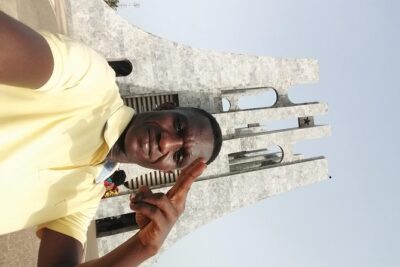
You pass Flagstaff House, the presidential residence, and visit the Kwame Nkrumah Memorial Park. The upgraded park includes a library, conference center, synchronized fountain, mini-amphitheater, and picnic area. Nkrumah’s role as Ghana’s first president makes this more than a quick photo stop. It helps explain the country’s independence story and its links to Pan-African politics.
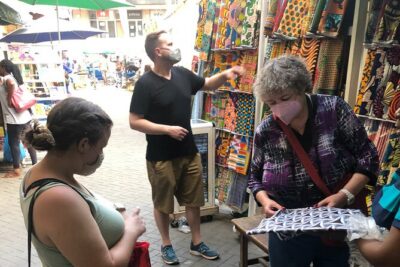
At the Accra Arts and Crafts Centre, you can browse Kente cloth, sculptures, jewelry, and other handmade goods. Bargaining is part of the experience, so take your time and compare items before buying. This is also one of the few points where the schedule gives you room to interact directly with makers and sellers.
The Accra days are fairly short on paper, with each listed stop showing two hours, but city traffic can affect the rhythm. Keep some patience for road delays and use the free time to rest before the more demanding Cape Coast section.
Days 3 and 4: Cape Coast, Elmina, and Kakum
The road to Cape Coast takes you into Ghana’s Central Region, an area with a direct connection to the lives of Africans in the Americas. A stop at Mankessim includes the Posuban Shrine and a Fante village, offering an introduction to local tradition before the castle visits.
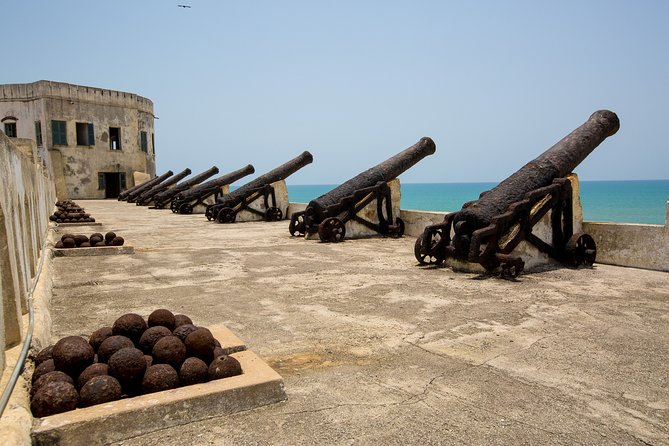
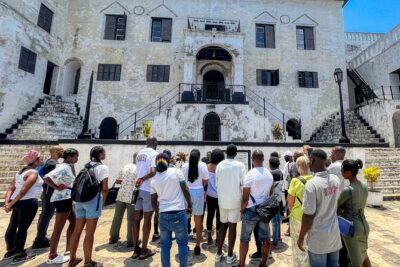
Cape Coast Castle is the emotional core of the Ghana section. It was one of the departure points for Africans forced onto ships bound for the Americas. The guided tour and castle museum cover the structure’s role in that system, including the underground holding areas and the Door of No Return.
Give yourself time after the visit. This is not a light sightseeing stop, and the subject matter can feel heavy. The value is in having a guide explain the site’s place in Ghanaian and diaspora history instead of seeing only the walls and ocean views.
An evening tour through Elmina adds a different side of the coastal town. At the harbor, you see colorful fishing boats and daily activity around one of Ghana’s historic ports. That contrast matters. The town is not only a monument to the past, but also a working community.
The next morning takes you to Elmina Castle, built in 1482 and described as the first European structure built in sub-Saharan Africa. Like Cape Coast Castle, it is a UNESCO World Heritage site connected to the slave trade. Seeing both castles can feel repetitive in subject, but their different layouts and settings help show the scale of the coastal system.
The fiankra, or Return to the Homeland ceremony, is a distinctive part of this tour. It illustrates the separation of Africans from their families and homeland, and it also functions as an initiation rite for African returnees. This is a ceremonial experience, not simply another museum visit, so approach it with respect and a willingness to listen.
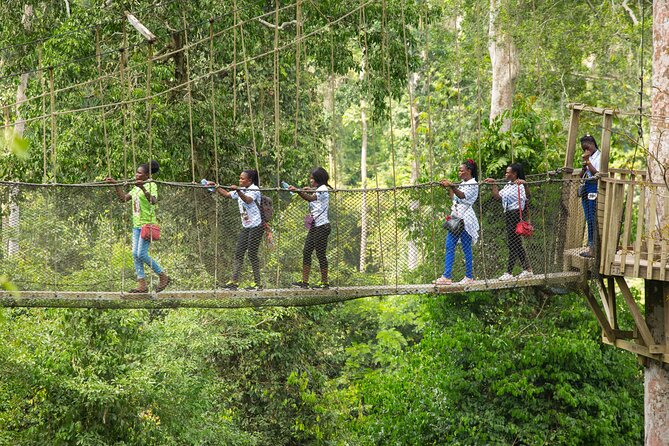
Kakum National Park changes the pace. A short walk on the forest floor gives you a chance to look for birds, butterflies, monkeys, and perhaps signs of the park’s larger mammals, including the reclusive forest elephant. The park is said to hold more than 40 mammal species.
Do not book this day expecting a long wildlife trek. The itinerary calls it a brief walking tour, and sightings are never guaranteed. Its strength is the change from coastal history to forest ecology.
Day 5: The transition from Ghana to Johannesburg
Day 5 is mainly a transfer day. You return to Accra after breakfast, spend part of the afternoon at leisure, and visit any Accra sights you did not reach earlier. A day room is provided so you can rest and refresh before the airport transfer.
Nonstop Accra to Johannesburg flights are available Tuesday, Thursday, and Saturday. That detail can shape your whole booking, so check the operating day before setting your international flights.
The day room is a thoughtful touch. Without it, you could face a long wait at the airport after checking out of your hotel. Even so, this is a tiring section of the trip because you are moving from Ghana into South Africa and arriving early the next morning.
Same coastline, a completely different kind of day:
- The Cape Coast Day Tour
★ 5.0 · 525 reviews - The Cape Coast Tour
★ 5.0 · 177 reviews - From Accra: Cape Coast, Elmina Castle & Kakum Park Day Tour
★ 4.6 · 144 reviews - Accra Detailed City Tour
★ 4.5 · 118 reviews
Days 6 and 7: Soweto, apartheid history, safari, and Lesedi
After arriving in Johannesburg, you transfer to your hotel and later explore Soweto through the story of the freedom struggle.
At the Hector Pieterson Memorial, you confront the 1976 Soweto uprising through the memory of the 12-year-old schoolboy who was shot. Regina Mundi Church shows another side of that period. It served as a refuge for activists, and bullet holes from clashes with police remain visible.
The itinerary also includes Chris Hani Baragwanath Hospital, named for the ANC leader Chris Hani, Mandela’s House, and Freedom Square, where the Freedom Charter was adopted. Together, these stops give you a route through protest, political organizing, imprisonment, and the creation of a democratic South Africa.
I like this approach because Soweto is not reduced to a quick drive past residential streets. You get specific people, buildings, and events to hold onto. The drawback is that this is another serious day, following two days of Ghanaian slave-trade history. If you prefer a slower emotional pace, the schedule may feel demanding.
Day 7 brings a sharp change. You travel to Pilanesberg National Park for a game drive. The reserve is home to lions, buffalo, leopards, elephants, and rhinos, as well as cheetahs, giraffes, hippos, and more than 360 bird species.
A game drive is wildlife viewing, not a guaranteed checklist. You may see several species, or spend time looking across the park for movement. The appeal is the chance to encounter South African wildlife within a day trip from Johannesburg.
Later, you stop at a market selling Southern African goods before continuing to Lesedi Cultural Village. The program includes a welcome in the Ndebele village, a multimedia presentation about South Africa, and guided visits to four cultural villages with their own customs and languages.
The evening ends with traditional performance and buffet dinner. Lesedi is clearly designed as an introduction to several cultural groups in one place. It is convenient and accessible, though it presents culture in a structured format rather than through a long stay in one community. That makes it a good overview, but not a substitute for extended independent travel.
Days 8 and 9: Cape Town, Robben Island, and the townships
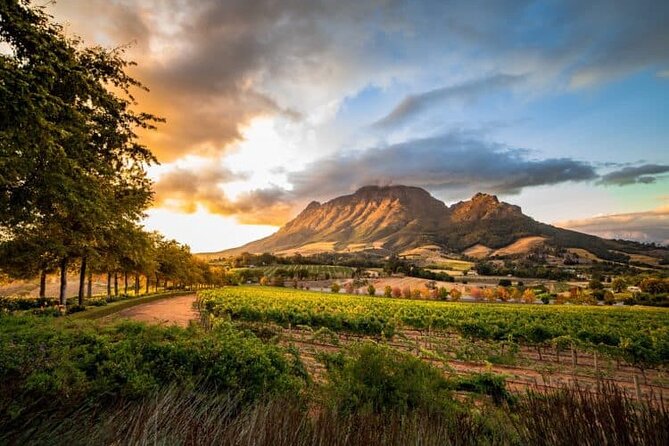
You fly from Johannesburg to Cape Town on Day 8 and transfer to a hotel near the Victoria and Alfred Waterfront. The rest of the day is free, which gives you a needed pause after the safari and Lesedi day.
Cape Town offers shopping, restaurants, music, architecture, and outdoor activities. Greenmarket Square is mentioned as a place to bargain with vendors, while the Waterfront gives you a convenient base for free time.
Day 9 begins with the ferry to Robben Island, the former prison where Nelson Mandela spent many years. The island is a UNESCO World Heritage site and one of South Africa’s most important places connected to apartheid and the democratic transition.
Ferry schedules and weather can affect the outing, so keep your expectations flexible. The significance of Robben Island is the main reason to go, but the crossing and island logistics can make this a longer, less spontaneous visit than a city museum.
After Robben Island, you visit Cape Town townships including Langa, described as the city’s oldest formal township, and Gugulethu. The tour focuses on the legacy of apartheid, the country’s struggle for democracy, community interaction, and a community-run project where artisans and crafters work.
This is one of the most valuable parts of the Cape Town program because it adds present-day community life to the political history. Listen carefully and ask respectful questions. The experience is strongest when you treat the townships as living communities, not as scenery.
Breakfast and dinner are included on this day, and the listed overnight stay is at the Protea Hotel Sea Point. The hotel’s position near Cape Town’s coastal attractions should make the free time easier to use, though the exact room arrangements should be confirmed when booking.
Day 10: Table Mountain, Cape Point, and Constantia
Day 10 packs in some of Cape Town’s most recognizable sights. You begin with the rotating cable car to Table Mountain, where you get wide views over the city and coast.
The cable car is a major highlight, but weather can affect mountain access. If the ride is operating, allow time to enjoy the view rather than treating it as a quick photo stop.
The Cape Peninsula drive follows the Atlantic coast through Clifton, Camps Bay, and Hout Bay, then continues along Chapman’s Peak Drive toward Scarborough and the Cape of Good Hope. At Cape Point, you have tea or coffee near the signboard and ride the Flying Dutchman Funicular toward the old lighthouse.
Lunch is at Seaforth near Boulders, followed by a visit to the Constantia Valley Wine Route. A tasting at a selected estate gives the day a calmer finish after the long coastal drive. The return route passes the Botanical Gardens before you head back to Cape Town.
This is a scenic day, but it is also a long one with several stops. If you want extended time at Table Mountain, Boulders, Cape Point, and the wine estate, the schedule may feel tight. Its advantage is that you see a great deal without arranging separate transport.
Days 11 and 12: Time to slow down
Day 11 is free for shopping, dining, and exploring Cape Town at your own pace. Breakfast and dinner are included, but lunch and personal activities are your responsibility.
This open day improves the overall design of the trip. After the heavy history in Ghana and Johannesburg, you can choose a quiet meal, spend more time near the Waterfront, or simply rest. Since the tour has already covered the main Cape Town sights, you are not left wondering what to do first.
On Day 12, breakfast is included and the rest of the day remains free until your airport transfer. The tour ends at the meeting point, with departure assistance included.
Guides, group size, and daily comfort
The maximum group size is 10, which is a strong feature for a trip built around discussion. A smaller group makes it easier to hear explanations at museums and ask questions in the vehicle.
The Ghana team includes Elvis, Edith, Michael, Joseph, and Wahab in various guiding, driving, and support roles. Elvis is described as giving exceptional presentations, while Edith is noted for her patience and kindness. Michael is identified as an excellent driver. Those details matter because the Ghana section relies heavily on road travel and interpretation.
Transportation is by private air-conditioned vehicle, with bottled water supplied per person per day. You should still bring comfortable walking shoes and prepare for moderate physical activity. The schedule includes castle tours, forest walking, cable cars, ferry travel, and long sightseeing days.
Breakfast is included on 11 days and dinner on nine. The supplied details do not list every dinner location or menu, so plan to budget for lunches, drinks, snacks, and any meals not specifically included.
Who should book this Ghana and South Africa tour?
You should consider it if you want a guided introduction to the history of the African diaspora, Ghana’s independence story, South Africa’s apartheid past, and major natural and scenic sights. It suits people who value a fixed plan, private transport, and a guide who can connect separate sites into one story.
It is also a good fit if you are marking a special occasion. The Ghana team has experience providing attentive support for anniversary trips and small groups.
I would hesitate if you want a slow, highly independent trip. The schedule crosses two countries and includes several flights, early starts, long drives, and emotionally serious visits. You also need to add flights, insurance, gratuities, and personal spending to the headline price.
Free cancellation is available when you cancel at least 24 hours before the start time. Inside that window, the amount paid is not refunded, and late changes are not accepted.
Final verdict: a strong choice for history-led touring
I would book this tour if your priority is seeing Ghana and South Africa through their political and cultural stories, with wildlife and scenery added along the way. Cape Coast, Elmina, Soweto, Robben Island, and the fiankra ceremony give the trip a clear purpose.
The best value comes from the private vehicle, small group, admissions, airport support, meals, and guide services. The weakest point is the price once flights and extras are added, along with the quick pace.
Before booking, confirm the flight dates, hotel details, meal plan, and the amount of free time at each major stop. If you are comfortable with a full schedule and want an organized first look at two historically important countries, this is a thoughtful and well-supported choice.
FAQ
How long is the Cultural Tour of Ghana and South Africa?
The tour lasts approximately 12 days. The itinerary begins in Accra on Day 1 and ends in Cape Town on Day 12.
Where does the tour begin?
The tour begins at Kotoka International Airport in Accra, Ghana. The listed start time is 8:30 am.
Where does the tour end?
The activity ends back at the meeting point after your transfer to the airport in Cape Town.
Are flights included in the tour price?
No. Flights are not included. This includes the flight from Accra to Johannesburg and the flight from Johannesburg to Cape Town.
What meals are included?
Breakfast is included on 11 days, and dinner is included on nine days. Other meals are not included unless specifically listed.
What attractions are included in Ghana?
The Ghana program includes Accra, the W.E.B. Du Bois Centre, Kwame Nkrumah Memorial Park, the Accra Arts and Crafts Centre, Cape Coast Castle, Elmina Castle, the fiankra ceremony, Mankessim, Elmina town, and Kakum National Park.
What attractions are included in South Africa?
The South Africa program includes Johannesburg, Soweto, Pilanesberg National Park, Lesedi Cultural Village, Robben Island, Cape Town, Table Mountain, the Cape Peninsula, Cape Point, Boulders, Chapman’s Peak Drive, and a Constantia Valley wine tasting.
How many people can join the tour?
The maximum group size is 10 people.
Is the tour physically demanding?
A moderate level of physical fitness is recommended. The itinerary includes walking tours, a forest walk, castle visits, a game drive, ferry travel, cable-car sightseeing, and several long touring days.
Just added around Accra
- Visit Aburi Garden, Tetteh Quarshie Cocoa Farm & Waterfall★ 4.0 · 4 reviews
- Historical Day Tour to Cape Coast, Elmina and Kakum★ 5.0 · 3 reviews
- Private Slave Castles and Dungeons Tour in Cape Coast, Ghana★ 5.0 · 3 reviews
- Local Ghanaian Food Tasting Tours★ 5.0 · 3 reviews
- Private Airport Transfer to from ACC Kotoka by Business Car★ 5.0 · 4 reviews
- The Door Of No Return/ Dungeon & cape Coast Castle★ 5.0 · 4 reviews
- Historical tour in Cape Coast Ghana★ 5.0 · 3 reviews
- Cape Coast Castle and Kakum National Park 2-Day Private Tour★ 5.0 · 3 reviews
Historical Tours, compared.
Experience the Beauty, History and the Culture Of Accra in a Day
Read our review →
Full-Day Private Culture and History Tour of Accra
Read our review →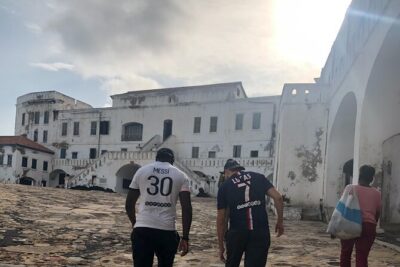
Ghana Private Historic Tour through Castles and Nature
Read our review →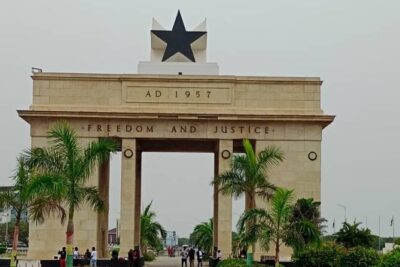
7-Day Private Cultural and Heritage Tour in Ghana
Read our review →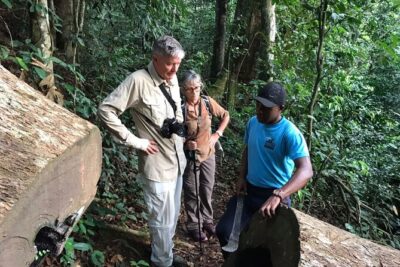
The Historic Cape Coast and Elmina Tour (The Land of History).
Read our review →Browse the lists this tour appears in