
Reviewed · MARKETS
Private Accra Market Tour
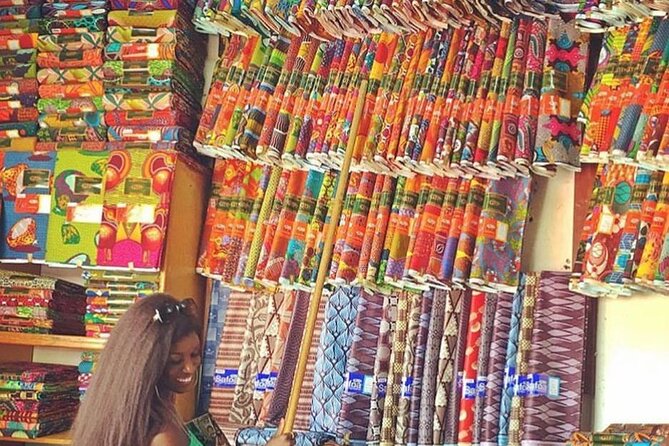
Accra’s markets do not ease you in. Makola, Nima, and Mallam Atta put you close to the city’s daily trade, with fabric, spices, clothing, and household goods moving around you at a quick pace. Guide Ebo Cobbinah helps you enter this busy world without having to guess where to go or how to bargain.
I like the private transportation, since it keeps the long day simple, and I like having lunch built in rather than stopping at an unknown place. Ebo also helps with prices and points you toward less polished, more genuine parts of the markets.
The main caution is pace. This is not a slow browse through tidy stalls. If you like to examine every item before buying, the crowds and constant activity may feel overwhelming. Wear good shoes, carry little, and accept that the market decides the rhythm.
Key points to know before you book
- Three working Accra markets: Visit Makola, Mallam Atta, and Nima, each with its own feel and mix of goods.
- Ebo Cobbinah as your guide: He leads the walk, helps with bargaining, and answers questions about Accra and Ghana.
- A private eight-hour day: Only your group takes part, with transportation included from Accra Mall.
- Lunch with Ghanaian choices: Choose from fufu, banku, red-red, jollof with grilled chicken, tilapia, and other local dishes.
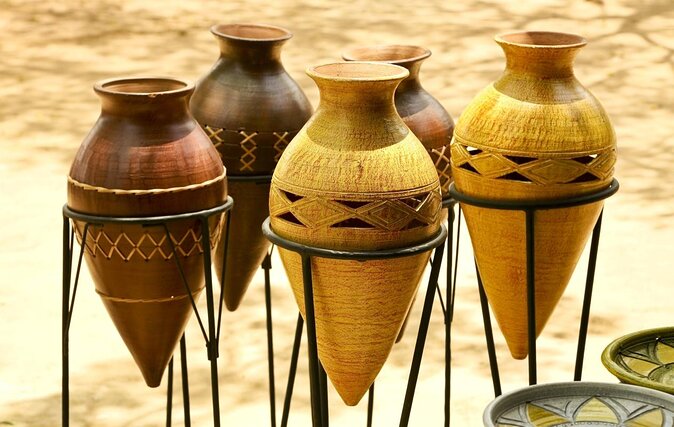
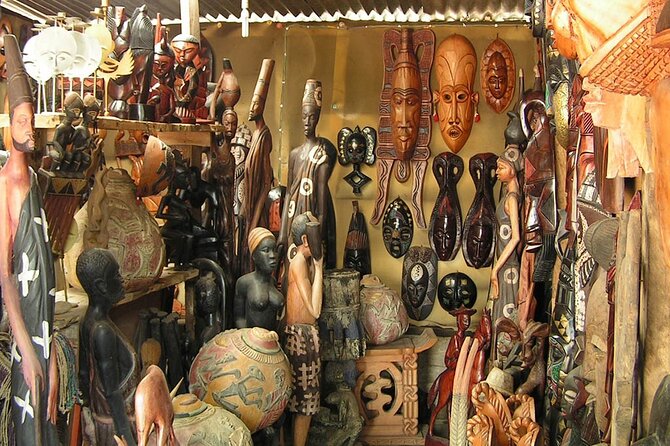
- Arts and shopping stop: The Accra Arts Centre offers locally made crafts, useful for gifts and souvenirs.
- Come prepared for heat and motion: Bring comfortable shoes, a sunhat or umbrella, a face cloth, and a small bag.
Why Accra’s markets are the heart of this day

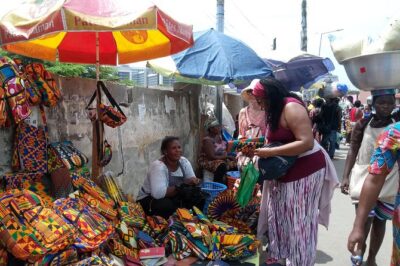
This tour is built around ordinary commerce rather than a staged cultural display. You are not simply looking at souvenirs behind glass. You are moving through places where people buy food, clothing, fabric, household goods, and other daily necessities.
That difference matters. Markets can tell you how a city works. They show what people buy, how goods are priced, and how sellers and customers deal with one another. In Accra, that means close quarters, quick exchanges, loud voices, and plenty of visual detail.
The day lasts about eight hours, from a 9:00 am start until you return to the meeting point. That is a full outing, but the schedule gives roughly one hour to each market and one and a half hours for lunch. The private format lets your group move with Ebo instead of following a large crowd.
You should also set your expectations before you go. The tour uses the phrase African-style markets for good reason. They are not laid out like many Western shopping streets, where you can wander quietly and compare prices at your leisure. Here, goods and people may move around you quickly. A guide is especially useful when you want to shop without losing your bearings.
A few more Accra trips to weigh up
- Makola Market Walking Tour
★ 5.0 · 16 reviews - Makola Market Walking Tour
★ 5.0 · 14 reviews - Accra Street Food Tour: Makola Market Tour With Full Lunch
★ 4.1 · 9 reviews
Makola Market brings the city’s trade close
Makola Market is the first major stop, with about one hour to walk around Accra’s biggest market. This is likely to be the most intense opening to the day, since you begin with one of the city’s best-known places for trade.
Expect a broad mix of goods rather than one narrow specialty. Fabrics, soaps, clothing, spices, and other products may catch your eye. The tour gives you time to look, but the purpose is not a carefully ordered shopping trip. It is a chance to see how Accra’s market economy operates at close range.
Ebo’s help matters most here. He can guide you through the market and assist with price negotiations. That is useful if you want to buy fabric, clothing, or small gifts but do not know the usual bargaining style.
Bring only what you need. A small bum bag or similar compact carrier is more practical than a large daypack in a crowded market. Keep your hands free where possible, and avoid carrying valuables you will not use.
One hour may sound brief, but it can be enough for a first look without exhausting you at the start of the day. If you are a serious shopper, ask Ebo early about the items you want most. The market is not the place to spend half an hour deciding where to begin.
Accra Arts Centre shifts from daily goods to handmade pieces
The Accra Arts Centre gives you a different kind of shopping stop. You have about an hour to look for local arts and crafts, so this is the natural place to consider souvenirs and gifts.
Compared with the food, clothing, and household trade of the larger markets, the Arts Centre focuses on items made for visitors and collectors. That does not make it less useful. It simply changes the aim of the stop. You can browse for craft pieces while keeping in mind that prices may still be open to discussion.
The key advantage is convenience. The Arts Centre is already part of your private day, and Ebo can help you understand what you are seeing and decide how to handle a purchase. You do not have to arrange a separate visit or work out transportation on your own.
Give yourself a little time to compare before buying. If you find something you like, check the price and consider whether it can fit safely in your luggage. The tour information does not specify shipping or packing services, so you should not count on those extras being included.
Mallam Atta Market shows another side of Accra shopping
Mallam Atta Market is the third market walk, again planned for about one hour. Including it after Makola keeps the day from relying on just one market to represent Accra.
You may notice similarities in the range of goods, but the value is in seeing another popular market area and its own flow of trade. The tour is less about ticking off a famous sight and more about comparing different parts of the city through their shops and stalls.
This is also where the practical nature of the excursion becomes clear. You are not spending the morning in a vehicle looking at markets from the outside. You get out and walk through them, with Ebo helping your group stay focused and comfortable.
If you are prone to sensory overload, use this stop to slow down when you can. You do not need to buy something at every market. The most worthwhile part may be watching the exchanges and noticing the different goods rather than filling your bags.
Same coastline, a completely different kind of day:
- The Cape Coast Day Tour
★ 5.0 · 525 reviews - Experience the Beauty, History and the Culture Of Accra in a Day
★ 5.0 · 323 reviews - The Cape Coast Tour
★ 5.0 · 177 reviews - From Accra: Cape Coast, Elmina Castle & Kakum Park Day Tour
★ 4.6 · 144 reviews
Lunch at Living Room makes a useful mid-day break
After the market walks, the schedule allows about ninety minutes for lunch at Living Room, also identified as Liv Resto Lounge in the tour details. The restaurant is in East Legon and is described as one of the area’s prominent places for local food.
Lunch is included, but only from the stated menu. You can choose among several Ghanaian dishes:
- Fufu with light soup and your choice of protein
- Groundnut soup
- Red-red, plantains with a bean stew
- Grilled chicken with jollof
- Banku with tilapia
- Omoto, rice balls served with soup
- Boiled plantain and yam with palava sauce
This is one of the strongest parts of the package because it turns the market visit into a wider look at Ghanaian food. You get more than a quick snack between stops, and the long lunch break gives you time to sit down after several hours on your feet.
If you are new to Ghanaian dishes, ask Ebo to explain the choices before ordering. Fufu, banku, omoto, and red-red each offer a different texture and style of eating. Grilled chicken with jollof is a more familiar entry point for many people, while tilapia, groundnut soup, and palava sauce give you a broader taste of local cooking.
One local alcoholic beverage is included if you want it. You can also simply stick with water. Bottled water is provided, which is a small but useful touch on a hot day.
The meal is not a side note. It gives the day a needed pause and lets you process what you have seen. Still, remember that any food outside the included menu is not covered by the tour price.
Nima Market adds a final burst of local activity
Nima Market is the last market stop, with about one hour set aside for walking. By this point, you will already understand the basic rhythm of the day, but Nima gives you one more look at a popular Accra market before returning to the meeting point.
The order is sensible. You see several markets first, take a proper lunch break, and then finish with another market rather than ending the day immediately after eating. If you are still shopping, this is a chance to make a final purchase. If your energy is fading, it is also reasonable to focus on watching the activity and asking questions.
Do not expect every stop to feel neatly separate. Markets share some types of goods, and the experience is more about the total picture than a sharply different theme at each location. The benefit of visiting Makola, Mallam Atta, and Nima is the chance to see several important commercial areas instead of forming an opinion from just one.
What Ebo adds to the market experience
A market guide is most useful when you want context and practical help at the same time. Ebo Cobbinah does both within this tour. He guides your group through the markets, helps negotiate prices, and can answer questions about Ghana, Accra, and the areas you visit.
The bargaining help is especially valuable for first-time shoppers. You can ask about fabrics, soaps, clothing, and other goods without trying to manage every conversation alone. That does not mean you should buy something simply because Ebo helped negotiate it. Treat his assistance as a way to make shopping clearer, not as pressure to spend.
Ebo also takes photos from a unique viewpoint during the day. The exact location is not specified, so do not book this expecting a named landmark or a formal photography session. Think of it as a chance to record the outing from a perspective you may not have found on your own.
The private setup makes a difference here. Your group is the only group on the activity, so you can ask questions as they arise and spend more or less time looking at a particular type of item. Larger parties and custom tours can be arranged by contacting the provider.
The $100 price: good value if you want a full private day
At $100 per person, this is not a bargain-priced market walk. But the price includes private transportation, a full lunch, bottled water, one local alcoholic drink if wanted, and an eight-hour schedule with a personal guide.
There are no admission fees to the listed stops, so you are not paying for expensive tickets. The real value lies in the transport, guidance, bargaining help, and time saved organizing several market visits yourself. Lunch also removes one decision from a long day.
The value is strongest for couples, families, or small groups who want a private outing rather than a fixed large-group tour. It is also useful if you want to shop but do not feel confident handling Accra’s markets alone.
The calculation changes if you mainly want a short visit to one market. In that case, eight hours and $100 per person may be more than you need. You are paying for variety, private service, and the meal, not just entry to Makola.
Practical preparation for an eight-hour market day
Start at 9:00 am from Accra Mall, at Plot C11, Tetteh Quarshie Interchange, Spintex Road, Accra. The activity returns to that same meeting point, and pickup is offered, so confirm the exact pickup arrangement when booking.
Wear comfortable shoes. You will spend much of the day walking and standing, and market surfaces are not designed for leisurely strolling in dress shoes.
Carry a sunhat or umbrella and a face cloth. The advice is practical for a long day in the heat and close market spaces. Bottled water is included, but you should still plan your clothing and personal items with the weather in mind.
Use a compact bag and bring only what you need. A bum bag is suggested because it keeps valuables close without taking up much room. If you plan to shop, leave some room in your luggage and keep purchases together.
Most people can take part, and the tour is near public transportation. The information does not give specific accessibility details, so anyone with mobility concerns should ask the provider before booking.
Free cancellation is available up to 24 hours before the local start time for a full refund. Changes or cancellations made less than 24 hours before departure are not accepted for a refund. The tour can also be moved or refunded if bad weather affects the outing or if the minimum number of participants is not met.
Who should book this Accra market tour?
I would choose this tour if you want to see several working markets in one day and prefer to have a guide handle the practical details. It suits first-time visitors who want help with bargaining, local food choices, and moving between areas.
It also works well for anyone who enjoys shopping with a purpose. You can look for fabrics, soaps, clothing, and crafts, then stop for a Ghanaian meal before finishing at Nima Market.
I would think twice if you dislike crowds, heat, fast-moving spaces, or open-ended shopping. The tour is designed around real markets, not a quiet retail setting. It is also a long day, so you should be ready for several hours of walking.
The 4.9 rating from 10 reviews and 100 percent recommendation suggest a very strong early response, though the sample is small. The most consistent strengths are Ebo’s guidance, his help with prices, and the chance to see market areas in a more personal way.
Should you book it?
Book this tour if you want Accra’s markets in their working form, with private transport, a personal guide, and a substantial Ghanaian lunch included. Ebo’s bargaining help is a real advantage, especially if you want to buy fabrics, clothing, or crafts without handling every negotiation alone.
Skip it if you only want a short, quiet shopping stop or if a crowded market sounds unpleasant. For the right kind of visitor, though, the $100 price buys a full day of access, context, food, and practical support rather than a quick look from the roadside.
FAQ
Where does the tour start?
The tour starts at 9:00 am from Accra Mall, Plot C11, Tetteh Quarshie Interchange, Spintex Road, Accra, Ghana.
Where does the tour end?
The activity ends back at the meeting point.
How long does the tour last?
The tour lasts about eight hours.
Which markets are included?
The tour includes Makola Market, Mallam Atta Market, and Nima Market.
Is the Accra Arts Centre part of the tour?
Yes. You have about one hour at the Accra Arts Centre to shop for local arts and crafts.
Is lunch included?
Yes. Lunch at Living Room, also identified as Liv Resto Lounge, is included from the stated menu of Ghanaian dishes.
What drinks are included?
Bottled water is included. One local alcoholic beverage is also included at lunch if you want one.
Is this a private tour?
Yes. Only your group takes part in the private activity, and private transportation is included.
Just added around Accra
- Visit Aburi Garden, Tetteh Quarshie Cocoa Farm & Waterfall★ 4.0 · 4 reviews
- Historical Day Tour to Cape Coast, Elmina and Kakum★ 5.0 · 3 reviews
- Private Slave Castles and Dungeons Tour in Cape Coast, Ghana★ 5.0 · 3 reviews
- Local Ghanaian Food Tasting Tours★ 5.0 · 3 reviews
- Private Airport Transfer to from ACC Kotoka by Business Car★ 5.0 · 4 reviews
- The Door Of No Return/ Dungeon & cape Coast Castle★ 5.0 · 4 reviews
- Historical tour in Cape Coast Ghana★ 5.0 · 3 reviews
- Cape Coast Castle and Kakum National Park 2-Day Private Tour★ 5.0 · 3 reviews
Markets, compared.

Accra Street Food Tour: Makola Market Tour With Full Lunch
Read our review →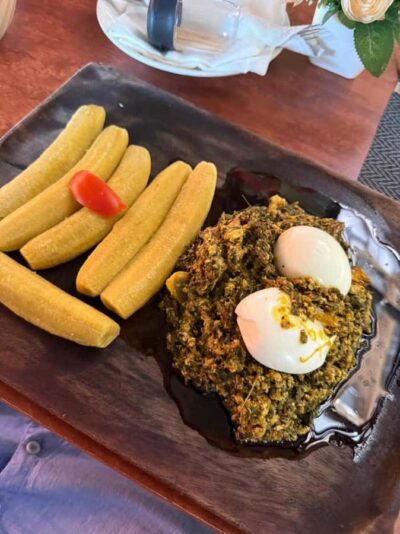
Accra Street Food Tour: Osu Night Market Tour Experience
Read our review →
Browse the lists this tour appears in