
Reviewed · MARKETS
Makola Market Walking Tour
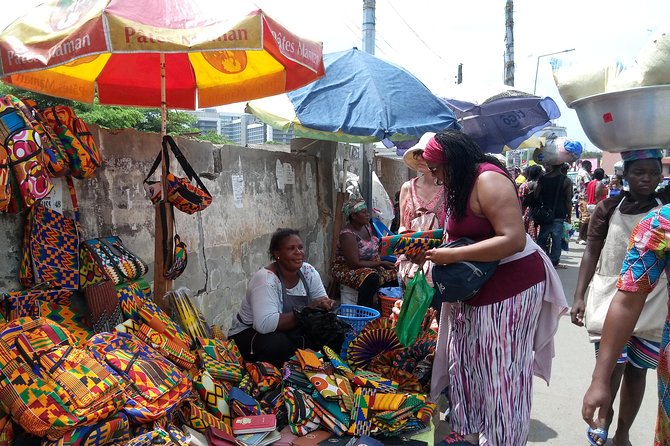
Makola Market is not a polished shopping center. It is a working slice of Ghanaian life, where food, clothing, cosmetics, medicine, electronics, tools, and building supplies all meet in a maze of busy lanes. A local guide helps you see the order inside the apparent confusion, and can take you to the right section instead of leaving you to wander.
I like the food-market start, where palm oils, gari, spices, fish, snails, vegetables, and other Ghanaian kitchen staples become a lesson in daily life. I also like having a guide who can help with shopping and prices, as Ben did for some visitors, and who can even help you find a replacement item if something goes wrong.
The main drawback is the setting itself: Makola can be crowded, noisy, hot, and demanding on foot. Two to three hours is enough for a strong introduction, but reaching the artisan, timber, Agblobloshie, and used-clothing areas may require extra time and energy.
Key points to know before you go
- Start with Ghanaian food culture: Learn about palm oil, gari, local spices, giant snails, fish, vegetables, and edible cow hide.
- Use the guide for navigation: Makola’s many sections are easier to handle when someone can lead you to the items you want.
- Expect a private walking tour: The experience is offered for a private group with an English-speaking local guide.
- Leave room for shopping: Guides such as Ben and Prince have helped visitors locate goods and negotiate prices.
- The market goes beyond food: You can see cosmetics, jewelry, textiles, pharmaceuticals, groceries, electronics, tools, timber, and used clothing.
- Plan for a lively, physical outing: The tour lasts 2 to 3 hours and involves walking through a busy open market.
Why Makola Market makes a strong first look at Accra
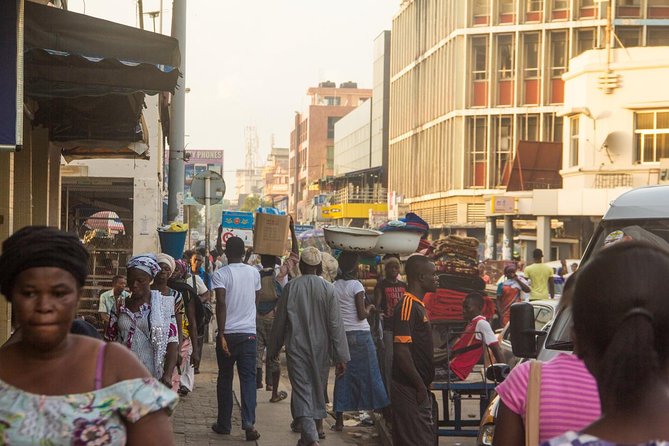
Makola Market gives you something a standard city tour often misses: a close look at how people buy, sell, cook, dress, repair, and build. This is not a staged cultural show. It is a place where everyday trade takes place, and your guide helps explain what you are seeing without turning the market into a museum.
The tour begins at a selected meeting or pickup point, depending on the option you book. From there, your guide takes you into Makola on foot. Since the group is private, you have more room to ask questions, slow down at an interesting stall, or focus on a particular type of shopping.
I would treat this as an orientation to Accra as much as a market visit. Makola is large enough that a first-time visitor could easily miss the sections that matter most. A guide can point you toward the right products and help you understand how the market is arranged.
The experience is especially useful if you want to buy something specific. Tell your guide early if you are looking for textiles, jewelry, cosmetics, food ingredients, clothing, electronics, or another item. That simple step can save time and prevent you from spending the whole tour walking without a clear aim.
A few more Accra trips to weigh up
- Makola Market Walking Tour
★ 5.0 · 14 reviews - Private Accra Market Tour
★ 5.0 · 10 reviews - Accra Street Food Tour: Makola Market Tour With Full Lunch
★ 4.1 · 9 reviews
The food section: a lesson in the Ghanaian kitchen
The food-market portion is the best place to begin because it gives the whole tour a human scale. Instead of hearing about Ghanaian culture in broad terms, you see the ingredients that shape ordinary meals and household routines.
Your guide can introduce you to gari made from cassava, red and white palm oils, local spices, fresh fruits, and vegetables. These products may be familiar to local shoppers but can look unusual if you have not cooked with them before. Ask what each ingredient is used for, how it is stored, and which dishes depend on it.
The market also includes foods that may challenge your expectations. You may see local meats, bush meat, fish, giant snails, and edible cow hide. The point is not simply to look at unusual products. It is to understand that Ghanaian cooking draws on a much wider range of ingredients than many visitors first expect.
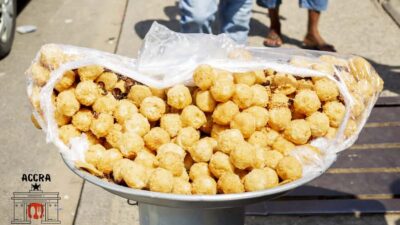
At times, you might get the chance to try a local snack or ingredient. One guide-led outing included Agneli kaklo and tiger nuts, with the tiger nuts making a particular impression. Tasting is not listed as a guaranteed part of the tour, so think of it as a possible bonus rather than the main reason to book.
This section also gives you a chance to ask practical questions. If you enjoy cooking, ask about the differences between the oils, how gari is prepared, or which spices are common in home kitchens. If you are simply curious, let the guide explain what local shoppers buy and why.
From cosmetics to electronics, Makola keeps changing
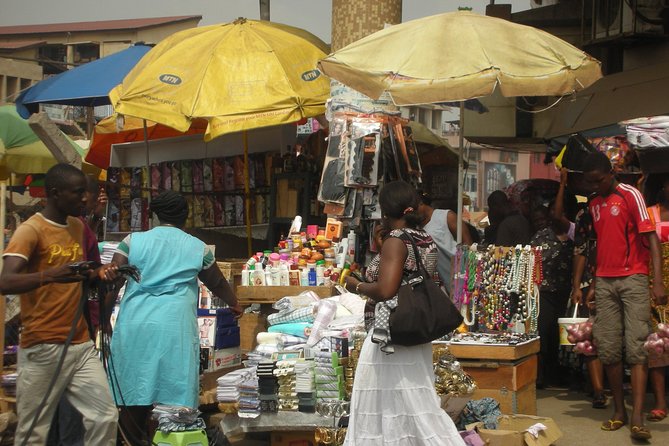
After the food stalls, the route moves through several other parts of the market. Cosmetics, jewelry, textiles, pharmaceuticals, groceries, and electronics each have their own character, and the change from one section to another shows how much Makola serves everyday life.
The cosmetics area may be useful if you want to see products made for local hair and skin care. Textiles and jewelry offer a more obvious shopping opportunity, though your guide can help you compare choices and understand where to look.
The pharmaceutical section is worth seeing as part of the market’s function, but you should not treat a walking tour as medical advice. If you need medicine, use the guide for orientation and ask a licensed professional about any health decision.
Electronics and general groceries show another side of Makola. This is not just a place for souvenirs. It is a source of practical goods for local households and businesses. That detail makes the tour feel more genuine, but it also means the experience may be less visually tidy than a visitor-focused shopping street.
Guides can be particularly helpful here because the market does not present every product in a simple, visitor-friendly way. Ben, one of the named guides associated with this experience, has helped visitors locate specific purchases and seek better prices. That kind of assistance can be worth more than a general talk about the market.
The artisan and timber market for a longer walk
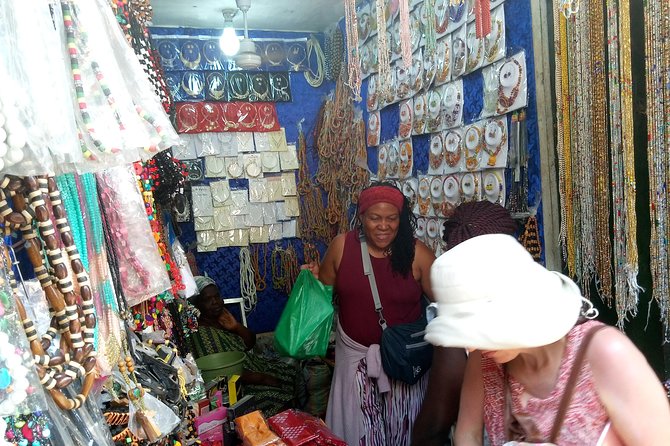
If you still have time and energy, the route can extend toward the artisan and timber market. This section is tied to building and practical trade, with skilled workers and materials for construction.
It is a useful reminder that Makola is part of a much larger commercial network. You are not only looking at finished goods. You may also see the tools, timber, and supplies needed to make, repair, or build things.
The tradeoff is time. The basic tour lasts about 2 to 3 hours, and the additional sections may make the walk feel longer. If you have limited stamina or want to spend time shopping in the central food and textile areas, you may prefer to stay closer to the main market.
Tell your guide what matters most to you. Someone interested in crafts and construction may be happy to extend the route. Someone focused on food or fabrics may get more from a slower visit to those sections.
Same coastline, a completely different kind of day:
- The Cape Coast Day Tour
★ 5.0 · 525 reviews - Experience the Beauty, History and the Culture Of Accra in a Day
★ 5.0 · 323 reviews - The Cape Coast Tour
★ 5.0 · 177 reviews - From Accra: Cape Coast, Elmina Castle & Kakum Park Day Tour
★ 4.6 · 144 reviews
Agblobloshie and the used-clothing lines
The Agblobloshie market, described as Ghana’s largest vegetable market, offers another look at food distribution. Compared with the ingredient stalls inside Makola, this area can help you see the scale of produce trade and the practical work behind city meals.
The used-clothing section is known locally as Broni wawu, meaning the white man died, or as the bend-down boutique. The name reflects the way shoppers search through donated or secondhand clothing. You might find everything from shirts and shoes to undergarments.
This is not the place to expect a quiet browse. Used clothing is often about patient searching, quick choices, and checking an item carefully. If you want to shop here, ask the guide to help you understand where to look and what prices make sense.
These outer sections may not fit comfortably into a short visit if you also want time for food, textiles, cosmetics, and electronics. Consider them optional extensions rather than required stops. The best route depends on your interests and how much walking you want to do.
Why a private local guide matters here
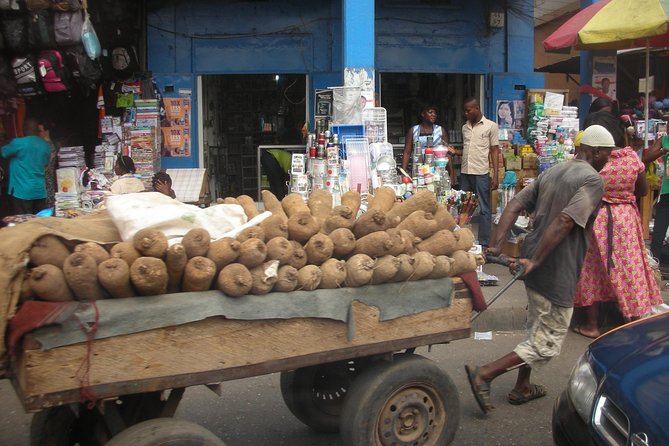
Makola is possible to visit independently, but the tour’s strongest feature is having someone lead you through it. The market’s size and many segments can make an unplanned visit inefficient, especially if you want to find a particular product.
A guide can also help with communication and social context. You are not simply pointing at an item and asking for a price. You can learn what a product is, how it is used, and which part of the market is most suitable for your needs.
Prince, another guide named in connection with this experience, has combined the market visit with an Accra Slave Tour and offered extra help during the day, including a drive past Jubilee House. That combination may suit you if you want a longer day of city sightseeing, though the market walk itself remains a separate 2 to 3 hour experience.
The bargaining help is practical, but keep it respectful. The aim is to understand the price and avoid obvious confusion, not to force every seller to accept the lowest possible amount. A good guide can help you handle the exchange with less stress.
The private format also matters for comfort. You can ask your guide to explain a product, pause for a moment, or adjust the focus. Still, private does not mean quiet. The surrounding market remains active and crowded.
What the $58 price gets you
At $58 per person, this is not the cheapest way to enter a market. You are paying for a private English-language guide, local knowledge, water, and help with navigation and shopping during a 2 to 3 hour walk.
The value depends on how you use the time. If you only want to glance at stalls and take a few photos, the price may feel high. If you want to understand the food section, locate specific items, ask questions, and make purchases with help, the cost becomes easier to justify.
A private guide is most useful in a place as large as Makola. You are paying less for a formal lecture than for access to someone who knows how the market works. That includes finding the right area, explaining unfamiliar ingredients, and helping you avoid wasting time.
The price may also make sense for first-time visitors who would not feel comfortable handling the market alone. It is less compelling for experienced Accra shoppers who already know where to go and how to bargain.
Water is included, which is helpful during a walking tour. The duration is listed as 2 to 3 hours, and starting times depend on availability, so check the schedule before you commit your day.
Who will enjoy this walk most
I would recommend Makola Market to you if you want daily Ghanaian life rather than a neat row of visitor shops. It suits curious eaters, home cooks, textile shoppers, photographers, and anyone who likes learning by watching ordinary trade.
It is also a good choice if you want to buy something but do not know where to begin. Tell the guide your goal, then let that shape the route. The experience can be more useful when you have a small shopping plan.
You should be comfortable walking through a crowded open market. Noise, close quarters, and a busy pace are part of the setting, not problems the tour can remove. Wear practical clothing and shoes, keep your belongings secure, and bring patience.
This may not be the right outing if you want air-conditioning, a fixed display of crafts, or a quiet cultural talk. It is also not ideal if you have only enough energy for a short stop and want to visit every section.
Booking details and practical expectations
The tour is offered as a private group with an English-speaking live guide. Pickup and drop-off options vary, with listed drop-off points in the Accra Metropolis and at the Accra Metropolitan Assembly.
The stated location is Ghana’s Central Region, while the route and drop-off information point to Accra. Check the exact meeting point and selected pickup option carefully so you know where the walking portion begins.
You can cancel up to 24 hours before the experience for a full refund, and the reserve-now, pay-later option lets you hold a place without paying immediately. Starting times depend on availability.
The provider is Classic Holidays. The experience has a top rating from 16 reviews, with particular praise for guides who navigate the market well, explain local details, help with purchases, and pay attention to comfort.
Should you book the Makola Market Walking Tour?
Book it if you want a direct look at Ghanaian food, trade, clothing, and daily shopping, and if you would value a local person beside you. The guide is the main reason to pay for this experience, especially if you want to find particular goods or reach sections beyond the main food market.
I would be especially keen to book with enough time to tell the guide what interests me. Ask for food, textiles, cosmetics, used clothing, tools, or another focus, rather than trying to see everything at once.
Skip it if you dislike crowded markets or prefer a quiet, highly organized attraction. For everyone else, this is a practical way to understand Accra through the place where people shop, work, eat, and sell. The best moments are likely to come from the small details: a local ingredient, an unfamiliar trade, a useful purchase, or a guide who knows exactly which lane to take.
FAQ
How long does the Makola Market Walking Tour last?
The tour lasts approximately 2 to 3 hours. The Makola Market visit itself is scheduled for about 2 hours, with the possibility of exploring additional sections if you have enough time and energy.
What language is the tour offered in?
The live tour guide speaks English. English is also the listed tour language.
Is this a private tour?
Yes. The activity is offered for a private group rather than as a shared group experience.
What does the tour include?
The tour includes guiding services from a local expert and water.
What parts of Makola Market can I see?
The route can include the food market, cosmetics, jewelry, textiles, pharmaceuticals, groceries, and electronics. If time and energy allow, you may also reach the artisan and timber market, Agblobloshie vegetable market, and the Broni wawu used-clothing area.
Can I shop during the tour?
Yes. Shopping is part of the Makola Market visit. Your guide can help you find particular sections and may assist with negotiating prices.
Where does the tour start and finish?
The starting or pickup location depends on the option selected. Listed drop-off locations include the Accra Metropolis and the Accra Metropolitan Assembly.
Can I cancel the booking?
You can cancel up to 24 hours in advance for a full refund. The reserve-now, pay-later option allows you to keep your plans flexible and pay nothing at the time of booking.
More Walking Tours in Accra
- Walking Tours In Cape Coast And Elmina
★ 5.0 · 9 reviews - Accra Zoo, Canopy Walk and Botanical Gardens Private Tour
★ 5.0 · 3 reviews
Just added around Accra
- Visit Aburi Garden, Tetteh Quarshie Cocoa Farm & Waterfall★ 4.0 · 4 reviews
- Historical Day Tour to Cape Coast, Elmina and Kakum★ 5.0 · 3 reviews
- Private Airport Transfer to from ACC Kotoka by Business Car★ 5.0 · 4 reviews
- Private Slave Castles and Dungeons Tour in Cape Coast, Ghana★ 5.0 · 3 reviews
- Local Ghanaian Food Tasting Tours★ 5.0 · 3 reviews
- The Door Of No Return/ Dungeon & cape Coast Castle★ 5.0 · 4 reviews
- Historical tour in Cape Coast Ghana★ 5.0 · 3 reviews
- Cape Coast Castle and Kakum National Park 2-Day Private Tour★ 5.0 · 3 reviews
Markets, compared.
Accra Street Food Tour: Makola Market Tour With Full Lunch
Read our review →
Accra Street Food Tour: Osu Night Market Tour Experience
Read our review →
Browse the lists this tour appears in