
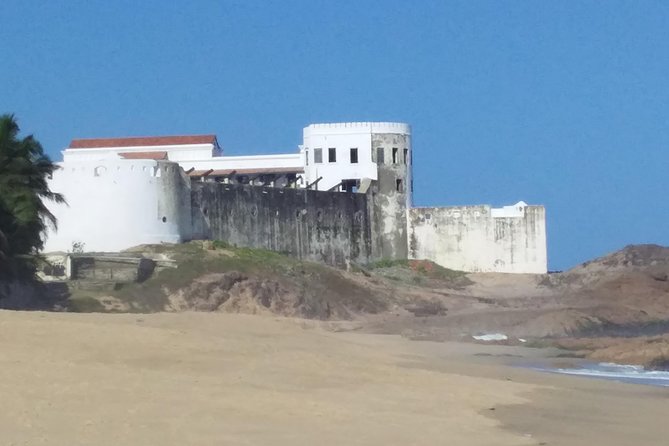
Reviewed · ACCRA TOURS
A 9 Days Experience Of The Motherland
Ghana gives you something many organized trips miss: real contact with daily life. Along with museums, castles, waterfalls, and markets, you attend a naming ceremony, meet a monkey priest, watch kente and Adinkra cloth being made, and join Winneba’s annual masquerade festival.
I like the mix of serious history and hands-on culture. I also like the private format, with airport pickup, an air-conditioned vehicle, unlimited bottled water, and a guide team led by Ben. The main drawback is the pace: nine days cover a great deal of ground, and some days run long, especially the six-hour visit at Assin Manso and the full day around Cape Coast.
Key Points
- A personal introduction to Ghana: Begin with an airport pickup and a Kpalungo cultural performance at your hotel.
- History with weight: Visit the W.E.B. DuBois Center, Kwame Nkrumah Memorial Park, Assin Manso, Cape Coast Castle, and Elmina Castle.
- Hands-on local culture: Try making Adinkra cloth, visit a kente village, and receive a Ghanaian name at a traditional ceremony.
- Nature beyond the cities: See Mona and black-and-white colobus monkeys, Kintampo Falls, and Kakum National Park’s canopy walkway.
- Food and transport included: Eight breakfasts and eight lunches come with the tour, along with an air-conditioned vehicle and bottled water.
- A private group experience: Your group travels together, with pickup offered and a start time of 7:00 a.m.
First Evening in Accra: Music at the Hotel

Your Ghana experience begins with airport pickup in Accra. A driver and guide meet you at the airport and take you to your booked hotel, a useful start after a long flight and an easy way to avoid arranging your first transfer alone.
The welcome continues with a one-hour performance by the Kpalungo Cultural Troupe. This gives you music and dance before the sightseeing begins, and it sets the tone for a trip built around Ghanaian culture rather than only monuments.
The first day is light, which is sensible. You have time to settle in, meet the tour team, and prepare for an early start the next morning. The standard meeting time is 7:00 a.m., so do not plan on treating the whole trip as a late-rising holiday.
Other Accra days people book alongside this one:
- The Cape Coast Day Tour
★ 5.0 · 525 reviews - Experience the Beauty, History and the Culture Of Accra in a Day
★ 5.0 · 323 reviews - The Cape Coast Tour
★ 5.0 · 177 reviews
Accra’s Story, From DuBois to Makola Market
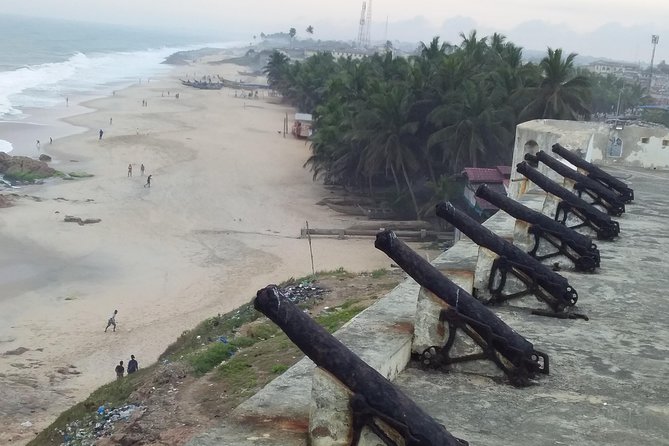
Day two brings a full tour of Accra. At the W.E.B. DuBois Center, you visit the former home and library of the writer, Pan-African thinker, and civil rights figure who spent his final years in Ghana. It is a compact stop, but it gives the capital a wider connection to the African diaspora and the political movements of the twentieth century.
Next comes Kwame Nkrumah Memorial Park. The mausoleum is the final resting place of Ghana’s first president and the leader associated with the country’s independence. The visit helps explain why Nkrumah remains such an important figure in Ghana’s national story.
Makola Market shifts the mood from formal history to everyday commerce. You get about an hour at one of West Africa’s major open-air markets. Keep your attention on the people, goods, sounds, and movement rather than expecting a polished shopping center. The market is a better place to see ordinary Accra at work, though it can feel intense if you prefer quiet sightseeing.
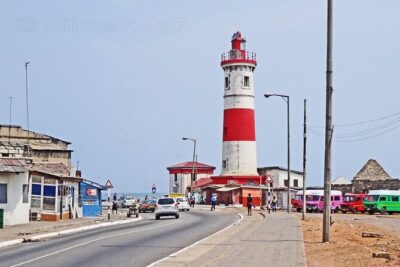
At James Town Lighthouse, you explore one of Accra’s early British settlements, along with the lighthouse, Usher Fort, fishing harbor, and nearby community. This is one of the more revealing stops because it connects colonial history with a working coastal neighborhood.
The day ends at the Center for National Culture, described as Ghana’s largest arts market. You can browse crafts and art here, but remember that market shopping works best when you set a budget before you start. The tour includes the visit, not personal purchases.
Kumasi and the Ashanti Royal Past
Day three takes you to Kumasi, the heart of Ashanti cultural life on this itinerary. At Manhyia Palace Museum, you visit the former residence and museum connected with the Ashanti king. The setting gives you a direct look at royal history and the institutions that shaped the region.
The Prempeh II Jubilee Museum, located in the Kumasi Cultural Centre, adds more detail about Nana Agyeman Prempeh. You have two hours here, longer than at many other museums on the trip, so this is a good place to slow down and ask questions.
I like the way these two stops work together. Manhyia Palace gives you the royal setting, while the Prempeh II Museum adds a more focused account of one major Ashanti ruler. If you want only scenery and food, the museum time may feel heavy. If you want context for the crafts and ceremonies later in the trip, it is essential.
Kente, Cocoa, and Your Ghanaian Name
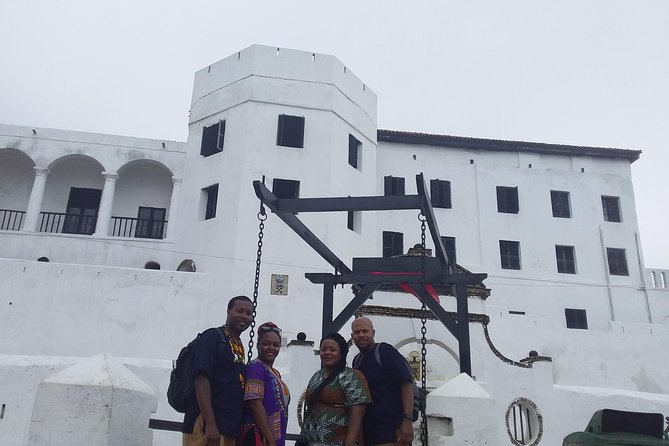
Day four is one of the most personal parts of the tour. At Adansomaso, you visit a kente weaving village and learn how this famous Ghanaian cloth is made. Kente is not simply a colorful souvenir. The weaving process and patterns carry cultural meaning, and seeing the work done in a village gives you more respect for the time behind each piece.
The same stop includes a local cocoa farm and a local healer’s shrine. These visits bring agriculture and traditional practice into the itinerary, two subjects that can be missed when a trip stays inside museums and city centers.
You also take part in a traditional naming ceremony and receive a local name. This is a major reason to choose this tour over a standard Ghana highlights trip. It gives you a ceremonial connection to the place, though you should approach it with respect and follow the guidance of your hosts.
At Ntonso, you learn about Adinkra cloth, another important Ashanti art form. You have the chance to make your own cloth, turning the stop into a practical workshop rather than a simple demonstration. Bring patience. Handmade work rarely produces a perfect result on the first try, and that is part of the fun.
Same coastline, a completely different kind of day:
- From Accra: Cape Coast, Elmina Castle & Kakum Park Day Tour
★ 4.6 · 144 reviews - Accra Detailed City Tour
★ 4.5 · 118 reviews - Accra Guided City Tour Experience
★ 4.7 · 88 reviews - Accra Guided City Tour Experience
★ 5.0 · 76 reviews
Monkeys and Kintampo Falls
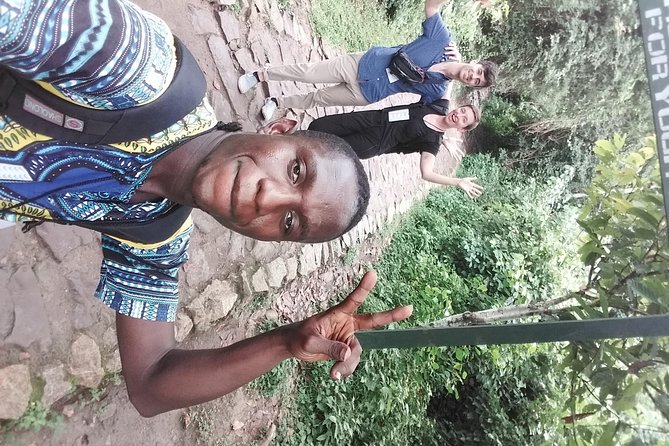
Day five shifts toward nature. At Boabeng-Fiema Monkey Sanctuary, you look for Mona monkeys and black-and-white colobus monkeys in an area protected through local tradition. You also make a courtesy call on the monkey priest of the villages.
That local connection matters. The sanctuary is not presented only as a wildlife attraction. It is tied to the customs of the community, making the visit different from viewing animals in a conventional zoo or park.
Kintampo Falls adds water and forest scenery. You spend about two hours at the falls and use the newly constructed canopy walkway. This is a welcome change after museums and historical sites, but wear sensible shoes and expect a physical outing. The day includes two separate nature stops, so the schedule may feel full.
Assin Manso and the Difficult History of the Slave Trade
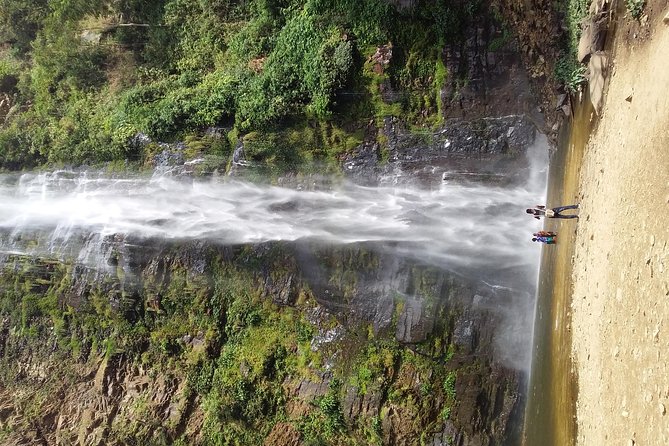
Day six centers on Assin Manso Ancestral Slave River Park. The river was a place where captive Africans were taken for a final bath before being sent onward to the slave castles at Cape Coast and Elmina during the transatlantic slave trade.
The planned visit lasts six hours, making it one of the longest single stops of the tour. That amount of time signals that this is not a quick photo stop. You should expect a serious, reflective portion of the trip.
This visit can be especially meaningful if your interest in Ghana is connected to African diaspora history. The site helps connect the later castles with the earlier stages of captivity and forced movement. It is also emotionally demanding, so do not schedule a carefree evening afterward in your mind. The value here comes from giving the history time and attention.
Cape Coast Castle, Kakum, and Elmina
Day seven is the tour’s biggest historical and nature-packed day. At Cape Coast Castle, you visit a UNESCO World Heritage site tied to the transatlantic slave trade. The two-hour stop offers important context for the forts and castles along Ghana’s coast, but it is not light sightseeing. You should be ready for difficult stories and spaces.
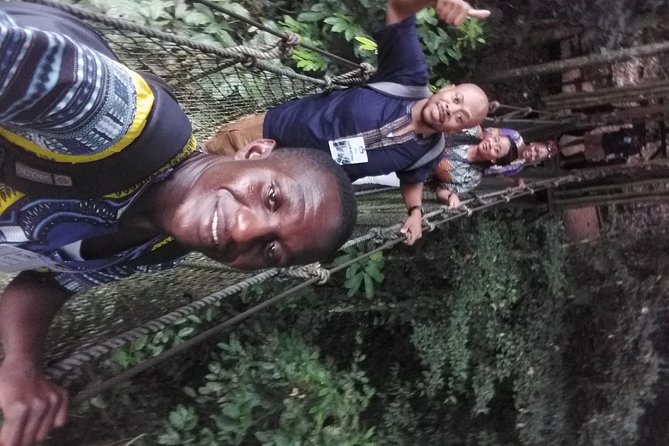
Kakum National Park follows with a different kind of experience. The park is home to many tree and bird species, and the famous canopy walkway lets you see the forest from above. The walkway is one of the trip’s most memorable activities, but anyone uncomfortable with height should consider that before booking.
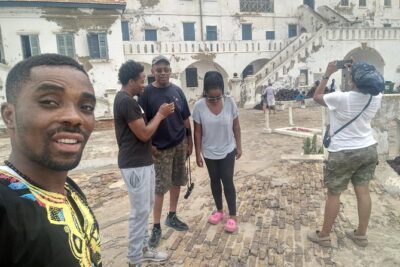
The day ends at Elmina Castle, described as the first colonial building in sub-Saharan Africa and also a UNESCO World Heritage site. Seeing both Cape Coast and Elmina in one day gives you useful comparisons, but it also makes for a long schedule. You may find the sites begin to blur if you rush. Listen closely to your guide and take notes if the historical details matter to you.
Winneba’s Annual Masquerade Festival
Day eight is set aside for Winneba’s annual masquerade festival. You have six hours to experience the event and the local celebration around it.
This is one of the strongest reasons to choose a fixed-date trip such as this one. Museums can be visited in many seasons, but a festival offers a glimpse of public culture that cannot be reproduced on demand. The exact feel of the day will depend on the festival schedule and conditions, so bring flexibility and expect crowds or delays.
The festival also provides a useful balance after the heavier historical sites. You see Ghana not only through political history and colonial buildings, but through performance, community, costume, and celebration.
Modern Accra and a Final Beach Stop
The final day begins at West Hills Mall, where you get an hour to see a more modern side of Accra. This may seem less distinctive than a market or palace, but it helps round out the picture. Ghana is not only historic sites and village crafts. It is also contemporary shopping, commerce, and city life.
You then visit Labadi Pleasure Beach for several hours. The plan includes time to relax, enjoy the sea breeze, and take part in horse riding at the beach. This gives you a slower ending after the demanding schedule of the previous days.
The group leaves for the airport two hours before check-in time. Keep your final-day plans simple, since airport timing and traffic can affect how long you actually have at the beach.
What the Price Covers at $1,948.72
At $1,948.72 per person, this is not a cheap sightseeing package, but the value depends on how much support you want. You receive airport pickup, private transportation in an air-conditioned vehicle, a driver and guide, admission fees, unlimited bottled water, eight breakfasts, and eight lunches.
That matters in Ghana because the tour covers Accra, Kumasi, central Ghana, Assin Manso, Cape Coast, Elmina, Kakum, and Winneba. Organizing this route yourself would require arranging transport, entrance fees, timing, and local introductions across several areas.
The food arrangement needs a close reading. Eight breakfasts and eight lunches are included. Drinks and personal purchases are not included, and the available details do not confirm that dinners are covered, so budget for evening meals and other spending.
Gratuities for the driver and guide are also separate. Keep some money available for those thanks, along with crafts at the arts markets, cloth workshops, drinks, and souvenirs.
The Guide Team and Private Format
The tour is private, so only your group participates. That gives you more control than a large coach trip, especially when you want to ask questions, pause at a meaningful site, or make a reasonable extra request.
Ben is the main guide associated with the experience. The support team has included Victor, Emanuel, Bernice, Dan, Sherifa, and Charles. Feedback about the team repeatedly points to punctuality, flexibility, warmth, and a strong sense of safety. Ben is also described as having a good sense of humor and a clear way of explaining Ghanaian history.
You should still remember that a private tour does not mean a relaxed schedule. The team keeps to the plan, and several days begin early or include long stops. The advantage is that you have a dedicated group rather than strangers setting the pace.
Who Should Book This Ghana Tour?
I would choose this experience if you want Ghana’s history, culture, and nature in one trip, especially if you are visiting for the first time. It suits families and groups who value a guide, included transport, and a clear route rather than independent travel with daily planning.
It is also a strong fit if you have a personal or family connection to the African diaspora. Assin Manso, Cape Coast Castle, and Elmina Castle offer substantial historical context, while the naming ceremony and cultural visits create a more personal link to Ghana.
I would hesitate if you dislike early starts, long road days, museums, or emotionally serious history. The itinerary is packed, and the combination of castles, markets, workshops, waterfalls, festivals, and beaches leaves little empty time.
Book at least 24 hours before the start if you want the stated free-cancellation terms. You can cancel for a full refund up to 24 hours in advance, but changes or cancellations inside that window are not refunded.
Should You Book A 9 Days Experience Of The Motherland?
Book it if you want a guided introduction that goes beyond Accra and includes experiences you would be unlikely to arrange easily on your own, such as the naming ceremony, local craft work, monkey priest visit, and Winneba festival.
The best parts are the range and the human contact. The tradeoff is a demanding schedule and a price that makes most sense when you use the included transport, admissions, water, breakfasts, and lunches.
For a first Ghana trip, especially with a private group and a guide such as Ben, this is a useful choice. Just arrive ready for early mornings, long days, difficult history, and a lot of ground covered.
FAQ
Where does the tour begin?
The tour begins in Accra, Ghana, with airport pickup and transfer to your booked hotel.
How long does the experience last?
The experience lasts approximately nine days.
What time does the tour start?
The stated start time is 7:00 a.m.
Is this a private tour?
Yes. Only your group participates in the private tour or activity.
Is airport pickup available?
Yes. A driver and tour guide pick you up at the airport on the first day.
What meals are included?
Eight breakfasts and eight lunches are included. Drinks and personal-use items are not included.
Is transportation included?
Yes. The tour includes an air-conditioned vehicle, a driver, and a tour guide.
Which major castles are included?
The itinerary includes Cape Coast Castle and Elmina Castle.
Does the tour include the Kakum canopy walkway?
Yes. The Kakum National Park visit includes the famous canopy walkway.
Can I cancel for a full refund?
Yes, if you cancel at least 24 hours before the experience start time. Cancellations within 24 hours are not refunded.
Just added around Accra
- Visit Aburi Garden, Tetteh Quarshie Cocoa Farm & Waterfall★ 4.0 · 4 reviews
- Historical Day Tour to Cape Coast, Elmina and Kakum★ 5.0 · 3 reviews
- Private Airport Transfer to from ACC Kotoka by Business Car★ 5.0 · 4 reviews
- Private Slave Castles and Dungeons Tour in Cape Coast, Ghana★ 5.0 · 3 reviews
- Local Ghanaian Food Tasting Tours★ 5.0 · 3 reviews
- The Door Of No Return/ Dungeon & cape Coast Castle★ 5.0 · 4 reviews
- Historical tour in Cape Coast Ghana★ 5.0 · 3 reviews
- Cape Coast Castle and Kakum National Park 2-Day Private Tour★ 5.0 · 3 reviews
Accra Tours, compared.
Experience the Beauty, History and the Culture Of Accra in a Day
Read our review →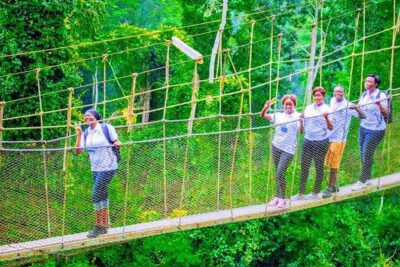

Cape Coast, Elmina Castle & Kakum Park Day Tour
Read our review →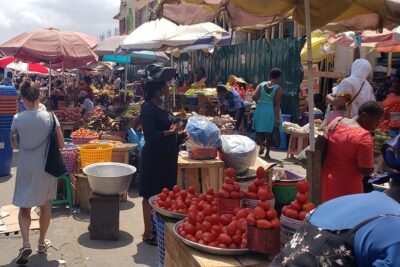
Browse the lists this tour appears in