
Reviewed · TOURS
7 Day Artisanal Tour
The heart of this Ghana tour is its hands-on craft workshops. You shape and paint pottery, make traditional black soap, and use wax and dye to create two yards of batik fabric. I like that these are working classes, not quick photo stops. You get to handle the materials and take something home.
I also like the balance between city sights and countryside. Accra brings museums, galleries, markets, and national history, while Kakum National Park and Cape Coast add forest and coastal history. The main consideration is the price: at $2,610 per person, this is a substantial purchase, and the long Cape Coast day may feel tiring.
Key points to know before booking
- Pottery you shape and paint yourself: The three-hour class at Happy Art Academy gives you time to make a piece and add your own colors.
- Three different craft traditions: Pottery, black soap, and batik each show a different side of Ghanaian daily life and artistic work.
- A serious Accra orientation: You visit Black Star Square, the W.E.B. Du Bois Center, the Arts Center, the Kwame Nkrumah Memorial Park, and major galleries.
- Kakum has two walking choices: You can take a two-kilometer forest walk or use the canopy walkway, which hangs 40 meters above the ground.
- Private transport matters: Your group travels in an air-conditioned vehicle, with airport transfers included in the overall plan.
- A useful free day: Day four gives you space to rest after several busy touring days.
Why the craft workshops are the real reason to go
Many Ghana trips show you art from a distance. This one asks you to make it. That difference matters. You see the work of local artisans, then try the same basic methods with guidance.
At Happy Art Academy, you spend about three hours learning traditional pottery. You shape clay into a useful or decorative piece, then paint it. The class is suited to beginners because the point is not perfect technique. The point is understanding how much care goes into an object that can look simple once it is finished.
Your pottery may need time before it is fully ready, so do not assume you will carry home a fired piece that same day. The supplied details confirm that you paint your creation, but they do not explain the firing and collection process. Ask about that before you begin if bringing the finished item home is important to you.
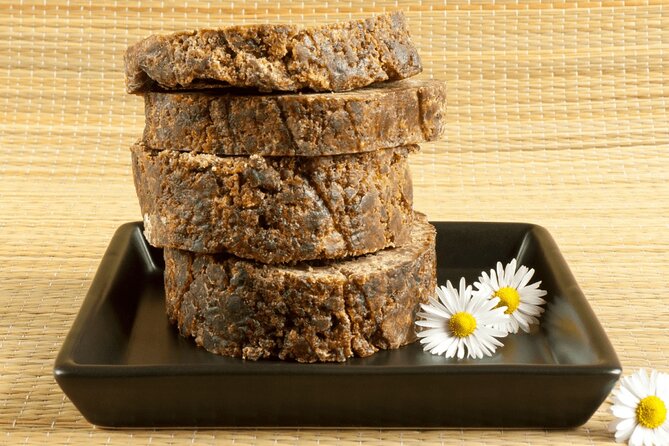
The black-soap workshop offers a different kind of learning. At ALL PURE NATURE Skin & Hair Care Products, you work with natural ingredients and traditional methods used to make African black soap. You mix and mold the soap, then personalize it with essential oils and botanicals.
This is one of the more useful activities on the schedule because the finished product has a daily purpose. You are not simply producing a souvenir. You are learning how a familiar skincare item is made and why its cleansing and moisturizing qualities are valued. If you have skin sensitivities, ask about the ingredients before adding oils or botanicals.
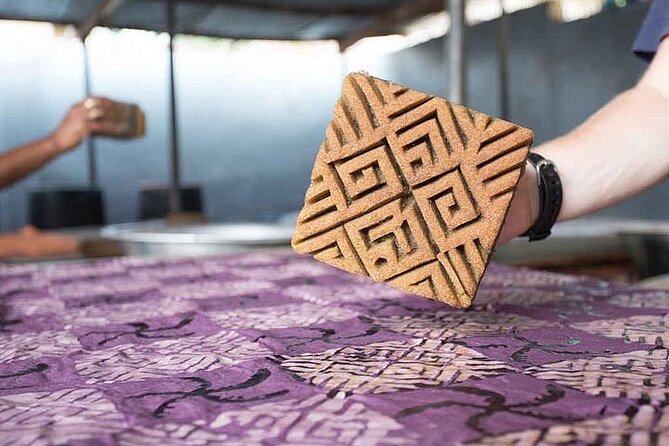
The batik class on day six gives you another three-hour session with a local artisan. You use wax to block parts of the fabric, then apply dye to form colorful patterns. The process lets you see how a plain piece of cloth becomes a patterned textile through repeated steps.
You take two yards of your handiwork home. That is a practical amount for a future sewing project, home decoration, or personal keepsake, although the tour does not include turning it into a finished garment. The appeal is the work itself. You will understand the patience behind Ghanaian textiles better after making even one fabric design.
A few more Accra trips to weigh up
- 7-Day Private Cultural and Heritage Tour in Ghana
★ 5.0 · 17 reviews - Private Multi-Day Ghana Tour about Culture History and Wildlife – 7 Days
★ 5.0 · 8 reviews - 7days/6nights Eco Tourism
★ 5.0 · 3 reviews
Accra in two different moods
The Accra portion begins with a broad orientation to the capital. You pass through its administrative and economic areas and see places tied to Ghanaian politics, independence, and Pan-African thought.
The Kwame Nkrumah Memorial Park is the clearest historical stop. The grounds include Nkrumah’s mausoleum, a museum about his life, his personal residence, the Eternal Flame of African Liberation, and landscaped gardens. You learn about his early life, political career, and vision for African unity.
The visit works best if you take your time. Nkrumah was Ghana’s first president and an important figure in African independence, so this is more than a quick monument stop. It gives the rest of the trip political context, especially when you later visit Cape Coast Castle and consider Ghana’s relationship with the wider world.
The schedule also includes the W.E.B. Du Bois Center for Pan-African Culture, Independence or Black Star Square, the Center for National Culture, and the Arts Center. Together, these stops give you a broad introduction rather than a narrow museum visit.
At the Arts Center, you can shop for Ghanaian goods and practice bargaining. Set a budget before you enter. The best approach is friendly and relaxed, with a clear idea of what you are willing to pay. The tour description does not specify what goods will be available on your particular day, so keep some flexibility.
Accra’s art scene receives its own day. Gallery 1957 focuses on contemporary African art. Artists Alliance Gallery presents paintings, sculptures, and textiles from Ghana and other parts of the continent. At dot.ateliers in South La, you get another look at local creative work.
This combination is useful because it places traditional craft beside current art. The workshops show you how objects are made by hand, while the galleries show how African artists work with newer ideas and forms. The gallery stops are each listed at about an hour, so you should expect an introduction and viewing time rather than a long guided seminar at every location.
The day Cape Coast puts Ghana’s past in focus
Day five is the most demanding day physically and emotionally. You travel from Accra toward Cape Coast, passing through the historic Denkyira Kingdom before reaching Kakum National Park.
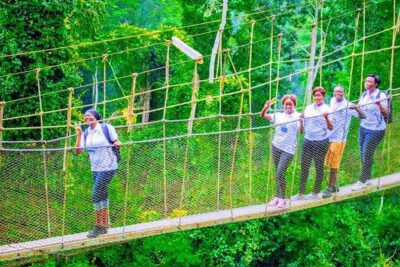
Kakum protects one of West Africa’s surviving tropical rain forests. You have two ways to experience it. The first is a two-kilometer nature walk, where you look for plant and animal life and learn about medicinal uses of forest species. The second is the canopy walkway, suspended 40 meters above the forest floor.
The canopy option gives you height and a different view of the forest. The ground walk gives you more direct contact with the plants and the forest floor. The itinerary says you choose between them, so consider your comfort with heights and your interest in natural history before the day begins.
The park visit lasts about four hours. Wear practical clothing and shoes suitable for walking. The supplied information does not state the exact weather conditions, difficulty level, or equipment provided, so ask your operator for current advice before departure.
Cape Coast Castle follows, with about three hours devoted to the site. Built by the Swedes in 1653 and later taken over by the British, the castle was connected to the trans-Atlantic slave trade. You visit the dark, confined dungeons and the West African Historical Museum.
This is not a light sightseeing stop. The tour places you close to physical spaces where enslaved Africans were held, and the guide explains the role of European traders and African groups in the trade. The subject deserves quiet attention. Give yourself room to process what you see rather than rushing straight from one photo opportunity to the next.
The return to Accra makes this a full day. Kakum and Cape Coast are valuable additions to a Ghana trip, but the travel time is a real consideration. If you prefer slow mornings and short transfers, this day may feel crowded. If you want nature and history in one outing, it is one of the most worthwhile parts of the program.
Aburi adds a slower green afternoon
The Aburi Botanical Gardens appear on day six after the batik class. Created in 1890 for pleasure and scientific research, the gardens contain plants and butterflies from around the world.
The town of Aburi has its own local character and mountain setting. Rental bicycles are available for tours, according to the supplied information, though the price and availability are not stated. Do not count on a bicycle unless your operator confirms it in advance.
This stop gives your schedule a needed change of pace. After the concentration required for batik, a garden visit lets you walk, look at plants, and take the afternoon at a gentler speed. The three-hour timing is long enough to avoid a rushed visit, though the experience will depend on how much independent walking or guided explanation your group receives.
Same coastline, a completely different kind of day:
- The Cape Coast Day Tour
★ 5.0 · 525 reviews - Experience the Beauty, History and the Culture Of Accra in a Day
★ 5.0 · 323 reviews - The Cape Coast Tour
★ 5.0 · 177 reviews - From Accra: Cape Coast, Elmina Castle & Kakum Park Day Tour
★ 4.6 · 144 reviews
What the seven-day pace feels like
The first day is simple: airport pickup and transfer to your hotel in Accra. The transfer is listed at about one hour, but the details do not state the exact hotel or traffic conditions. Accra traffic can affect timing, so keep your first evening easy.
Day two is full. Pottery takes three hours, followed by Accra sightseeing and the Nkrumah and Arts Center visits. Day three is also busy, with the black-soap class followed by three art venues. You will spend much of both days moving between hands-on work and cultural stops.
Day four is free. I consider this an important part of the design, not wasted time. You can rest at the hotel, catch up on laundry, or recover from the pace before the Cape Coast excursion.
Day five is the longest touring day. Day six combines batik and Aburi, while day seven allows time for shopping, packing, hotel checkout at noon, and airport transfer.
Breakfast is included on five days, but not all meals. Lunches, dinners, drinks, and personal purchases are not listed as included. One account of the service specifically praised the food, restaurants, cold drinks, and communication, but you should still budget separately for meals beyond the included breakfasts.
Private transport and personal service
The tour uses private transportation in an air-conditioned vehicle. Only your group takes part, which gives you more control than a large coach tour. You can ask questions as you go, and the schedule should be easier to adjust when the group has a shared preference.
Airport pickup is offered, and the final airport transfer is included in the plan. The tour description does not identify the vehicle size, hotel names, or exact pickup times, so confirm those details before paying.
The service record includes a guide named Mohammad, who is credited with helping arrange requested experiences and keeping communication clear. If he is assigned to your group, tell him early what matters most to you, such as extra time at the Nkrumah memorial, a particular gallery, or help with shopping.
The overall service has received top marks from four written evaluations, with repeated praise for friendly staff, comfortable transport, good hotels, informative tours, food, and communication. That does not guarantee every detail will match your expectations, but it points to the areas where the operator has made a strong impression.
Is $2,610 per person a fair price?
The cost is $2,610 per person. That is not a bargain Ghana package, but the value depends on how much help you want arranged in advance.
You are paying for seven days, private transport, airport transfers, an air-conditioned vehicle, five breakfasts, workshop access, sightseeing admissions, and a private group format. The program also handles complicated logistics between Accra, Aburi, Kakum, and Cape Coast.
The price is easier to justify for a first visit, a family group, or travelers who prefer a guide and driver rather than arranging each transfer alone. It is harder to justify if you already know Ghana, travel comfortably by local transport, or mainly want the workshops without the sightseeing package.
Hotel quality is described as good, but the actual properties are not named. Meals beyond breakfast are not included. Airport departure tax and landing and facility fees are also excluded, so ask for a full final cost before booking.
Who should book this Ghana experience?
I would recommend it to you if you want to make things, not only look at them. The pottery, black-soap, and batik classes give the trip a clear theme and produce useful memories you can carry home.
It also suits families, private groups, and first-time visitors who value a driver, airport pickup, and a fixed plan. Most people can take part, and the activity is private to your group.
You should think twice if you dislike full touring days, long road trips, or emotionally difficult historical sites. Cape Coast Castle is important, but the visit can be heavy. You should also confirm the pottery firing process, hotel names, meal arrangements, and any workshop ingredient concerns before committing to the price.
Final call
Book this tour if you want a structured introduction to Ghana built around local making, national history, art, and nature. Its strongest feature is the connection between watching artisans work and trying the techniques yourself.
Choose a different plan if you want a cheaper, slower trip or only need a craft workshop in Accra. For everyone else, the private vehicle, airport support, free rest day, and broad range of experiences make this a well-rounded seven-day introduction, provided the $2,610 cost fits your budget.
FAQ
How long is the tour?
The experience lasts approximately seven days.
Where does the tour take place?
The tour is based in Accra, Ghana, with excursions to Kakum National Park, Cape Coast Castle, and Aburi Botanical Gardens.
Is airport pickup included?
Airport pickup is offered, and day seven includes a transfer to the airport for departure.
Is this a private tour?
Yes. Only your group participates in the private tour or activity.
What meals are included?
Five breakfasts are included. Other meals are not listed as included.
What workshops are part of the experience?
The schedule includes pottery making and painting, traditional black-soap making, and batik production using wax and dye.
Can I cancel for a full refund?
You can receive a full refund if you cancel at least six full days before the experience start time. A 50 percent refund applies to cancellations made two to six full days before the start time. Cancellations less than two full days before the start time are not refunded.
Just added around Accra
- Visit Aburi Garden, Tetteh Quarshie Cocoa Farm & Waterfall★ 4.0 · 4 reviews
- Historical Day Tour to Cape Coast, Elmina and Kakum★ 5.0 · 3 reviews
- Local Ghanaian Food Tasting Tours★ 5.0 · 3 reviews
- Private Airport Transfer to from ACC Kotoka by Business Car★ 5.0 · 4 reviews
- Private Slave Castles and Dungeons Tour in Cape Coast, Ghana★ 5.0 · 3 reviews
- The Door Of No Return/ Dungeon & cape Coast Castle★ 5.0 · 4 reviews
- Historical tour in Cape Coast Ghana★ 5.0 · 3 reviews
- Cape Coast Castle and Kakum National Park 2-Day Private Tour★ 5.0 · 3 reviews
Tours, compared.


Cape Coast, Elmina Castle & Kakum Park Day Tour
Read our review →
Boti Falls, Umbrella Rock, Aburi Gardens & Cocoa Farm Tour
Read our review →Browse the lists this tour appears in