
Reviewed · CAPE COAST AND ELMINA CASTLE TOURS
10 Days Trip to Cape Coast and Elmina Castles from Accra
The most powerful part of this Ghana journey is the movement between places of beauty and places of painful memory. You begin in Accra, follow Ashanti traditions to Kumasi, then reach the coastal castles and slave sites at Elmina, Cape Coast, and Assin Manso. The final days connect that past with PANAFEST and Emancipation Day, when music, ceremony, and traditional chiefs bring the present into the picture.
I like the small maximum of 10 people, which gives your guide room to answer questions and adjust the pace. I also like the mix of castle visits, craft villages, forest walks, and city sightseeing. The main drawback is the price, $4,695 per person, and the steady pace. Several days combine long drives with emotionally demanding sites, so this suits you best if you want a structured cultural journey rather than a leisurely beach holiday.
Key points to know before booking
- Elmina Castle and Cape Coast Castle: Visit two major coastal fortresses connected to the Atlantic slave trade, with guided interpretation and a memorial ceremony by the sea.
- A real Ashanti culture focus: Kumasi includes the Prempeh II Jubilee Museum, Manhyia Palace Museum, and craft villages known for woodcarving, Adinkra cloth, and Kente weaving.
- Kakum offers two levels of activity: Choose the 1,000-foot canopy walkway, with platforms more than 150 feet above the ground, or a 2-kilometer forest walk.
- Festival dates matter: PANAFEST activities and the Emancipation Day celebration depend on the event schedule, so confirm that your dates match the program you want to see.
- Private transport and a resident guide: Airport transfers, hotels, bottled water, daily breakfast, and nine dinners are included, along with transportation in a private vehicle.
- The trip is educational and personal: Guides such as Joshua, George, Elvis, Kwaku, and Nii Solomon have been associated with warm, attentive service, though your assigned guide may differ.
Why this Ghana route carries real weight
This is not simply a tour of old buildings. It is a guided trip through several layers of Ghanaian identity: Ga life in Accra, Ashanti power and craft in Kumasi, coastal trade and enslavement at the castles, and modern remembrance through festivals and ceremonies.
That range is the strongest reason to consider the program. You are not left to piece together separate day tours or arrange long-distance transport on your own. A guide accompanies you for the duration, giving continuity as the subject changes from national independence to royal traditions, forest ecology, and the Atlantic slave trade.
The emotional range can be intense. A morning at a museum may feel calm and methodical, while a castle dungeon or slave river can be sobering. Give yourself time to think, ask questions, and step back when needed. This is a meaningful trip, but it is not light sightseeing.
More cape coast and elmina castle tours in Accra:
- The Cape Coast Day Tour
★ 5.0 · 525 reviews - The Cape Coast Tour
★ 5.0 · 177 reviews - From Accra: Cape Coast, Elmina Castle & Kakum Park Day Tour
★ 4.6 · 144 reviews
Day 1: A soft landing in Accra
Your trip begins at Kotoka International Airport. After immigration, luggage collection, and customs, you meet the guide and transfer to your Accra hotel.
Once you check in, the guide offers an Akwaaba, or welcome, and explains the days ahead. Dinner is included, while the rest of the day is free for rest.
That first evening is useful. International flights can leave you tired, and the schedule does not force a major visit immediately after arrival. Use the time to adjust, drink water, and get ready for an early start the next morning.
Day 2: Accra from independence to Jamestown
Day two gives you a strong introduction to Ghana’s modern identity. The morning begins with an orientation on Ghanaian customs, health, safety, and basic historical context.
The W.E.B. Du Bois Centre is an important first stop. Du Bois, a major Pan-African thinker, chose Ghana as a place to live and work. The visit helps frame the wider theme of the trip: Ghana is not only a country connected to the African past, but also a center of Pan-African thought and political independence.
At Independence Square, you see the enclosed flame of African Liberation, lit by Kwame Nkrumah in 1961. The nearby Black Star Square reflects Ghana’s place as one of the first sub-Saharan African countries to gain independence from colonial rule.
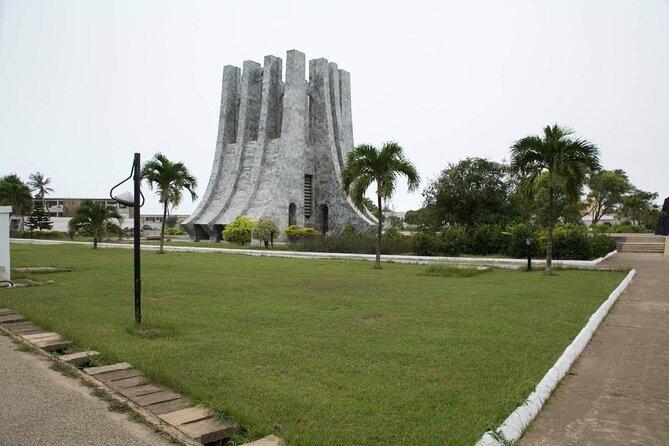
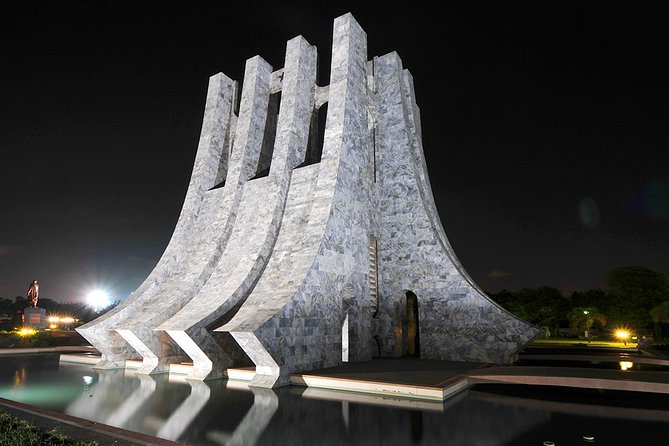
The Kwame Nkrumah Memorial Park is another central stop. It is the final resting place of Ghana’s first president and a place to consider the country’s independence movement.
You also visit Jamestown, one of Accra’s oldest communities. The fishing district offers a sharp contrast with modern Accra. At the lighthouse, you can look across the waterfront and see how work, housing, and public life meet along the shore. The Brazil House adds another layer, linking the neighborhood to the return of formerly enslaved Africans from Brazil.
This day has a lot in it. The listed stops are designed to fit into a focused visit rather than a slow neighborhood walk. Wear comfortable shoes and keep your attention open. Jamestown is best understood as a living community, not a museum display.
Day 3: Accra to Kumasi and the Ashanti center
After breakfast and hotel checkout, you travel inland to Kumasi, the historic seat of the Ashanti Empire. The drive is one of the longer transitions of the trip, but it gives you a sense of the distance between Ghana’s coastal capital and the Ashanti heartland.
Kumasi is tied to the Asante people, the largest Akan ethnic group in Ghana. The city’s political and cultural importance is central to understanding the next day’s palace and craft visits.
In the afternoon, you visit the National Centre for Culture and the Prempeh II Jubilee Museum. The center also includes studios where brass makers, potters, and batik artisans work. This is a good place to see objects being made rather than only displayed behind glass.
The museum is named for Prempeh II, a former Asantehene, or ruler of the Ashanti people. The visit gives context to royal authority, court customs, and the survival of Ashanti identity through periods of outside pressure.
You also pass colonial-era buildings and the Kejetia Market, described as one of West Africa’s most dynamic marketplaces. The schedule may not provide a long independent market visit, but the drive gives you a useful look at Kumasi’s scale and energy.
Same coastline, a completely different kind of day:
- Experience the Beauty, History and the Culture Of Accra in a Day
★ 5.0 · 323 reviews - Accra Detailed City Tour
★ 4.5 · 118 reviews - Accra Guided City Tour Experience
★ 4.7 · 88 reviews - Accra Guided City Tour Experience
★ 5.0 · 76 reviews
Day 4: Ashanti royal traditions and handmade cloth
Day four is the cultural heart of the Kumasi portion. You visit three craft communities, each with its own specialty.
At Ahwiaa, woodcarvers make royal stools, walking sticks, and fertility dolls. You can watch the work and buy carved pieces. If you plan to purchase anything, ask your guide about quality, packing, and a fair price before committing. Shopping is part of this route, but it should not feel compulsory.
Ntonso is known for Adinkra textiles. Artisans hand-stamp patterns onto cotton cloth, using symbols with meanings tied to ideas such as wisdom, strength, leadership, or community. The value here is not just the finished fabric. You see how visual language carries social meaning.
At Bonwire, Kente cloth is woven by hand on traditional looms. Kente is closely linked with Ashanti identity and ceremonial use. The weaving process is slow and careful, which makes the cloth’s price easier to understand than it might be in a shop.
Manhyia Palace Museum completes the day. The palace museum helps connect the craft traditions to the Ashanti royal system. Together, the palace and villages give you more than a quick cultural performance. They show how design, authority, ceremony, and local work remain connected.
This is also another full day. If you want time to ask detailed questions or shop carefully, tell your guide early. The private format should make that conversation possible.
Day 5: From Kumasi to Elmina
After breakfast and checkout, you finish the Kumasi visits before driving toward Cape Coast and Elmina. The change in scenery and subject is clear: you move from inland royal traditions to the coastal world shaped by European trade and fishing.
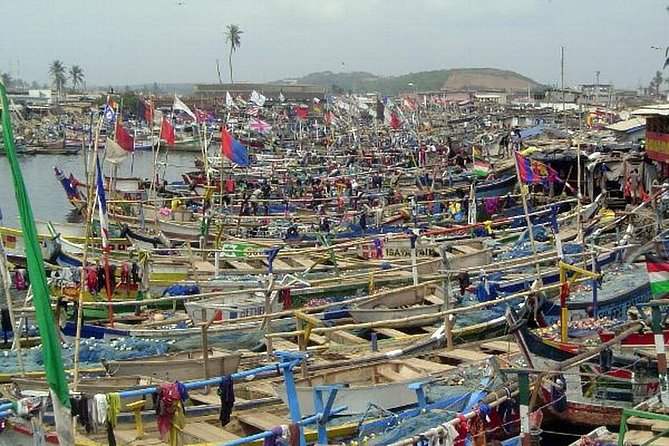
The evening guided walk through Elmina Township is one of the more grounded parts of the trip. At the harbor, colorful fishing canoes prepare for another night at sea. Elmina is not only a historic site. It is still a working coastal town, and the fishing community gives you a view of daily life beside the castle.
The lagoon and harbor area help explain why European powers valued this coast. The town’s location made it an important point for trade, but the same system became part of the forced movement of Africans across the Atlantic.
PANAFEST activities may also be scheduled during your stay. The festival is linked to African arts, heritage, and remembrance. Events can vary, so the exact experience depends on the calendar. Your guide accompanies you to scheduled activities, which is helpful when timing and locations change.
Day 6: Kakum’s forest canopy or a gentler day
Kakum National Park offers a change of pace after several days of museums, city visits, and difficult historical subjects. It is one of Ghana’s best-known protected forest areas and supports birds, butterflies, many plant species, and more than 40 types of mammals, including monkeys and the reclusive forest elephant.
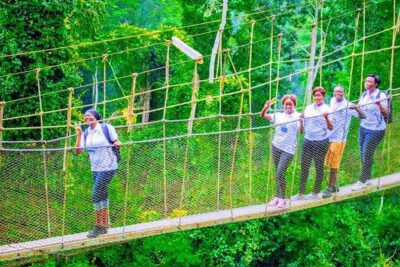
The signature activity is the canopy walkway. It stretches about 1,000 feet across seven bridges, with viewing platforms more than 150 feet above the forest floor. You should expect height, movement, and a physical challenge. The reward is a broad view into the treetops, a perspective you cannot get from a normal forest path.
If you prefer to stay closer to the ground, choose the 2-kilometer nature walk. It focuses on birds, butterflies, exotic plants, and the medicinal uses of forest species. This option is still active, but it avoids the height of the suspended bridges.
You can also spend the day at your hotel pool or take a dip in the ocean. That choice matters. The tour is packed enough that a rest day may be the wiser decision if you are tired, especially before more emotionally heavy castle visits.
PANAFEST activities are scheduled again in the evening when available. The combination of forest and festival makes this day one of the most varied on the route.
Day 7: Elmina Castle and remembrance by the water
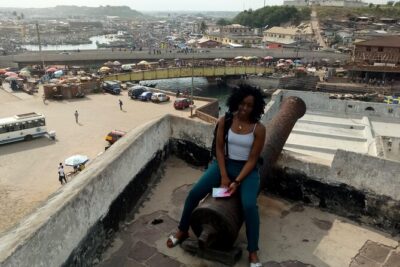
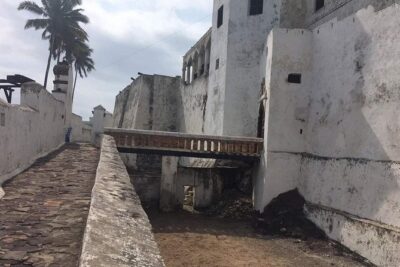
Elmina Castle, also called St. George’s Castle, was the first European structure built in sub-Saharan Africa. The castle’s age is impressive, but the real importance lies in what happened inside its walls and how the Atlantic trade reshaped countless lives.
You walk through the grounds and rooms with a guide. The castle includes spaces connected to the confinement and shipment of enslaved Africans. Expect the visit to be disturbing. It is not a place to rush through with a camera and a checklist.
The program also includes a memorial ceremony at the beach. Participants throw bread into the water in remembrance of ancestors. A wreath and candle are sent out to sea, followed by a moment of silence for those who died during the Middle Passage.
This ceremony gives the visit a personal structure, especially for people making a return-to-ancestry pilgrimage. It is also important to approach it respectfully. Listen to the instructions, observe the silence, and allow others their own response.
PANAFEST activities continue when scheduled. That pairing of a historical site with a living cultural event is one of the tour’s strongest ideas.
Day 8: Assin Manso and the Slave River
At Assin Manso, you visit the Slave River site and the burial place of two formerly enslaved people from the United States and Jamaica. Their remains were reinterred in 1998 during Ghana’s first Emancipation Day celebration.
The river site is described as a final transit point before captured Africans were taken to the coastal castles. The washing of enslaved people before confinement is part of the site’s painful account. Here, the setting is open and natural, but the meaning is heavy.
This stop works best after Elmina Castle because the earlier visit gives you a clearer sense of the coastal system. At Assin Manso, you are looking farther inland, at one of the places connected to the forced journey toward the sea.
The afternoon or evening includes any scheduled PANAFEST event. Keep your plans flexible. Festival programs can shape the day, and the exact event may not be known until the schedule is confirmed.
Day 9: Emancipation Day and the Grand Durbar
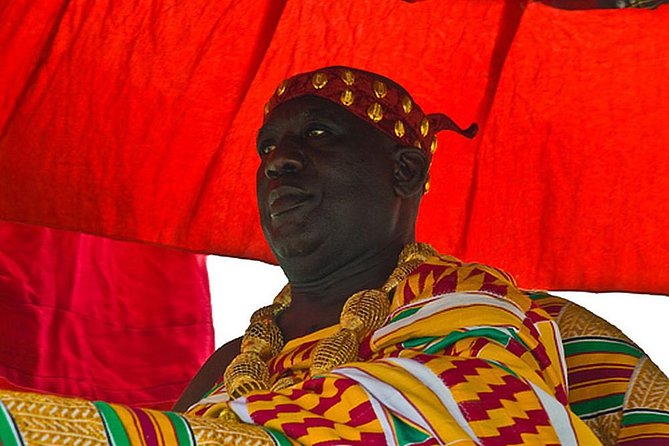
The ninth day returns to Assin Manso for the opening of the Emancipation Day celebration, when scheduled. The centerpiece is a Grand Durbar of traditional chiefs and people from the Central Region.
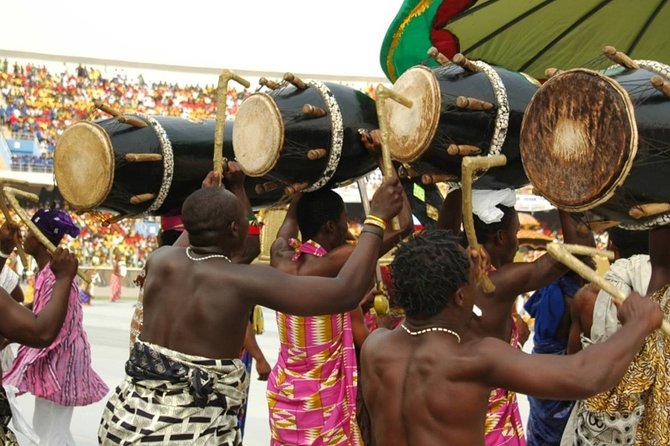
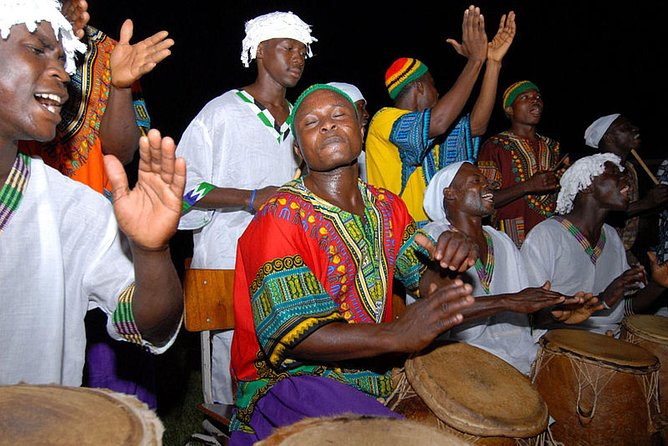
You can expect formal traditional clothing, gold jewelry, beads, music, and ceremonial pageantry. The fontomfrom drums provide the rhythm, and dancing is part of the celebration.
This is an important counterweight to the castle visits. The trip does not end with sorrow alone. It shows Ghanaian authority, performance, memory, and community in the present day.
Do check the dates before booking. The description ties this day to Emancipation Day, but the availability of the full celebration depends on when you travel. If the event is not running, your day may follow a different scheduled program.
The farewell dinner takes place at the hotel. After many long drives and guided visits, a final meal with the group and tour team gives the journey a natural closing point.
Day 10: Returning to Accra and flying home
After breakfast and checkout, you return to Accra, arriving in the early afternoon. Your guide and driver assist with last-minute shopping, including the collection of custom-made clothing.
A day-room is provided so you can rest before the airport transfer. That is a practical benefit, especially if your international flight leaves later in the day. You are not forced to wait in a public area with your luggage after a long road journey.
The tour ends back at Kotoka International Airport. Airport arrival and departure assistance, along with round-trip airport and hotel transfers, are included.
What the $4,695 price really covers
At $4,695 per person, this is an expensive Ghana tour. The value depends on how much planning and support you want handled for you.
The package includes hotel accommodation, a private vehicle, an experienced cultural guide, airport transfers, bottled water each day, nine breakfasts, and nine dinners. Admission to the listed attractions is also included. You are paying for a complete, escorted program rather than a series of inexpensive local visits.
The private vehicle matters because Accra, Kumasi, Elmina, Cape Coast, Kakum, and Assin Manso are spread across a large area. You avoid arranging intercity transport, finding each entrance, and coordinating festival stops on your own.
The price is harder to justify if you mainly want beaches, free time, or a short castle visit. You could spend less by arranging a focused coastal trip. This program earns its cost through its breadth, guide support, cultural context, and included meals and transport.
Food is one area where you may want to set expectations. Included dinners have been described as repetitive by some people on earlier departures, and some dishes may be spicy. If you have strong food preferences, tell your guide early. Meals not listed, snacks, and personal purchases are extra.
International flights, visas, travel insurance, gratuities, and personal expenses are not included. Build those into your budget before deciding.
Who will get the most from this trip
I would recommend this tour to you if you want:
- A structured Ghana heritage journey with a private vehicle
- Direct visits to Elmina Castle, Cape Coast Castle, and Assin Manso
- Time in both Accra and Kumasi
- Ashanti royal and craft traditions, not only coastal history
- Festival participation tied to PANAFEST or Emancipation Day
- A guide who can explain customs, history, and daily life throughout the trip
You should think twice if you prefer independent travel, long afternoons without appointments, or a slower schedule. The route covers a lot of ground, and one earlier group found the program strenuous and too busy. That is useful warning, not a reason to reject it. Just know what you are buying.
The small group is a real advantage. Guides associated with the program include Joshua, George, Elvis, Kwaku, Nii Solomon, and others. Past service has been praised for attentiveness, patience, safety, and flexibility. Ask at booking if a particular guide is available, but do not assume you will receive a specific person.
Should you book it?
Book this tour if your main goal is to understand Ghana through places, people, ceremony, and difficult memory. The combination of Accra’s independence sites, Kumasi’s Ashanti traditions, Elmina’s harbor, Kakum forest, the castles, and Assin Manso gives you a broad view that a short coastal excursion cannot match.
I would be cautious if $4,695 feels stretched or if you need plenty of unscheduled rest. Confirm the festival dates, ask about the hotel properties and dinner menus, and be honest about your comfort with long drives and emotionally serious sites.
For a first Ghana visit focused on heritage and connection to the African diaspora, this is a substantial, well-supported choice. Go with patience, curiosity, and room in your luggage for Kente, Adinkra cloth, or a carved keepsake.
FAQ
Where does the tour begin?
The tour begins at Kotoka International Airport in Accra, Ghana, with arrival assistance and a transfer to your hotel.
Where does the tour end?
The tour ends back at Kotoka International Airport in Accra after the return from the coastal region.
How long is the experience?
The experience lasts approximately 10 days.
What is included in the price?
The price includes airport and hotel transfers, hotel accommodation, private vehicle transportation, an experienced tour guide, bottled water each day, daily breakfast, nine dinners, and admission to the listed attractions.
Are international flights included?
No. Visas and round-trip international flights are not included.
Is travel insurance included?
No. Travel insurance must be arranged separately.
What group size should I expect?
The tour has a maximum of 10 travelers.
Can I choose between activities at Kakum National Park?
Yes. You can choose the canopy walkway or a 2-kilometer nature walk. You may also choose to relax at the hotel pool or take a dip in the ocean instead of visiting the park.
What is the cancellation policy?
You can cancel at least 24 hours before the experience start time for a full refund. Cancellations or changes made less than 24 hours before the start time are not accepted for a refund.
Just added around Accra
- Visit Aburi Garden, Tetteh Quarshie Cocoa Farm & Waterfall★ 4.0 · 4 reviews
- Historical Day Tour to Cape Coast, Elmina and Kakum★ 5.0 · 3 reviews
- Private Slave Castles and Dungeons Tour in Cape Coast, Ghana★ 5.0 · 3 reviews
- Local Ghanaian Food Tasting Tours★ 5.0 · 3 reviews
- Private Airport Transfer to from ACC Kotoka by Business Car★ 5.0 · 4 reviews
- The Door Of No Return/ Dungeon & cape Coast Castle★ 5.0 · 4 reviews
- Historical tour in Cape Coast Ghana★ 5.0 · 3 reviews
- Cape Coast Castle and Kakum National Park 2-Day Private Tour★ 5.0 · 3 reviews
Cape Coast and Elmina Castle Tours, compared.


Cape Coast, Elmina Castle & Kakum Park Day Tour
Read our review →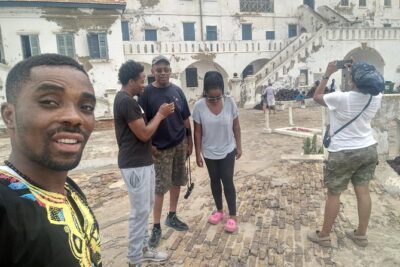
Cape Coast ,Elmina Castle and Kakum Full-Day Tour
Read our review →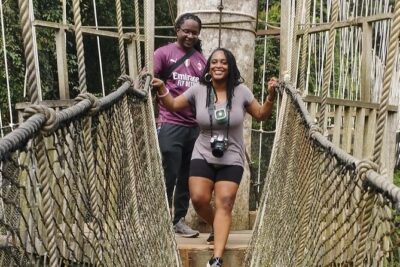
The Homecoming Experience To Cape-coast And Elmina.
Read our review →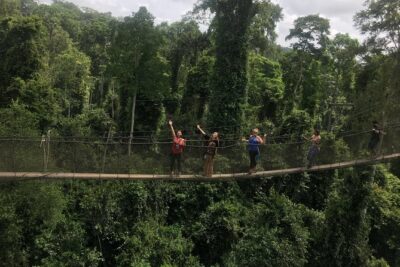
Cape Coast/Elmina Slave Dungeon and Canopy Walkway Private Tour
Read our review →Browse the lists this tour appears in