
Reviewed · ACCRA CITY TOURS
Accra city tour
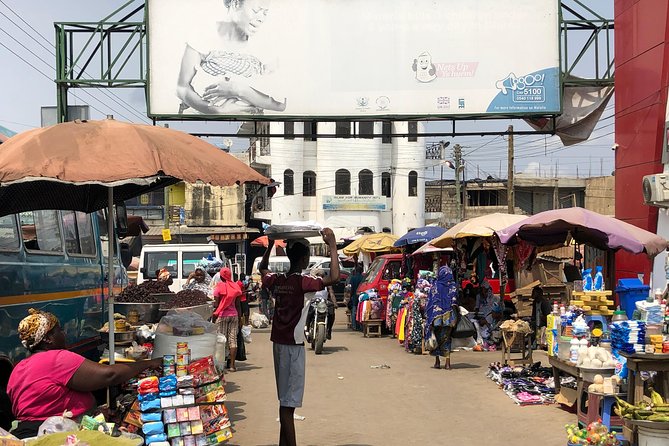
Accra’s story comes into focus through four places tied to independence, colonial rule, Pan-African thought, and daily Ghanaian life. This early-morning city tour moves from Kwame Nkrumah’s memorial to James Town, Independence Square, and the W.E.B. DuBois Center, giving you a useful first look at the capital in roughly three to eight hours.
I like the maximum of two people, which should make it easier to ask questions and adjust the pace. I also like the mix of major civic sights and older neighborhood history, especially James Town. The main consideration is the early 6:30 a.m. start, and the full duration can vary widely, so you should keep part of your day open.
Key points to know before booking
- Four important Accra stops: See Nkrumah’s memorial, James Town Lighthouse, Independence Square, and the W.E.B. DuBois Center.
- Smallest possible group: The tour accepts a maximum of two people, useful if you prefer direct contact with your guide.
- Admission is included: Each listed stop includes an admission ticket.
- Pickup is offered: The experience provides pickup and has a mobile ticket.
- A guide named Cardi: Cardi is described as accommodating, informative, and helpful with Ghana’s history.
- Flexible cancellation: You can receive a full refund when canceling at least 24 hours before the start time.
Why this Accra tour works as a first introduction
Accra can feel like several cities at once. It is Ghana’s political center, a coastal city shaped by colonial rule, and a place where modern life runs alongside older communities. This outing gives you a clear route through those layers without asking you to plan several separate visits.
The four stops are not interchangeable photo stops. Each one answers a different question. Who helped lead Ghana to independence? What did British Accra look like? How is national identity presented today? Why does an African American scholar matter so much to Ghanaian and Pan-African history?
That focus gives the outing more weight than a drive around town. You will see public monuments, but you will also get context from a guide. Cardi is the named guide associated with the experience, and the available guest comments describe Cardi as accommodating and informative. If Cardi leads your visit, asking questions is likely to be one of the best ways to get more from each stop.
The group limit matters here. With no more than two people, you are not trying to hear a guide over a large crowd. You can ask for clarification, spend longer at a display that interests you, or move along when you have seen enough. That private feel is a major part of the tour’s value.
More accra city tours in Accra:
- Know Ghana in 4 hrs – Accra City Tour
★ 4.5 · 47 reviews - Escape Accra City to Aburi Gardens and Tetteh Quarshie Cocoa Farms
★ 4.5 · 32 reviews - Accra City Tour
★ 5.0 · 21 reviews
Kwame Nkrumah Memorial Park: Ghana’s independence story
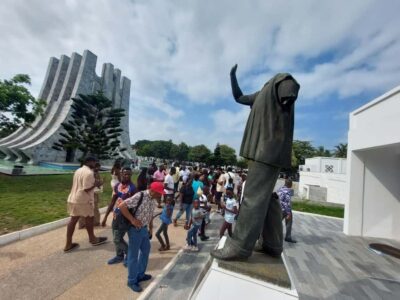
The tour begins with about an hour at Kwame Nkrumah Memorial Park. This is the natural starting point because Kwame Nkrumah is central to Ghana’s modern political story. The stop focuses on his life and includes belongings connected to him, giving you something more personal than a monument viewed from outside.
I would allow the full hour here. A memorial park can look quick on a schedule, but personal objects often need explanation. Your guide can help connect what you see with Ghana’s path toward independence and Nkrumah’s place in that movement.
This stop is especially useful if you are new to Ghanaian history. You do not need to arrive with a long list of names and dates. Listen for the main themes: leadership, independence, national identity, and the role of Accra as the country’s political center.
The practical point is simple: admission is included, so you do not need to budget a separate entrance fee for this stop. You should still keep your timing flexible, since the total outing may last much longer than the three hours suggested by the listed visits.
James Town Lighthouse and the older Accra
The second stop lasts about 45 minutes and takes you to James Town Lighthouse. James Town, also called British Accra, is one of the oldest parts of Accra. Its significance comes from its connection to the British period and the coastal trade that shaped the city.
The lighthouse is described as a structure used by the British during the era of the slave trade. That history deserves a careful explanation, not just a quick picture. Ask your guide how the lighthouse fits into the wider story of the coast, British control, and the growth of Accra.
This may be the most revealing stop for understanding the city beyond its official monuments. Independence Square presents the nation as a symbol. James Town shows an older urban area tied to colonial power and Atlantic history.
The visit is short, so you should not expect a long walking program or an exhaustive account of James Town. The value is in the setting and the guide’s explanation. If this is the part of Accra that interests you most, tell Cardi early and ask whether the schedule allows extra time.
Independence Square and the Black Star symbols
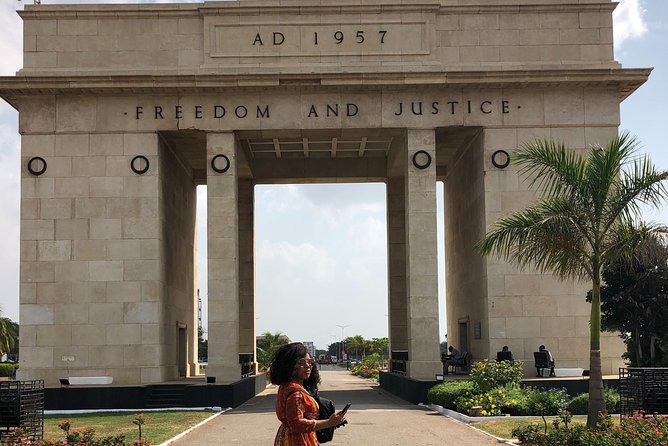
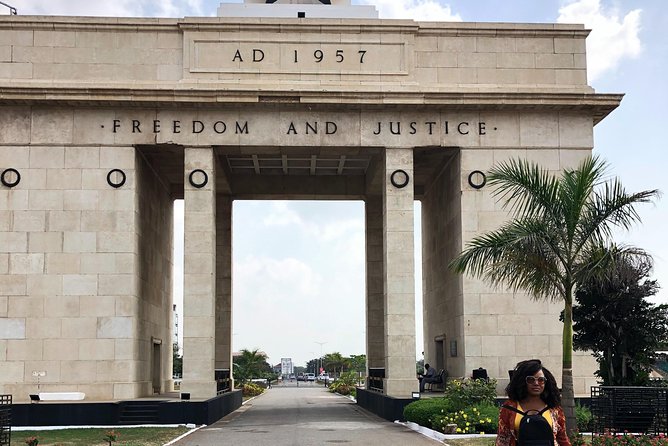
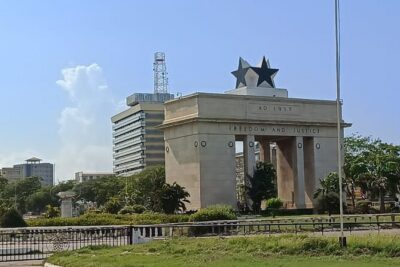
Independence Square receives about 45 minutes. It is one of the largest squares in the world and was designed for state ceremonies, military parades, and commercial events. The space was commissioned to honor a visit by Queen Elizabeth II, adding another layer to its story.
Before the square, you will see the roundabout containing the Black Star Gate, also called the Black Star Monument. The monument was designed in 1961, shortly after Ghana’s independence. These symbols are important because they show how a public space can communicate a country’s political identity.
I find this stop useful when you pay attention to scale. A large ceremonial square tells you how a government wants national events to feel: formal, public, and shared. It is not the same experience as walking through a market or an older neighborhood, but it helps explain the official face of Accra.
The drawback is that large squares can feel visually spare if you expect a museum-style visit. Your enjoyment will depend on the explanation and on your interest in civic architecture and national symbolism. Use the time to ask about the Black Star and the square’s continuing role in public events.
A few more Accra trips to weigh up
- Accra Detailed City Tour
★ 4.5 · 118 reviews - Accra Guided City Tour Experience
★ 4.7 · 88 reviews - Accra Guided City Tour Experience
★ 5.0 · 76 reviews - Accra: Guided City Tour with Lunch
★ 4.5 · 40 reviews
W.E.B. DuBois Center: Pan-African links in Accra
The final listed stop lasts about 35 minutes at the W.E.B. DuBois Center. William Burghardt DuBois was an African American civil rights activist and is often called the father of Pan-Africanism. He became a citizen of Ghana in 1960 and lived at this site with his wife.
The center contains his personal library, belongings, a seminar room, a gallery, and his tomb. That combination gives the visit a personal angle. You are not only hearing about DuBois as a thinker. You are seeing the place connected to his life in Ghana and his final resting place.
This stop also broadens the tour beyond Ghana alone. DuBois’s connection to Ghana shows how the country became important to a larger Pan-African movement. If you have an interest in civil rights, African independence, or the links between Africa and the African diaspora, this may be the most rewarding stop.
Thirty-five minutes is enough for a focused visit, but it is not a long seminar. I would listen closely to the guide’s explanation and use any spare time for the library, gallery, and personal items. The admission ticket is included, which makes this an easy addition to the route.
What the small group changes
The maximum group size is two people. That is unusually small for a city outing and changes the feel of the day. You should have a better chance to hear the guide clearly, ask questions, and discuss what you are seeing without waiting for a large group to gather.
A small group can also make the schedule more responsive. The published stop times add up to about three hours and five minutes, while the overall duration is given as three to eight hours. That broad range suggests that transport, pickup arrangements, traffic, conversations, or extra time at a site can affect the day.
You should not schedule a flight, formal meeting, or tightly timed activity immediately afterward. The tour begins at 6:30 a.m., but the end time is not fixed closely enough for a narrow connection. Think of it as a morning outing that may extend into part of the afternoon.
Pickup is offered, and the experience is near public transportation. Those details make it easier to fit into an Accra stay, but you should confirm the exact pickup point and expected finish time when booking. The start time is stated, while a specific meeting location is not provided.
Is $95 a fair price?
The cost is $95 per person. For a large group and a simple sightseeing loop, that would feel expensive. Here, the maximum of two people changes the calculation. You are paying for a compact, guided experience with a highly personal format rather than joining a coach full of people.
Admission is included at all four listed stops. That saves you from handling separate entrance payments and makes the price easier to judge. Pickup is also offered, and the mobile ticket keeps the booking simple.
The value depends on what you want from Accra. If you only need transport past the main landmarks, $95 may not suit your budget. If you want a guide to explain Ghana’s independence, colonial-era Accra, national symbols, and DuBois’s connection to Ghana, the fee is more defensible.
Food and a souvenir have been part of at least some past bookings, and guest comments specifically praised both. Do not assume those extras are guaranteed unless they are confirmed when you book. The core value is the guided access to the four sites, the included admission, and the two-person format.
The experience is booked, on average, 36 days ahead. That does not guarantee it will sell out, but it is a useful sign that you should reserve early if your Ghana dates are fixed, especially because the group size is limited to two.
Who should book this experience?
I would recommend this outing to a first-time Accra visitor who wants historical orientation without building a complicated route alone. The four stops cover major themes, and the early start leaves open the possibility of using the rest of the day for another activity.
It also suits couples and friends who want a private format. The two-person limit is particularly useful if one person wants to ask many questions or if you prefer not to move at a large group’s pace.
The tour is a good match for people interested in:
- Ghana’s independence story
- Colonial-era Accra and James Town
- National monuments and public ceremonies
- Pan-Africanism and W.E.B. DuBois
- A guide-led introduction to the capital
You should think twice if you dislike early starts, need a precise finish time, or prefer to spend most of a day at one location. The listed visits are short and focused. This is an overview of Accra’s key historical points, not a slow, single-neighborhood walking tour.
Most people can participate, according to the available booking information. The tour is also near public transportation, though pickup is offered. Since no detailed accessibility information is provided, ask the operator about your particular needs before paying.
Practical timing, weather, and cancellation
The start time is 6:30 a.m. That can be helpful in a city tour because it gives you an early start, but you need to be ready to leave before the day has properly begun. Plan your evening before, and confirm the pickup arrangements in advance.
The overall duration is approximately three to eight hours. The four site visits total just over three hours, but the longer estimate allows for movement between places and time spent with the guide. Keep the rest of your schedule loose.
The experience requires good weather. If poor weather causes cancellation, you will be offered another date or a full refund. You can also cancel for a full refund if you do so at least 24 hours before the start time. Cancellations or changes made less than 24 hours before the start are not accepted for a refund.
The booking confirmation is provided at the time of booking, and the ticket is mobile. Those are small conveniences, but useful when you are managing a busy trip from your phone.
Final verdict: a focused Accra orientation
I would book this tour if I wanted a private introduction to Accra’s political and cultural story, especially on a first visit. The route is well chosen: Nkrumah gives you independence, James Town gives you colonial and coastal context, Independence Square shows national ceremony, and DuBois connects Ghana to the wider African diaspora.
The strongest reasons to choose it are the two-person limit, included admission, and the chance to ask direct questions. The main cautions are the 6:30 a.m. start, the uncertain end time, and the $95 price if you are mainly looking for transportation.
Book it early if your dates are set. Before confirming, ask about pickup, the expected finish time, and whether extras such as food or a souvenir are included for your booking. If the answers fit your plans, this is a practical way to get your bearings in Accra while learning why these four places matter.
FAQ
How much does the Accra city tour cost?
The tour costs $95 per person.
How long does the tour take?
The approximate duration is three to eight hours. The four listed visits total about three hours and five minutes, with additional time possible for transport and other parts of the outing.
What time does the tour begin?
The tour starts at 6:30 a.m.
How many people can join the tour?
The experience accepts a maximum of two people.
Is pickup available?
Yes, pickup is offered.
Are admission tickets included?
Yes. Admission tickets are included for Kwame Nkrumah Memorial Park, James Town Lighthouse, Independence Square, and the W.E.B. DuBois Center.
Which places does the tour visit?
The route includes Kwame Nkrumah Memorial Park, James Town Lighthouse, Independence Square, and the W.E.B. DuBois Center.
Is the tour close to public transportation?
Yes, the experience is near public transportation.
Can I cancel for a full refund?
Yes, you can cancel for a full refund if you cancel at least 24 hours before the experience begins.
What happens if bad weather cancels the tour?
If poor weather causes a cancellation, you will be offered a different date or a full refund.
Just added around Accra
- Visit Aburi Garden, Tetteh Quarshie Cocoa Farm & Waterfall★ 4.0 · 4 reviews
- Historical Day Tour to Cape Coast, Elmina and Kakum★ 5.0 · 3 reviews
- Private Airport Transfer to from ACC Kotoka by Business Car★ 5.0 · 4 reviews
- Private Slave Castles and Dungeons Tour in Cape Coast, Ghana★ 5.0 · 3 reviews
- Local Ghanaian Food Tasting Tours★ 5.0 · 3 reviews
- Historical tour in Cape Coast Ghana★ 5.0 · 3 reviews
- The Door Of No Return/ Dungeon & cape Coast Castle★ 5.0 · 4 reviews
- Cape Coast Castle and Kakum National Park 2-Day Private Tour★ 5.0 · 3 reviews
Accra City Tours, compared.

Escape Accra City to Aburi Gardens and Tetteh Quarshie Cocoa Farms
Read our review →

Experience Authentic Ghana in a Personalized Accra City Tour
Read our review →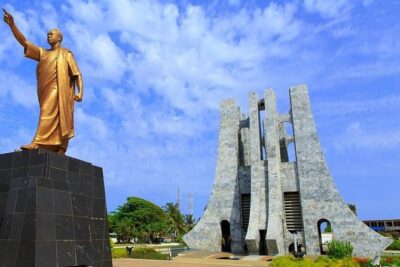
Browse the lists this tour appears in