

Reviewed · ACCRA CITY TOURS
6-Hour Private Guided Accra City Tour
Accra’s story comes into focus when you link its major sights in one outing: colonial forts, independence monuments, busy markets, museums, and the coast. I like the way this private tour brings together places that can feel scattered across the capital, and I especially like the chance to hear local explanations from guides such as Enoch, Clinton, or Daniel, depending on the assignment.
I also appreciate the mix of serious history and ordinary city life. You can examine gold weights and traditional textiles at the National Museum, bargain for crafts at the Centre for National Culture, then cool off at Labadi Beach. The main consideration is traffic: Accra can move slowly, and the full route may feel packed if every stop runs to schedule.
Key points to know before booking

- Seven major stops in one half-day: The route covers the National Museum, Makola Market, Independence Square, the Centre for National Culture, Jamestown, the W.E.B. DuBois Center, Kwame Nkrumah Memorial Park, and Labadi Beach.
- A genuinely private format: Only your group takes part, so you can ask questions and adjust the pace within the available time.
- History with a human scale: Market sellers, craft makers, local instruments, colonial forts, and beach life keep the tour from becoming a string of monuments.
- Transport is built for Accra traffic: You get an air-conditioned vehicle, bottled water, and WiFi, though smaller groups may sometimes use Uber, Bolt, Yango, or a local taxi.
- The $100 price includes key admissions: Entry to the National Museum, DuBois Center, Kwame Nkrumah Memorial Park, and Labadi Beach is included, but meals are not.
- A flexible cancellation window: You can receive a full refund if you cancel at least 24 hours before the start time.
Why this Accra route works
You could visit these places independently, but doing so requires planning around Accra’s traffic, opening times, directions, and the distance between central districts and the coast. This tour removes much of that work. Your guide and driver connect the major sights while explaining how they relate to Ghana’s past and present.
The route is also well balanced. The National Museum and memorial sites give you political and cultural context. Makola Market and Jamestown put you closer to daily life. The craft center gives you a chance to shop, and Labadi Beach provides a slower final hour after a warm day in the city.
The planned sightseeing adds up to roughly five and a half hours, not counting the Jamestown walk or traffic between stops. The stated duration is four to six hours, so you should treat the schedule as a framework rather than a minute-by-minute promise.
More accra city tours in Accra:
- Know Ghana in 4 hrs – Accra City Tour
★ 4.5 · 47 reviews - Escape Accra City to Aburi Gardens and Tetteh Quarshie Cocoa Farms
★ 4.5 · 32 reviews - Accra City Tour
★ 5.0 · 21 reviews
Starting at Accra Mall
The meeting point is Accra Mall, at Plot C11 near the Tetteh Quarshie Interchange on Spintex Road. The tour ends back there, which matters if you need a predictable finish or have plans later in the day.
Transport is by air-conditioned vehicle with bottled water and WiFi on board. For groups smaller than three, the operator may use an air-conditioned Uber, Bolt, Yango, or local taxi when traffic makes that the quickest way to keep the tour moving. This is practical rather than luxurious, but it is worth knowing before you arrive so the vehicle choice does not surprise you.
The tour is private, and most people can participate. A private booking also gives you a better chance to ask about food, customs, local art, and everyday life without holding up a large group.
Ghana’s story inside the National Museum
The National Museum is a useful first stop because it gives you a framework for the rest of the day. Plan on about an hour inside, with admission included.
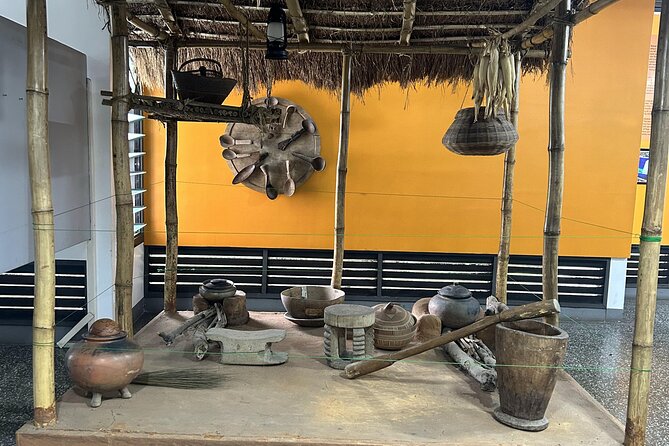
The archaeology displays range from the recent past to the Stone Age. In the ethnography gallery, you can see chiefs’ regalia, indigenous musical instruments, gold weights, beads, textiles, stools, and pottery. These objects help explain Ghanaian trade, leadership, craft traditions, and social life in a way that a quick monument visit cannot.
You may also see objects from other African countries, including Senufo masks from Côte d’Ivoire, wooden Zulu figures, and beaded items from southern Africa. That wider collection is useful because it places Ghana within a larger West African and African setting.
Your guide can add context as you move through the galleries, though the value of that explanation will depend on who leads your group. Enoch, Clinton, and Daniel have been associated with particularly personable and informative tours, but the guide assigned to you may differ.
Reading Accra through Makola Market
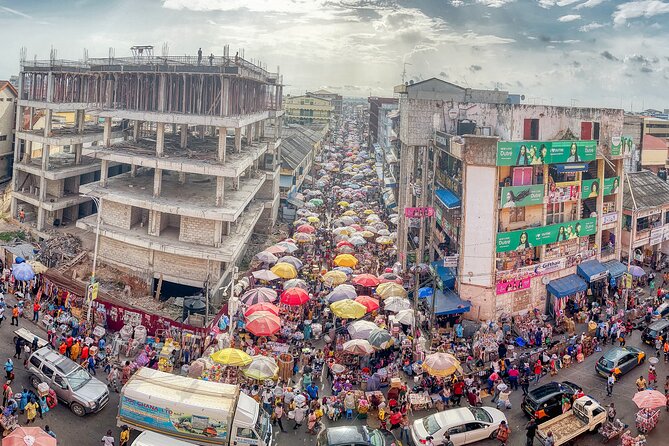
Makola Market gives you a sharp change of pace after the museum. Spend about 45 minutes among indoor and outdoor stalls in the center of Accra, where women vendors sell a wide range of goods.
This is a place for observation as much as shopping. You will see the working rhythm of the capital, hear sellers negotiating with customers, and get a feel for how central markets serve local households. The tour allows time to interact with vendors, take pictures, and shop, but 45 minutes is not long enough to explore every section.
Keep your camera use polite and ask before photographing people. If you want to buy something, your guide can help you understand the local bargaining rhythm. Do not expect a quiet browsing environment. Makola is active, crowded, and practical, not arranged for sightseeing.
A few more Accra trips to weigh up
- Private Car Service
★ 5.0 · 59 reviews - Private Aburi Hill Guided Tour
★ 5.0 · 34 reviews - Full-Day Accra Safari and Boat Cruise Private Tour
★ 5.0 · 32 reviews - The Agbogbloshie (Accra E-waste and Recycling experience) Private Tour
★ 5.0 · 31 reviews
Independence Square and Black Star Square
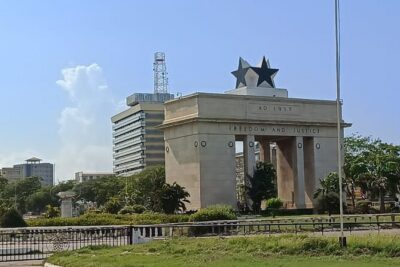
Independence Square, also called Black Star Square, is a 30-minute stop focused on Ghana’s break from British rule. Ghana gained independence in 1957, with Kwame Nkrumah becoming the country’s first prime minister and later president.
The square contains the Independence Arch, Black Star Gate, and Liberation Day Monument. It is also the site of Ghana’s Independence Day parade. The broad open space gives you a clear sense of the importance placed on national identity and public ceremony.
This stop is brief, so it works best when your guide supplies the background and points out the monuments. There is not much need for a long visit, but the open sun can be tiring. Bring water, use the supplied bottle, and keep your hat or sunscreen handy.
Crafts and local music at the Centre for National Culture
The Centre for National Culture is the shopping stop, with vendors selling locally made crafts and souvenirs. You have about 45 minutes here, and bargaining is part of the experience.
The center is also a place to learn about local instruments. You might get a chance to try a drum or another instrument with help from people working there. That small hands-on element makes this stop more personal than simply walking through a shop.
Prices and quality can vary, so look carefully before buying. The tour gives you access to the market but does not include purchases. If you are collecting gifts, this is one of the more useful parts of the day. If shopping is not your priority, tell your guide early so you can spend your time on the cultural side of the stop.
Walking through old Jamestown
Jamestown is explored on foot, making it different from the vehicle-based portions of the tour. It is one of Accra’s oldest neighborhoods and includes the colonial-era James Fort and Usher Fort.
The information provided does not assign a fixed time for Jamestown, so traffic and your group’s interests may affect how long you spend walking. Wear comfortable shoes and expect a more informal section of the day. Your guide is there to explain the area and answer questions as you move through it.
Jamestown adds an important human scale to the itinerary. Monuments can tell you when Ghana became independent, but an old neighborhood helps you see how the capital developed over time. The trade-off is that a walking tour through an old urban district may feel less polished than a museum or memorial park.
W.E.B. DuBois Center and Pan-African connections

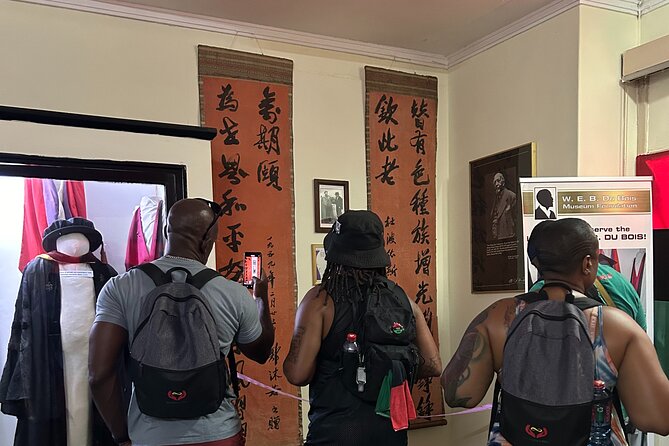
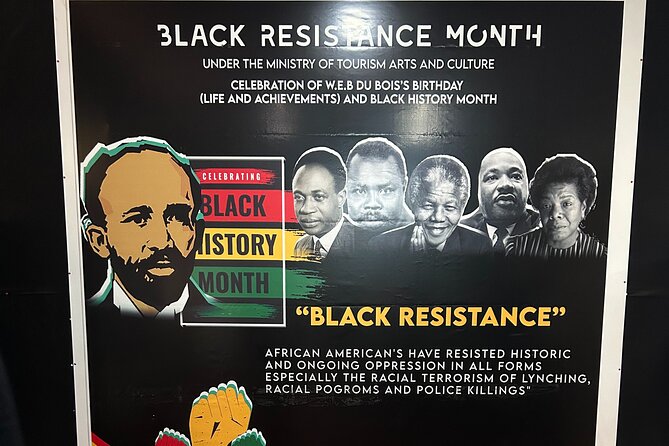
The W.E.B. DuBois Center takes about 45 minutes, with admission included. It is the home, library, and final resting place of William Edward Burghardt DuBois, the American-born campaigner for social justice.
The center includes a museum with personal items and books from his library. There is also an open-air theater used for lectures, seminars, workshops, and cultural programs. This makes the site more than a memorial. It connects DuBois’s work to continuing discussion about African identity, justice, and the wider Pan-African movement.
This stop is especially useful if you want more than a quick look at Ghanaian independence. It adds an international dimension to the day and gives your guide room to explain why an American intellectual is remembered in Accra.
Kwame Nkrumah Memorial Park
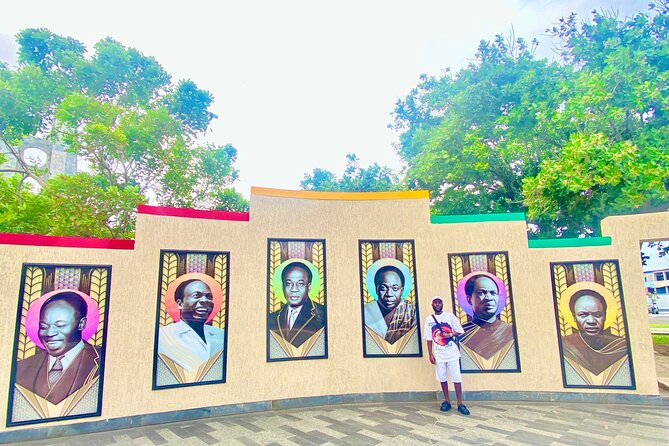
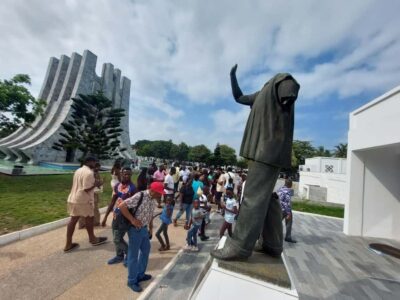
The Kwame Nkrumah Memorial Park is another 45-minute included stop in central Accra. It honors Ghana’s first Pan-African prime minister and president, who was born in 1909 and died in 1972.
After seeing Black Star Square, this park helps you connect the national symbols to the political leader who shaped Ghana’s early independence period. The setting is more reflective than the open parade square, and the mausoleum gives the tour a clear focal point.
You will get more from this stop if you ask questions about Nkrumah’s role, the independence movement, and Ghana’s place in Pan-African politics. Since both this park and Independence Square focus on national identity, some information may overlap. A good guide should help you see the difference between a public independence square and a memorial dedicated to one leader.
Ending at Labadi Beach
Labadi Pleasure Beach, also known as La Pleasure Beach, is the final stop and lasts about an hour. After museums, markets, monuments, and walking, the beach offers time to sit, cool down, and shift into a slower mood.
Labadi is cared for by local people and serves local, continental, and international food and drinks. The admission fee is included, but your meals and drinks are not. You should budget separately if you want to eat or order something during the final stop.
The beach is a pleasant finish because it keeps the tour from feeling like an all-day lecture. Still, the tour description does not promise swimming conditions, changing facilities, or a particular beach activity. Think of this as a chance to relax by the coast rather than a dedicated beach day.
Is $100 per person good value?
At $100 per person, this tour is not the cheapest way to see Accra, but it offers a lot for a private half-day outing. The price includes an air-conditioned vehicle, bottled water, onboard WiFi, and admission to four paid attractions: the National Museum, W.E.B. DuBois Center, Kwame Nkrumah Memorial Park, and Labadi Beach.
You are also paying for a driver-guide, route planning, and the convenience of moving between sites without arranging separate taxis. That matters in a city where heavy traffic can eat into a short visit. Group discounts may improve the value for larger parties, though the exact discount is not stated.
The price makes the most sense for a first visit, a private group, or anyone with limited time in Accra. It is less appealing if you want to spend a full morning in one museum, shop slowly, or linger at the beach. The route favors breadth over long visits.
What the guide can add
The strongest part of a private city tour is not simply getting from one address to another. It is having someone explain what you are seeing and respond to your questions. The tour specifically focuses on cuisine, customs, art, daily life, and Ghanaian history, so you can steer the conversation toward your interests.
Past tour accounts single out Enoch and the team of Clinton and Daniel for friendly care, energy, and useful explanations. That gives you a sense of the style to expect, but guide assignments can change. Ask questions as you go, especially at the museum, Jamestown, and the two Nkrumah-related stops.
You should also tell the guide if you need a slower pace. There are several short visits, a market walk, a Jamestown walking section, and a beach stop. The private format gives your group more control than a large coach tour, though traffic still sets hard limits.
Practical tips for a smoother day
- Wear comfortable shoes: Jamestown includes walking, and Makola Market is best explored on foot.
- Bring sun protection: Black Star Square and Labadi Beach expose you to the sun, and parts of the route are outdoors.
- Keep some shopping money aside: Crafts at the Centre for National Culture and purchases at Makola Market are not included.
- Expect schedule changes: Accra traffic may require a quicker stop or a switch to Uber, Bolt, Yango, or a local taxi for a small group.
- Use the private setting: Ask about food, customs, music, art, and local life instead of treating the day as a photo checklist.
- Plan around meals: Breakfast, lunch, and dinner are not included, although food and drinks are available at Labadi Beach.
Confirmation is received when you book. Free cancellation is available up to 24 hours before the start time for a full refund. Changes or cancellations made within 24 hours are not accepted for a refund, and the cut-off uses local time.
Who should book this Accra tour?
I would recommend it to a first-time visitor who wants a broad introduction to Accra without arranging several separate visits. It also suits families, couples, and small groups who value a private vehicle and the freedom to ask questions.
The tour is a good fit if you want museums and monuments, but also want to see market life, local crafts, an old neighborhood, and the coast. It is less suitable if your main goal is serious shopping, a long beach stay, or a slow museum study.
Book it if you value range, local explanation, and simple transport more than an unhurried pace. Skip it if seven major stops sound tiring or if you already know Accra and want to spend the day in one district. For many first visits, the combination of national history, everyday commerce, and Labadi’s relaxed ending makes the $100 private rate a reasonable way to get your bearings.
FAQ
How long does the Accra city tour last?
The tour lasts approximately four to six hours. The scheduled stops add up to about five and a half hours, excluding the walking portion in Jamestown and travel time between locations.
Where does the tour start?
It starts at Accra Mall, Plot C11, near the Tetteh Quarshie Interchange on Spintex Road in Accra.
Where does the tour end?
The activity ends back at the Accra Mall meeting point.
Is this a private tour?
Yes. Only your group participates in the activity.
Which attractions include admission?
Admission is included for the National Museum of Ghana, the W.E.B. DuBois Center, Kwame Nkrumah Memorial Park, and Labadi Pleasure Beach. Makola Market, Independence Square, and the Centre for National Culture have no admission charge listed.
Is transportation included?
Yes. An air-conditioned vehicle, bottled water, and WiFi on board are included. For groups of fewer than three, the operator may sometimes use an air-conditioned Uber, Bolt, Yango, or local taxi because of traffic.
Are meals included?
No. Breakfast, lunch, and dinner are not included. Labadi Beach offers local, continental, and international food and drinks for purchase.
Can I cancel for a full refund?
Yes, if you cancel at least 24 hours before the experience start time. Cancellations or changes made less than 24 hours before the start time are not refunded.
Just added around Accra
- Visit Aburi Garden, Tetteh Quarshie Cocoa Farm & Waterfall★ 4.0 · 4 reviews
- Historical Day Tour to Cape Coast, Elmina and Kakum★ 5.0 · 3 reviews
- Private Airport Transfer to from ACC Kotoka by Business Car★ 5.0 · 4 reviews
- Private Slave Castles and Dungeons Tour in Cape Coast, Ghana★ 5.0 · 3 reviews
- Local Ghanaian Food Tasting Tours★ 5.0 · 3 reviews
- Historical tour in Cape Coast Ghana★ 5.0 · 3 reviews
- The Door Of No Return/ Dungeon & cape Coast Castle★ 5.0 · 4 reviews
- Cape Coast Castle and Kakum National Park 2-Day Private Tour★ 5.0 · 3 reviews
Accra City Tours, compared.
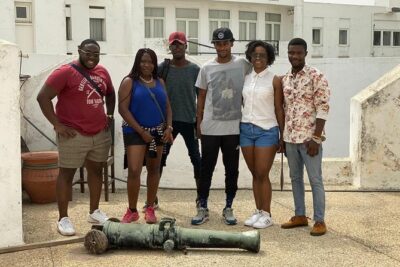

Escape Accra City to Aburi Gardens and Tetteh Quarshie Cocoa Farms
Read our review →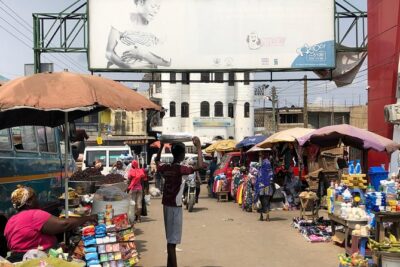

Experience Authentic Ghana in a Personalized Accra City Tour
Read our review →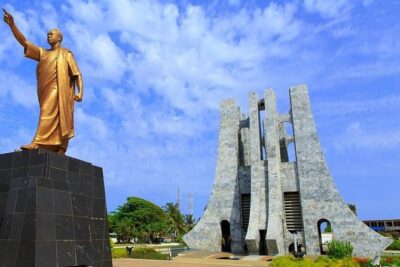
Browse the lists this tour appears in